
Monday, February 16, 2026
39.1 C
Abuja

Kwankwaso’s Political Nemesis: An Analysis of Politics, Governance, and Leadership

Democracy is defined as “a system of government in which power is vested in the people, who rule either directly or through freely elected representatives” (Robert Dahl, 1998). Democracy emphasizes citizen participation, protection of individual rights, and accountability of government to the people. In Nigeria’s democratic system, these concepts are crucial for understanding the dynamics of power and decision-making.

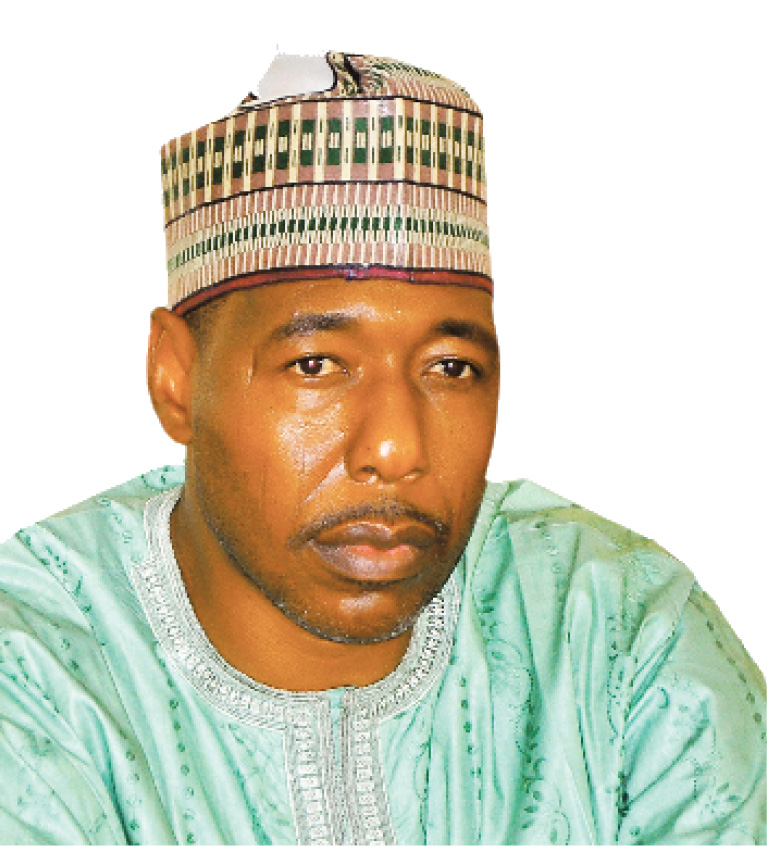
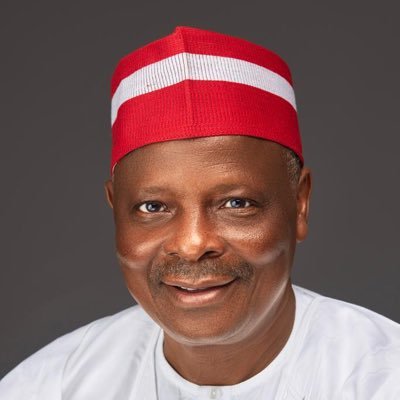
This article explores the rise and demise of Senator Rabiu Kwankwaso’s political dynasty in Kano State, examining how his leadership style has impacted the state’s political landscape. The Kwankwasiya political dynasty, once dominant in Kano State politics, appears to be crumbling. Senator Rabiu Kwankwaso’s actions have led to its downfall, exemplifying “political nemesis,” a term used to describe a situation where an individual’s actions ultimately lead to their own downfall.

After the 2023 election win, Kwankwaso allegedly directed Governor Abba Kabir Yusuf to demolish public buildings and markets built by the previous administration. This move, perceived as vendetta, severely affected the livelihoods of innocent traders, particularly those in the Filin Idi Market.

Senator Kwankwaso’s decision to change the logo of the New Nigeria Peoples Party (NNPP) resulted in him losing party control. Now, being in government but without a legal political party due to internal party conflicts and court orders. Kwankwaso’s attempts to dominate NNPP have failed, resulting in political factions and the decamping of NNPP Senator and other House of Representatives members to the All Progressives Congress (APC).

With an uncertain political future, he might decamp to the Social Democratic Party (SDP), or join another new party entirely, or else risk ending his political career in 2027. Moreover, Senator Kwankwaso’s leadership style seems driven by personal animosity rather than public interest.

This is reminiscent of his actions in 2011, when he abandoned projects initiated by former Governor Mallam Ibrahim Shekarau, such as the Paediatric Hospital along Zoo Road and Muhammad Buhari General Hospital in Giginyu. These projects were later completed by Governor Dr. Abdullahi Umar Ganduje in 2016.

Senator Kwankwaso’s approach to governance, prioritizing personal interests over continuity of impactful projects, has caused significant political losses for his party, the NNPP, and damaged the administration’s progress. Furthermore, truth be told, Governor Abba Kabir Yusuf, perceived as a simple personality due to his sympathetic nature towards the less privileged, payment of pensioners’ gratuity, visits to the sick, and condolences to the bereaved, seems to have been hindered negatively by Senator Kwankwaso’s politics of vendetta.

The Kwankwaso political decline highlights the consequences of prioritizing personal interests over public welfare and party stability. As the political landscape continues to evolve, it remains to be seen how Kwankwaso’s legacy will be remembered and what lessons can be learned from his kind of politics.


Hot this week

President Tinubu Felicitates NNPC Board Chair Musa Kida at 65

President Tinubu Felicitates NNPC Board Chair Musa Kida at 65

We Are Better Together: A Caution to the Advocates of Separation

It must first be clearly stated that the North’s preference for Nigerian unity is not because it is incapable of standing on its own, nor because it is uniquely dependent on the present federal arrangement for its existence. Historically, the North demonstrated a strong capacity for political cohesion and governance under the regional system, where the Caliphate produced the Premier and the Sultanate provided the Governor. With a vast, geographically contiguous landmass, a dominant lingua franca and largely shared religious and cultural frameworks, a substantial part of Northern Nigeria has historically functioned as a coherent political space.

PDP Disputes Ibadan Court, Affirms NWC Validity 

The PDP chairman noted that the Ibadan ruling was only one of several judgments of the Federal High Court on the matter and that the core issues were already before the Court of Appeal. He described the decision as “technically academic” pending an authoritative pronouncement by the appellate court. Turaki reassured party members that the National Working Committee produced by the Ibadan Convention remained “legally intact and firmly in place,” and committed to what he described as the party’s ongoing rebirth.

A Setback for Wike in PDP Crisis 

While the Supreme Court’s earlier intervention briefly revived Anyanwu’s standing, Tuesday’s dismissal signals that legal victories alone may no longer be enough to secure long-term control. The struggle within the PDP is increasingly shifting from courtrooms to internal political negotiations, and in that arena, the momentum appears to be slipping away from the Wike camp.

NNPC Ltd. Debt: FG Forgave Interest, Not Principal, Officials Say 

Fresh details have emerged that challenge the widespread belief that the...

Topics

President Tinubu Felicitates NNPC Board Chair Musa Kida at 65

President Tinubu Felicitates NNPC Board Chair Musa Kida at 65

We Are Better Together: A Caution to the Advocates of Separation

It must first be clearly stated that the North’s preference for Nigerian unity is not because it is incapable of standing on its own, nor because it is uniquely dependent on the present federal arrangement for its existence. Historically, the North demonstrated a strong capacity for political cohesion and governance under the regional system, where the Caliphate produced the Premier and the Sultanate provided the Governor. With a vast, geographically contiguous landmass, a dominant lingua franca and largely shared religious and cultural frameworks, a substantial part of Northern Nigeria has historically functioned as a coherent political space.

PDP Disputes Ibadan Court, Affirms NWC Validity 

The PDP chairman noted that the Ibadan ruling was only one of several judgments of the Federal High Court on the matter and that the core issues were already before the Court of Appeal. He described the decision as “technically academic” pending an authoritative pronouncement by the appellate court. Turaki reassured party members that the National Working Committee produced by the Ibadan Convention remained “legally intact and firmly in place,” and committed to what he described as the party’s ongoing rebirth.

A Setback for Wike in PDP Crisis 

While the Supreme Court’s earlier intervention briefly revived Anyanwu’s standing, Tuesday’s dismissal signals that legal victories alone may no longer be enough to secure long-term control. The struggle within the PDP is increasingly shifting from courtrooms to internal political negotiations, and in that arena, the momentum appears to be slipping away from the Wike camp.

NNPC Ltd. Debt: FG Forgave Interest, Not Principal, Officials Say 

Fresh details have emerged that challenge the widespread belief that the...

No Terrorists Were Killed in U.S. Strike on ‘ISIS’ in Nigeria 

Abu Jabo dismissed reports that terrorists were killed in the strike, stressing that Jabo has no history of insurgency or bandit activity. “There are no terrorists here. There are no Christians here either. Jabo is a peaceful, Muslim community. We do not have security problems,” he added. Local sources also dispute claims that the area harbors ISIS-linked elements, describing Jabo as a quiet farming settlement with no record of extremist activity.

Trump: U.S. Hit Terror Targets in Nigeria 

In a strongly worded statement posted on his verified social media account, Trump said the United States, acting under his direction as Commander-in-Chief, had launched “powerful and deadly” strikes against what he described as ISIS-linked terrorists operating in Northwest Nigeria. He claimed the operation was in response to the killing of Christians and warned of further military action if such attacks continued. 

NNPC Limited: Early Signals from the Kida–Ojulari Era 

As a non-executive chairman with decades of industry experience, Engr. Kida’s influence lies less in operational detail and more in direction-setting and discipline. The reconstituted board signals a renewed emphasis on corporate governance, professionalism and alignment with the spirit of the PIA, that NNPC Limited should operate as a business, not a government department. 
spot_img

Related Articles

Popular Categories

spot_imgspot_img