
Wednesday, May 20, 2026
24.1 C
Abuja

NNPC Limited: Early Signals from the Kida–Ojulari Era 

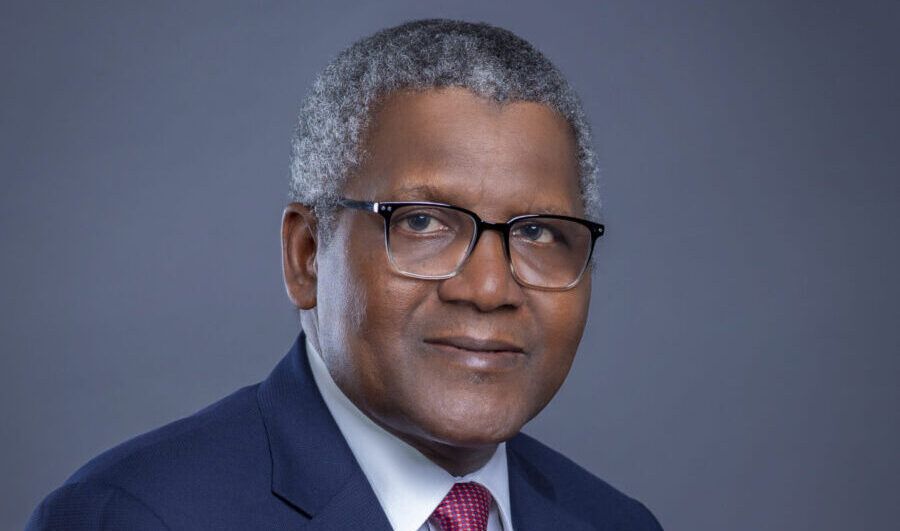
Barely four years after the Petroleum Industry Act (PIA) rewired Nigeria’s oil and gas governance architecture, the leadership of NNPC Limited has again come under the spotlight. With the appointment of Engineer Ahmadu Musa Kida as non-executive chairman of the board and Engineer Bashir Bayo Ojulari as Group Chief Executive Officer, expectations are high that the commercial national oil company can finally move from reform rhetoric to measurable results. 

A comparison between the earlier post-PIA board and the current one shows a subtle but important shift, from transition management to consolidation and delivery. 

The former NNPC Limited board, constituted after the PIA came into force, was largely transitional in character. Its primary task was to midwife the transformation of the old Nigerian National Petroleum Corporation into NNPC Limited, a Companies and Allied Matters Act (CAMA) entity with a commercial mandate, independent board and clearer separation between ownership, regulation and operations. 

That board oversaw foundational changes. These include incorporation of NNPC Limited, early governance frameworks, restructuring of subsidiaries, and the initial move toward profit declaration. However, its tenure was also marked by lingering uncertainty about roles, frequent leadership changes and public skepticism about how far “commercialization” had truly gone. 

The current board under Engr. Kida appears designed for a different phase. These are stabilization, strategic oversight, and performance monitoring. 

As a non-executive chairman with decades of industry experience, Engr. Kida’s influence lies less in operational detail and more in direction-setting and discipline. The reconstituted board signals a renewed emphasis on corporate governance, professionalism and alignment with the spirit of the PIA, that NNPC Limited should operate as a business, not a government department. 

One of the board’s earliest achievements has been restoring clarity at the top. By promptly confirming executive leadership and articulating broad priorities like boosting production, reviving refining, and deepening partnerships; the board has provided management with a clearer mandate than in the immediate post-PIA period. 

This clarity matters. Under the PIA, the board is meant to protect the company’s commercial interests, ensure transparency, and hold management accountable through measurable performance indicators. The Kida-led board has so far focused on rebuilding confidence in that governance framework, both internally and among external partners. 

If the board is about structure, Engr. Bayo Ojulari’s management has been about momentum. Since assuming office, Ojulari has moved quickly to assemble a new management team and project an image of decisiveness, a contrast to the cautious pace that characterized parts of the earlier post-PIA era. 

Operationally, NNPC Limited under Ojulari has highlighted gains in pipeline security and reductions in crude oil theft, a chronic problem that has undermined production and revenues for years. Any sustained improvement here directly impacts cash flow and investor confidence, making it one of the most tangible early wins of the current management. 

In the downstream, management has adopted a pragmatic approach by positioning NNPC Limited as a key offtaker and distributor for large domestic refineries, including private ones. This reflects a shift from state dominance to partnership, acknowledging that Nigeria’s refining challenge will not be solved by public assets alone. 

Ojulari has also aligned closely with government targets on production growth and refinery rehabilitation, publicly committing NNPC Limited to playing a central role. While many of these remain plans rather than completed projects, the willingness to stake management’s credibility on delivery timelines marks a more assertive posture. 

Compared with the former board and management structure, the current leadership shows stronger alignment between board oversight and executive action. The earlier phase was about setting up the rules of the game; the current phase is about playing it and being judged by results. 

However, the hard tests still lie ahead. Reviving state-owned refineries, sustaining crude output growth and attracting large-scale private capital will require not just announcements but disciplined execution, transparent procurement and consistent regulatory behavior. These are areas where previous efforts faltered. 

Hot this week

NNPC Limited Alerts Public to False Claims Over Refinery Scrap Sales 

 In its release signed by Andy Odeh, its Chief Corporate Communications Officer, the company clarified that it has not authorized or issued requests for bids, tenders, expressions of interest, or approvals concerning the sale of scrap materials, refinery components, or other items from its warehouses or inventories. The company underscored that any information circulating in public forums suggesting otherwise is inaccurate and should be disregarded. 

Supreme Court Cancels PDP Convention; BoT Assumes Leadership 

In a dramatic turn on Thursday, the apex court invalidated the November 15–16, 2025 convention held in Ibadan, which produced the Kabiru Tanimu Turaki-led National Working Committee (NWC). The ruling also upheld the suspension of key party officials, including Samuel Anyanwu, Umar Bature and Kamaldeen Ajibade. 

Opposition Parties Unite in Ibadan, Vow Single Candidate for 2027

Opposition political parties in Nigeria on Saturday resolved to form a united front ahead of the 2027 general elections, including plans to field a single presidential candidate, as they accused the ruling All Progressives Congress (APC) of undermining democracy. The resolution, contained in a communiqué issued at the end of a national summit in Ibadan, warned against what participants described as attempts by the APC to impose a one-party state on the country. The parties pledged to “resist all machinations” that could threaten Nigeria’s multi-party system.

White House Correspondents’ Dinner Interrupted by Shooting Incident 

Just after 8:30 p.m., while President Trump and Melania Trump were engaging with entertainer Oz Pearlman on stage, a man, later identified as Cole Tomas Allen, sprinted through a security checkpoint carrying a shotgun. Secret Service agents pursued and exchanged gunfire with him, quickly subduing Allen before he could reach the ballroom. Inside, guests enjoying their salads were startled by loud, cracking sounds, leading to confusion and panic as armed law enforcement swept in and shouted for everyone to get down. 

President Tinubu Felicitates NNPC Board Chair Musa Kida at 65

President Tinubu Felicitates NNPC Board Chair Musa Kida at 65

Topics

NNPC Limited Alerts Public to False Claims Over Refinery Scrap Sales 

 In its release signed by Andy Odeh, its Chief Corporate Communications Officer, the company clarified that it has not authorized or issued requests for bids, tenders, expressions of interest, or approvals concerning the sale of scrap materials, refinery components, or other items from its warehouses or inventories. The company underscored that any information circulating in public forums suggesting otherwise is inaccurate and should be disregarded. 

Supreme Court Cancels PDP Convention; BoT Assumes Leadership 

In a dramatic turn on Thursday, the apex court invalidated the November 15–16, 2025 convention held in Ibadan, which produced the Kabiru Tanimu Turaki-led National Working Committee (NWC). The ruling also upheld the suspension of key party officials, including Samuel Anyanwu, Umar Bature and Kamaldeen Ajibade. 

Opposition Parties Unite in Ibadan, Vow Single Candidate for 2027

Opposition political parties in Nigeria on Saturday resolved to form a united front ahead of the 2027 general elections, including plans to field a single presidential candidate, as they accused the ruling All Progressives Congress (APC) of undermining democracy. The resolution, contained in a communiqué issued at the end of a national summit in Ibadan, warned against what participants described as attempts by the APC to impose a one-party state on the country. The parties pledged to “resist all machinations” that could threaten Nigeria’s multi-party system.

White House Correspondents’ Dinner Interrupted by Shooting Incident 

Just after 8:30 p.m., while President Trump and Melania Trump were engaging with entertainer Oz Pearlman on stage, a man, later identified as Cole Tomas Allen, sprinted through a security checkpoint carrying a shotgun. Secret Service agents pursued and exchanged gunfire with him, quickly subduing Allen before he could reach the ballroom. Inside, guests enjoying their salads were startled by loud, cracking sounds, leading to confusion and panic as armed law enforcement swept in and shouted for everyone to get down. 

President Tinubu Felicitates NNPC Board Chair Musa Kida at 65

President Tinubu Felicitates NNPC Board Chair Musa Kida at 65

We Are Better Together: A Caution to the Advocates of Separation

It must first be clearly stated that the North’s preference for Nigerian unity is not because it is incapable of standing on its own, nor because it is uniquely dependent on the present federal arrangement for its existence. Historically, the North demonstrated a strong capacity for political cohesion and governance under the regional system, where the Caliphate produced the Premier and the Sultanate provided the Governor. With a vast, geographically contiguous landmass, a dominant lingua franca and largely shared religious and cultural frameworks, a substantial part of Northern Nigeria has historically functioned as a coherent political space.

PDP Disputes Ibadan Court, Affirms NWC Validity 

The PDP chairman noted that the Ibadan ruling was only one of several judgments of the Federal High Court on the matter and that the core issues were already before the Court of Appeal. He described the decision as “technically academic” pending an authoritative pronouncement by the appellate court. Turaki reassured party members that the National Working Committee produced by the Ibadan Convention remained “legally intact and firmly in place,” and committed to what he described as the party’s ongoing rebirth.

A Setback for Wike in PDP Crisis 

While the Supreme Court’s earlier intervention briefly revived Anyanwu’s standing, Tuesday’s dismissal signals that legal victories alone may no longer be enough to secure long-term control. The struggle within the PDP is increasingly shifting from courtrooms to internal political negotiations, and in that arena, the momentum appears to be slipping away from the Wike camp.
spot_img

Related Articles

Popular Categories

spot_imgspot_img