
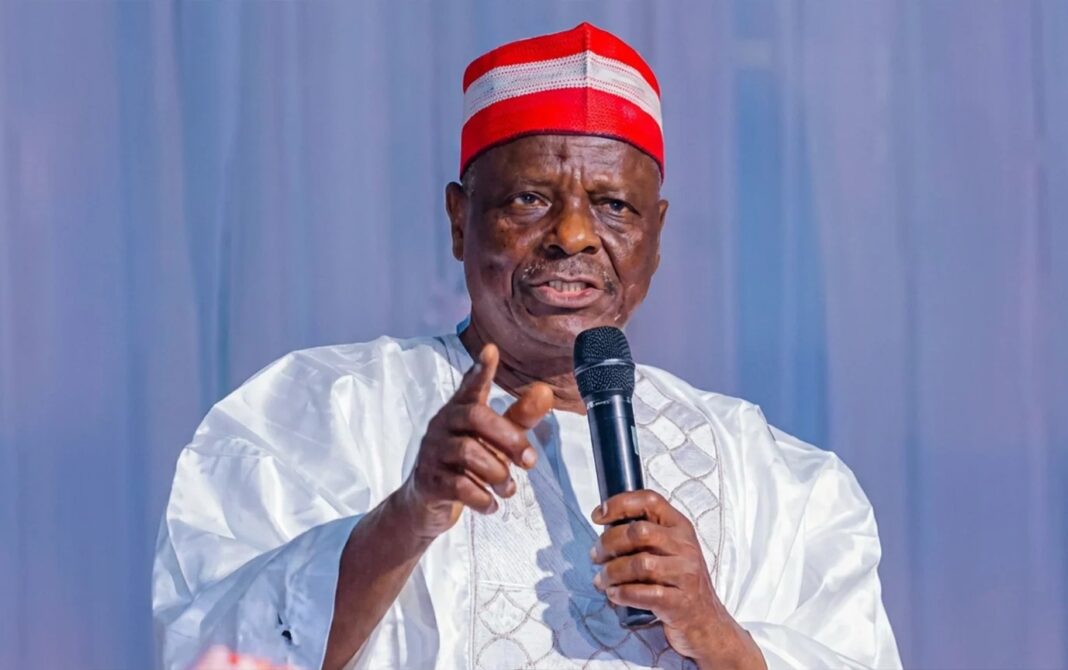

A fresh crisis has engulfed the Nigeria Democratic Congress (NDC), with former Kano State Governor and leader of the Kwankwasiyya Movement, Rabiu Musa Kwankwaso, reportedly considering leaving the party following the controversial replacement of candidates believed to be loyal to him in Kano State.
The development has exposed widening cracks within the opposition party and raised fresh concerns about its cohesion ahead of future electoral contests. The dispute comes as the NDC grapples with growing internal divisions over power-sharing, candidate selection, and the role of influential political blocs within the party.
The latest controversy highlights a broader struggle for control within the NDC, where competing interests are increasingly testing the party’s ability to maintain unity. While party leaders insist recent actions were taken to preserve internal democracy and balance among stakeholders, Kwankwaso’s allies view the replacement of candidates as a direct challenge to the influence of the Kwankwasiyya movement in Kano, one of the party’s strongest political bases.
The tensions stem from Kwankwaso’s integration into the NDC, a move reportedly championed by the party’s National Leader, Seriake Dickson, who urged members to accommodate the former presidential candidate in the interest of strengthening the party.
According to the NDC North-West Vice Chairman, Mohammed Rabiu Sarina, and the Kano State Chairman, Hussaini Isa Mariga, disagreements emerged during subsequent party congresses when Kwankwaso allegedly sought greater control of the party structure in Kano.
Party officials said the dispute was initially resolved through a power-sharing arrangement that allocated 60 percent of the party structure to the Kwankwasiyya bloc and 40 per cent to other stakeholders. However, tensions resurfaced during the nomination process for state and federal legislative positions.
Sarina alleged that access to nomination forms became heavily tilted in favor of aspirants linked to the Kwankwasiyya movement, sidelining other interested party members.
“We resisted attempts to exclude other stakeholders in the interest of fairness and inclusivity,” he said, adding that several interventions by the National Working Committee failed to resolve the disagreements.
According to party officials, efforts to broaden participation in the nomination process were rejected by Kwankwaso’s camp, which allegedly insisted on retaining substantial influence over candidate selection.
The Kano chapter of the party subsequently moved to replace several candidates initially submitted by the Kwankwasiyya bloc, arguing that the earlier nominations violated the agreed power-sharing arrangement and undermined internal balance.
Party leaders maintained that no individual or faction should dominate party structures or candidate selection processes, warning that such practices could erode internal democracy and weaken the party.
The leadership also dismissed allegations of financial impropriety, insisting that all payments connected to nominations were made through official party accounts and denying any personal financial dealings involving Kwankwaso.
Amid the growing controversy, there is a call urging Kwankwaso to leave the NDC if he believes he is being unfairly treated by the party leadership.
Supporters of Kwankwaso say he should pursue his political ambitions on another platform if he feels constrained, marginalized, or denied a fair role within the party.
Meanwhile, the NDC is facing another internal dispute, this time with supporters of its presidential candidate, Peter Obi, popularly known as the Obidient Movement.
The disagreement follows resolutions adopted at the party’s second National Executive Committee (NEC) meeting and announced by National Publicity Secretary Osa Director.
Among the resolutions, the party reaffirmed the principle of party supremacy, stating that governments elected on its platform must consult party structures on policies, programs, and appointments, except for personal staff appointments.
The NDC also resolved that affiliated groups and non-governmental organizations operating within the party ecosystem must function under its guidance and supervision rather than independently.
The NEC further approved a code of conduct for party officials and candidates, established a national reconciliation committee to address grievances, and introduced stricter financial accountability measures.
However, the decisions have sparked criticism from members of the Obidient Movement, who argue that the measures could weaken the independence of grassroots support groups that emerged around Obi’s presidential campaign.
Critics particularly faulted the decision to place affiliated groups under party control and interpreted the party’s declaration that it was being built as “an institution, not a personality cult, political movement or Special Purpose Vehicle” as a veiled reference to Obi and his supporters.
The twin controversies have intensified concerns about the NDC’s internal stability, with analysts warning that unresolved disputes among key stakeholders could undermine the party’s efforts to present a united front ahead of future political contests.