
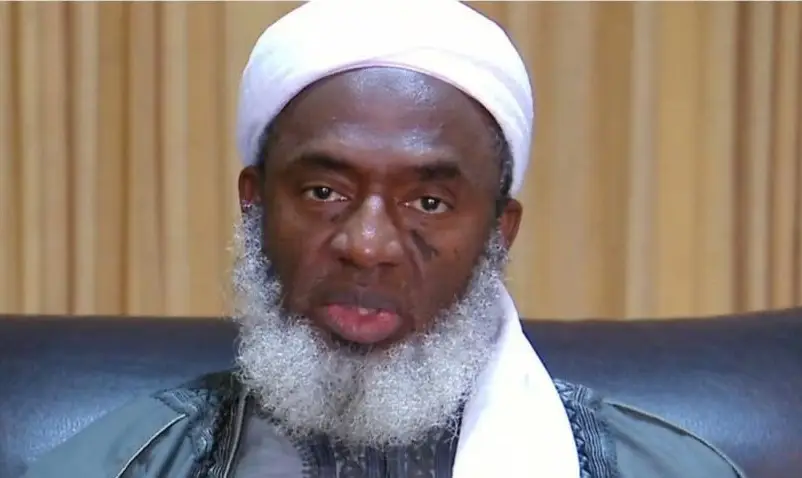
Sheikh Gumi: An Asset Nigeria Should Not Ignore

Nigeria’s security situation has continued to worsen over the years. What began as the Boko Haram insurgency in the Northeast later spread to the Northwest and Northcentral as banditry and kidnapping for ransom. Today, insecurity is no longer a northern problem alone. Cases of kidnapping and violent attacks are now being reported in other parts of the country, including the Southwest.

Despite huge spending on security and years of military operations, banditry remains a serious threat. This raises an important question: Are Nigerians making full use of every available resource in the fight against insecurity?

One person who has remained at the center of this debate is Sheikh Dr. Ahmad Abubakar Gumi.

For many years, Gumi has attracted criticism because of his contacts with bandits. Some commentators have accused him of being too sympathetic to them. Others have questioned why he meets with them in their forest hideouts.

But instead of seeing him as part of the problem, Nigerians should ask whether he can be part of the solution.

Who is Sheikh Gumi? He is a medical doctor, a retired army officer, an Islamic scholar, and one of the most influential clerics in northern Nigeria. He comes from Zamfara State and has cultural, religious, and ethnic ties with many of the communities where banditry has become widespread.

Because of these connections, Gumi has been able to gain access to bandits in ways that government officials, journalists, and even security agencies often cannot. He has visited their camps, spoken with their leaders, listened to their complaints, and urged them to stop violence.

Whether one agrees with his methods or not, the fact remains that very few Nigerians have such direct access to these criminal groups.

This is why Gumi should be seen as an asset.

Every successful security operation depends on good intelligence. Information about who the bandits are, where they operate, how they obtain weapons, and who supports them can be just as important as military force. Someone who has direct contact with these groups can provide valuable insights that may help security agencies understand and defeat them.

Unfortunately, public debate has often focused on one statement made by Gumi, that the bandits are his “brothers.”

Many people interpreted this as support for criminal activities. However, Gumi’s point was that they are his fellow human beings and, in many cases, share the same ethnic and religious background. Calling them brothers does not mean approving of their crimes. It means recognizing a connection that allows him to speak to them when others cannot.

History shows that governments around the world often use intermediaries to communicate with armed groups. Peace talks and negotiations have helped end conflicts in many countries. Talking to criminals does not mean supporting them. It means trying to find ways to reduce violence and save lives.

This does not mean bandits should escape punishment. Their crimes are real and their victims deserve justice. Thousands of Nigerians have been killed, displaced, kidnapped, or forced to pay ransom. No grievance can justify such actions.

However, solving a problem requires understanding it.

Through his meetings with bandits, Gumi has repeatedly highlighted issues such as poverty, neglect, lack of government presence in rural communities, cattle rustling, and tensions between herders and farmers. Whether these complaints are valid or not, understanding them can help policymakers, if they are serious, address some of the conditions that fuel insecurity.

Nigeria’s security crisis is too complex to be blamed on one individual. There are many actors involved, including criminal gangs, corrupt officials, informants, arms traffickers, and others who profit from instability. Focusing all attention on Gumi risks turning him into a convenient scapegoat while the real enablers remain hidden.

The truth is simple. If a person has access to violent groups and can help authorities gather information, encourage defections, or reduce bloodshed, that person should be viewed as a potential asset.

Sheikh Gumi should not be above criticism, but neither should he be treated as an enemy simply because he talks to bandits. In a country struggling with widespread insecurity, every useful channel of communication should be explored.

Nigeria needs results, not scapegoats. If Sheikh Gumi’s unique access can help bring peace, save lives, and weaken criminal networks, then he should be seen as part of the solution rather than part of the problem.

Mustapha Shehu is the CEO of Veritas Media Limited and the Editor-in-chief of The Politico magazine. He writes from Abuja and can be reached at mshehu@veritasmedia.com.ng


Hot this week

What They Never Told You: Ayatollah Khomeini Was a Great Jurist, Not a Fanatic

The West gave Iran a name — theocracy — and buried the reality beneath it. They never told you that Khomeini spent decades mastering one of the most rigorous legal traditions in human history, or that he built a constitutional republic ratified by 98 percent of the Iranian people in a free referendum. A nation of fanatics can be bombed with a clear conscience. A constitutional republic of 93 million people, founded by a supremely gifted jurist, is harder to dispose of.

‘We Won’t Be Silenced’: ADC Rejects Court-Ordered Deregistration

Abdullahi said: We did not expect the level of judicial rascality that was demonstrated. When a Court of Appeal says stay proceedings until October 27 and a lower court goes ahead to deliver judgment on the same matter, it is bizarre and dangerous."

Sheikh Gumi and the Case for Dialogue

It is against this background that I offer my views on the issues of banditry and kidnappings, particularly in northern Nigeria. My perspective is informed by knowledge acquired during my graduate studies at the Fletcher School of Law and Diplomacy, Tufts University, in the United States. Two courses, in particular, shaped my understanding of conflicts and their resolution. The first was International Security Studies, taught by Professor Richard Shultz, a consultant to the Pentagon. The second was International Negotiation, taught by Professor Diana Chigas, a member of the team that helped negotiate the end of apartheid in South Africa.

June 12: Democracy’s Sacred Mandate and Nigeria’s Unfinished Journey

Democracy has delivered some notable gains. The country has witnessed peaceful transfers of power, expanded political participation, a more vibrant media landscape, and greater civic engagement. These achievements should not be dismissed. They are evidence that democratic governance, despite its imperfections, remains preferable to military rule. However, democracy cannot survive on political rituals alone. For millions of Nigerians battling insecurity, unemployment, poverty, inflation, and inadequate infrastructure, democracy must mean more than periodic elections.

Atiku Picks Amaechi as Running Mate in Strategic Move

In a move that could significantly reshape Nigeria's political landscape ahead of the next presidential election, the presidential candidate of the African Democratic Congress (ADC), Alhaji Atiku Abubakar, has nominated former Minister of Transportation, Chief Chibuike Rotimi Amaechi, as his running mate.

Topics

What They Never Told You: Ayatollah Khomeini Was a Great Jurist, Not a Fanatic

The West gave Iran a name — theocracy — and buried the reality beneath it. They never told you that Khomeini spent decades mastering one of the most rigorous legal traditions in human history, or that he built a constitutional republic ratified by 98 percent of the Iranian people in a free referendum. A nation of fanatics can be bombed with a clear conscience. A constitutional republic of 93 million people, founded by a supremely gifted jurist, is harder to dispose of.

‘We Won’t Be Silenced’: ADC Rejects Court-Ordered Deregistration

Abdullahi said: We did not expect the level of judicial rascality that was demonstrated. When a Court of Appeal says stay proceedings until October 27 and a lower court goes ahead to deliver judgment on the same matter, it is bizarre and dangerous."

Sheikh Gumi and the Case for Dialogue

It is against this background that I offer my views on the issues of banditry and kidnappings, particularly in northern Nigeria. My perspective is informed by knowledge acquired during my graduate studies at the Fletcher School of Law and Diplomacy, Tufts University, in the United States. Two courses, in particular, shaped my understanding of conflicts and their resolution. The first was International Security Studies, taught by Professor Richard Shultz, a consultant to the Pentagon. The second was International Negotiation, taught by Professor Diana Chigas, a member of the team that helped negotiate the end of apartheid in South Africa.

June 12: Democracy’s Sacred Mandate and Nigeria’s Unfinished Journey

Democracy has delivered some notable gains. The country has witnessed peaceful transfers of power, expanded political participation, a more vibrant media landscape, and greater civic engagement. These achievements should not be dismissed. They are evidence that democratic governance, despite its imperfections, remains preferable to military rule. However, democracy cannot survive on political rituals alone. For millions of Nigerians battling insecurity, unemployment, poverty, inflation, and inadequate infrastructure, democracy must mean more than periodic elections.

Atiku Picks Amaechi as Running Mate in Strategic Move

In a move that could significantly reshape Nigeria's political landscape ahead of the next presidential election, the presidential candidate of the African Democratic Congress (ADC), Alhaji Atiku Abubakar, has nominated former Minister of Transportation, Chief Chibuike Rotimi Amaechi, as his running mate.

Three Killed as Gunmen Raid Kogi School

The Kogi State Police Command said the attackers arrived in large numbers, travelling on about 40 motorcycles, and targeted the school and nearby surroundings in what authorities believe may have been an attempt to carry out kidnappings.

Kwankwaso Weighs NDC Exit as Candidate Purge Deepens Party Crisis

Amid the growing controversy, there is a call urging Kwankwaso to leave the NDC if he believes he is being unfairly treated by the party leadership. Supporters of Kwankwaso say he should pursue his political ambitions on another platform if he feels constrained, marginalized, or denied a fair role within the party.

Appeal Court Voids Basis for Wike’s PDP Caretaker Committee Recognition, Faults Ibadan High Court

The Court of Appeal in Abuja has nullified the legal foundation upon which Wike's factional caretaker committee of the Peoples Democratic Party (PDP) was recognized and faulted a Federal High Court judge in Ibadan for granting reliefs that were never sought by any of the parties in the suit.
spot_img

Related Articles

Popular Categories

spot_imgspot_img