

Nigerians, including many among the educated elite, are often more sentimental than intellectual in the way they approach national problems. Issues that should be examined calmly and objectively in search of solutions are frequently viewed through the lenses of religion, ethnicity, or political affiliation. Such an approach may satisfy emotions, but it rarely solves problems.
It is against this background that I offer my views on the issues of banditry and kidnappings, particularly in northern Nigeria. My perspective is informed by knowledge acquired during my graduate studies at the Fletcher School of Law and Diplomacy, Tufts University, in the United States. Two courses, in particular, shaped my understanding of conflicts and their resolution. The first was International Security Studies, taught by Professor Richard Shultz, a consultant to the Pentagon. The second was International Negotiation, taught by Professor Diana Chigas, a member of the team that helped negotiate the end of apartheid in South Africa.
The lessons from those courses have convinced me that while military force may sometimes be necessary, conflicts are rarely resolved permanently without dialogue. It is from that standpoint that I view the role of Sheikh Ahmad Gumi in Nigeria’s security crisis.
Few public figures in Nigeria generate as much controversy as Sheikh Gumi. Mention his name in any discussion about banditry and kidnapping, and strong opinions quickly emerge. Yet, amid all the criticism directed at him, many Nigerians are overlooking what may be his most important contribution: his ability to communicate with people whom the rest of society cannot reach.
Like every human being, Sheikh Gumi is not perfect. But perfection is not the issue. The real issue is whether he possesses a skill that could help Nigeria end one of its most devastating security crises. I believe he does.
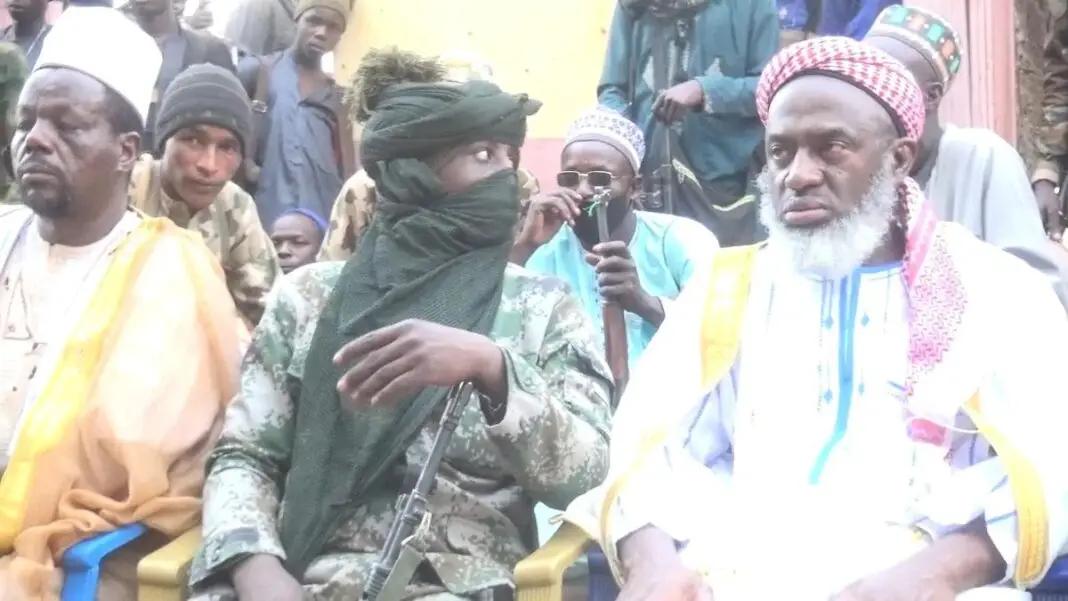
For years, Sheikh Gumi has been able to establish contact with armed Fulani groups operating in parts of northern Nigeria. They meet with him. They listen to him. More importantly, they appear to trust him. Whether we agree with his views or not, that level of access is something that government officials, security agencies, traditional rulers and community leaders have largely failed to achieve.
Conflict resolution experts often say that no conflict ends without communication. Opposing sides may fight for years, but lasting peace is usually achieved when dialogue eventually replaces the gun. That is not a sign of weakness. It is simply the reality of how many conflicts around the world have ended.
Nigeria’s banditry crisis is no longer just a law enforcement problem. It has evolved into a prolonged conflict that has claimed thousands of lives, displaced communities and destabilized large parts of the country. We may call the perpetrators criminals, terrorists or bandits, and many of their actions certainly fit those descriptions, but the uncomfortable truth is that they have become a party in a conflict with the Nigerian state and society.
If that is the case, then negotiation should not be treated as a dirty word.
The first rule of negotiation is understanding what both sides want. Nigerians want the killings, kidnappings and destruction to stop. That much is obvious. But what do the armed groups want? Sheikh Gumi has repeatedly tried to explain their grievances and demands, yet many people prefer to dismiss his efforts without examining the substance of what he is saying.
Instead, our national conversation has been dominated by a single response: more force.
There is no doubt that the government has a duty to protect citizens and pursue criminals. Military action has its place. However, after years of air strikes, offensives and security operations, the violence has not disappeared. In some areas, it has become even more entrenched.
The evidence is all around us. Thousands have been killed. Millions of naira worth of property have been destroyed. Entire communities have been uprooted. Families have lost breadwinners. Children have been orphaned. Widows and internally displaced persons continue to bear the burden of a conflict with no clear end in sight.
At what point do we admit that force alone is not enough?
This is why Sheikh Gumi’s advocacy for dialogue deserves a fair hearing. Negotiation does not mean surrendering to criminals. It does not mean abandoning justice. It means recognizing that every possible avenue for peace should be explored when lives are at stake.
As a go-between, Sheikh Gumi occupies a unique position. Because the armed groups trust him, he can potentially serve as a bridge between them and the government. For such a role to work, however, both sides must have confidence in him. Publicly attacking or discrediting him may satisfy political sentiments, but it could also destroy a channel of communication that may one day prove useful.
Not everyone will agree with this approach. Some people believe the conflict can only be resolved through overwhelming military force. That view deserves respect. But after years of bloodshed and enormous expenditure with limited results, surely it is reasonable to consider another option.
The objective should not be to win an argument. The objective should be to achieve peace.
The Chinese have a saying: “It does not matter whether a cat is black or white, as long as it catches mice.”
The same principle applies here. If dialogue can help reduce violence, save lives and restore security, then Nigerians should judge it by its results rather than by their feelings about the messenger.
Whether one likes Sheikh Gumi or not, his ability to talk to those holding communities hostage may be an asset that Nigeria can no longer afford to ignore.
Mustapha Shehu is the CEO of Veritas Media Limited and the Editor-in-chief of The Politico magazine. He writes from Abuja and can be reached at mshehu@veritasmedia.com.ng