
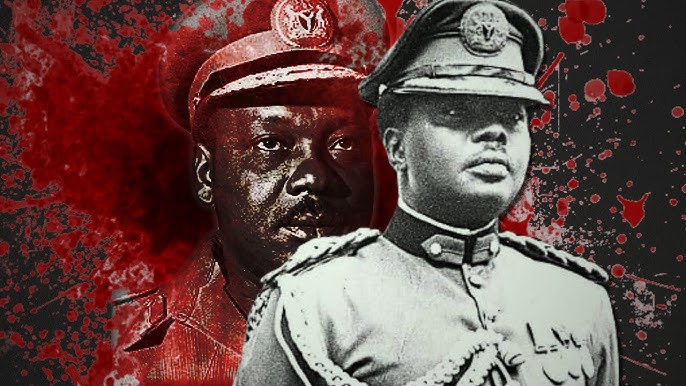

Editor’s Note: Continued from Operation ‘Aure’: The Northern Military Counter-Rebellion of July 1966 (II). In this part, we bring to you how the counter coup was launched in Abeokuta Garrison, on Thursday, July 28, 1966, and the massacre of Igbo officers. How the coup unfolded in Lagos.
Abeokuta Garrison, Thursday, July 28, 1966
Shortly before 2300 hours on July 28, 1966, Lt. Col. Gabriel Okonweze, Commander of the Abeokuta Garrison was tipped off by Lt. Col. Patrick Anwunah, General Staff Officer (1) for Intelligence at Army HQ in Lagos, that the long anticipated Northern countercoup was scheduled to begin that night.
What Anwunah did not know for sure was that the coup had in fact, once again, been put off by its chief planners on account of a leak.
Earlier that evening Anwunah had confronted Lt. Col. Murtala Muhammed in Yaba, Lagos with information that he was behind a planned countercoup, leading to a mean-spirited (some say violent) exchange between them. Anwunah initially thought this confrontation would in fact deter the plot from going forward and planned to do nothing. But having been prompted by Lt. Col. Alexander Madiebo to take some precautionary steps, and perhaps being in receipt of additional information, he took it upon himself to alert some unit commanders, one of whom was Okonweze. (An alternative account says Okonweze was also alerted by Njoku)
Lt. Col. Okonweze, therefore, called a meeting in the mess of all available officers (Igbo and non-Igbo) at the Abeokuta Garrison where he made the following announcement:
“Gentlemen, I have just been informed that there is going to be a coup tonight. Anyone of you who knows anything about the coup should please tell us. You may know the beginning, but you never know the end. I am not ambitious. My only ambition is to become a full Colonel. If you know anything, please let me know; I am not going to report anyone. What we are going to do is to avoid what happened in January where officers were taken unawares. We are going to wake up all soldiers, ask them to go to the armory to get issued with arms and ammunition.”
Officers present included Okonweze himself, Major John Obienu (Recce Commander), Lt. Gabriel Idoko, Lt. DS Abubakar (“Datti Abubakar”, Recce), Lt. IS Umar, and Lt. AB Mamman (Arty). Lt. E.B. Orok (Recce) later came in his Volkswagen. Captains M. Remawa (Recce 2ic) and Domkat Bali (Artillery Battery Commander) were at the Abeokuta club. Captain Ogbonna (Infantry company commander) was also in town.
Thereafter, an Igbo NCO went around the barracks, waking soldiers excitedly and saying, “Come out, come out, there is trouble; go to the armory and collect your armor.”
This alert woke up Sergeant Sabo Kole, an NCO from the Bachama area of Adamawa State. In the charged atmosphere of prevailing rumors at that time, Kole wrongly interpreted the Igbo NCO’s actions as an attempt by Okonweze to selectively wake up Igbo soldiers who would thus have an advantage in what was alleged to be an effort to finish what they did not finish in January. He, therefore, woke up another neighbor, Corporal Maisamari Maje, also Bachama, who happened to be the armourer of the unit. He told Maje to go to the armory and ensure that only northerners would be issued weapons. Meanwhile, assisted by Corporal Inua Sara, he mobilized a small guard of northern soldiers to protect the armory against any attempt to dislodge them while he made arrangements to disarm the quarter-guard. Having secured the armory, Sgt. Kole issued weapons and ammo to a section of assault troops. Assisted by Maje, and including Corporal J. Shagaya, the group advanced to the Officers Mess under the direction of the duty officer, Lt. Pam Mwadkon, younger brother of the late Lt. Col James Pam who was shot in Ikoyi by Major Christian Anuforo in January.
Once in the mess they ordered all officers present to raise their hands. When Okonweze challenged them, he was summarily executed right there and then. Major John Obienu, Commander of the Recce Squadron, sitting next to Okonweze, was also shot dead. Lt. E Orok, driving in to join them, saw what was happening, shouted at the soldiers, and was himself shot dead right under the tree where he parked his car. In the chaos, some northerners were shot too, notably Lt. Gabriel Idoko, mistaken for Igbo because he was wearing an “English dress”. He was lucky to survive. Some Igbo soldiers (other ranks) in the garrison were subsequently rounded up and shot.
Initial Contacts with Ibadan, Lagos, Enugu, and Kaduna
Not all Igbo officers in the Abeokuta garrison were killed. Ogbonna escaped and was the one who initially made urgent informal phone calls to Lagos (2nd Battalion), Ibadan (4th battalion) and much later to Enugu (to Lt. Cols Ogunewe – 1st Bn – and Ojukwu at the State House).
Almost simultaneously, Lt. Pam phoned Lt. Garba Dada (Paiko), the Adjutant of the 4th Battalion in Ibadan at Mokola Barracks saying “Look, we have done our own oh! If you people just siddon there, we have finished our own…. We have finished the Igbo officers here. We liberated our unit.” He was wrong, though, because Ogbonna was alive. Lt. John Okoli also survived.
When Captains Remawa and Bali returned to the Barracks from town, they met the dead bodies of Okonweze, Obienu and Orok in or around the mess. They changed quickly into combat dress and got themselves armed.
Captain Remawa then contacted Army HQ in Lagos to notify Lt. Col. Gowon of events. Gowon ordered Remawa to collect the corpses, secure the garrison, and await further instructions. This order from Gowon to Remawa sent shivers down the spines of the junior northern officers at Abeokuta like Lt. DS Abubakar who feared that they would all be arrested for the killings in the Mess. Therefore, they decided that come what may, they would fight to finish to ensure the end of the Ironsi regime. The impulse was primarily self-preservatory.
Gowon then contacted Brigadier Ogundipe, then Chief of Staff, SHQ and got orders to mobilize Army units in Lagos. Both Ogundipe and Gowon initially tried to reach Ironsi directly in Ibadan and failed. (It was when Gowon was trying to get Col. Njoku at the guest house that he spoke to Major Danjuma). Ogundipe then notified the Police hierarchy, including the Commissioner in Ibadan, whose first attempt to investigate events at the 4th battalion was strongly rebuffed by the Battalion adjutant who told him to steer clear. “Flying Policeman” Mr. Joseph Adeola eventually got through to Government House Ibadan, sometime around 1 am (some say 0030), to notify General Ironsi of events. (Adeola replaced Timothy Omo-Bare as the Commissioner of Police in the Midwest and was one of those kidnapped by Biafran forces to Enugu in August 1967.)
By this time Major Danjuma, Lt. James Onoja and elements of the 4th battalion were in process of arriving to cordon off the building. Before he was finally arrested shortly before 8am, Ironsi had made requests for a Police helicopter from Lagos and made other efforts, as are described elsewhere in this essay, to mobilize loyal units. By the time a helicopter arrived, though, he and Colonel Fajuyi had been taken away. General Ironsi’s last formal military contact was with Kaduna to mobilize the 1st Brigade. The commander, Lt. Col. Wellington “Papa” Bassey was not around so he spoke to Major Samuel Ogbemudia, then the Brigade Major, telling him “All is not well.” Unfortunately, the Brigade was too far away to be of immediate tactical value, even if it wanted to be.
Ogbonna’s call to Lt. Col. Igboba at the 2nd battalion in Ikeja preceded Remawa’s call to Army HQ. Unfortunately, it was intercepted by Lts. Nuhu Nathan and Malami Nassarawa. Nathan was the duty officer and had been contacted earlier by Murtala Muhammed about the postponement of the coup. When Ogbonna gave him the message to deliver to Igboba about events at Abeokuta, he immediately contacted Murtala Muhammed instead, who, having just gotten off the phone with the boys at Ibadan, finally realized that events were moving faster than he thought initially. Muhammed gave the go ahead to Nathan and Nassarawa to mobilize northern troops at Ikeja and launch
operations to pre-empt predictable efforts by the establishment to regain control. They secured the armory, distributed weapons selectively, and got busy rounding up Igbo soldiers. Northern NCOs and ordinary soldiers later went wild. If their officers did not explicitly give an order for an Igbo soldier to be shot, they would shoot him anyway and shout “accidental discharge, sah!”
Meanwhile, Muhammed began making rounds of Army units all over Lagos to see things for himself and wake up other coupists in the Lagos area asking them to “adjust to the new situation”. Two of those he woke up himself were Captain JN Garba and Lt. Paul Tarfa at the Federal Guard. As they were dressing up, the call from Gowon came in. By the time Muhammed got to Ikeja, Captain Martin Adamu, Lts. Nathan, Nassarawa, Muhammadu Buhari, Alfred Gom, Longboem and a bunch of NCOs were already in control of the battalion, having executed several Igbo soldiers and officers (including Major B Nnamani, one of the company commanders) and arrested many others by cordoning off the quartermaster section of the barracks or grabbing soldiers as they came out for morning PT. The battalion commander, Lt. Col. Henry Igboba, narrowly escaped a dragnet deployed around his house by Lt. Longboem and got away.
Muhammed reportedly gave orders to stop the killing and focus instead on securing the perimeter as well as approach roads and taking measures to ensure the eventual success of their activities. Captain Martin Adamu went to Army HQ and placed himself in the intelligence center to monitor information and disseminate disinformation. Muhammed then contacted Abeokuta garrison directly and asked Lts. DS Abubakar and Pam Nwadkon to fuel up, arm a troop each of armored vehicles (ferrets) and head out for Lagos and Ibadan respectively, accompanied by a section of assault troops to provide support in case of any shoot out with loyal troops being mobilized by Lt. Col. Gowon, Lt. Col. Anwunah, Major Mobolaji Johnson and Brigadier Ogundipe from SHQ. Sergeant Paul Dickson, a fearsome Idoma NCO who was later to acquire a reputation as a bloodthirsty savage, was despatched to take Ikeja Airport. A typical example of a coded order (in Hausa) for the murder of an Igbo captive was: “Take him to the house of chiefs.”
Later that morning, after Abubakar and Pam had left for Lagos and Ibadan, northern NCOs from the Abeokuta garrison set up check points in town and decided to pay a visit to the Abeokuta Prison where Major DO Okafor, former Federal Guards Commander, January 15 co-conspirator and alleged co-executioner of the late Prime Minister was held. He was tortured and killed in the courtyard, some say buried alive. The soldiers did not stop there. At one of the checkpoints, 2/Lt A.O. Olaniyan, oblivious of events, was stopped. As he tried to identify himself, he was summarily shot dead. The situation was clearly out of control.
Lagos, July 29, 1966
After being alerted, first by Lt. Col. Muhammed, then Lt. Col. Gowon, Captain Garba and Lt. Tarfa secured the Federal (then known as ‘National’) Guards Barracks at Obalende, better known as ‘Dodan Barracks’. It is named after a town called Dodan in the Arakan peninsula in Burma where Nigerians fought back in World War 2. They rounded up all Igbo soldiers and locked them up in safety. Not a single Igbo soldier in that unit lost his life. Garba and Tarfa overcame a challenge by a northern soldier called Adamu Lamurde who emotionally threatened to kill them both if he was not allowed to avenge the death of Brigadier Maimalari by liquidating the Igbo soldiers in the unit. Indeed, this achievement was one of the very few successes of northern officers against northern NCOs seeking revenge. Garba later got a letter of commendation and appreciation from Col Hilary Njoku, his erstwhile Brigade Commander, when all the Igbo soldiers including Sergeant Vidal, Private Oligbo, Private Calistus Chukwu and others in the unit eventually arrived back safely in the east.
After Lt. Col. Gowon completed the first round of calls to Army commanders in Lagos early that morning, a decision was made to establish an operations room at the Police HQ on Moloney Street in Lagos. Brigadier B. Ogundipe, then Chief of Staff, SHQ, was joined by acting Police IG Kam Salem, Commodore Wey of the Navy, Lt. Col. Gowon (Army COS), Lt. Col. Anwunah (PSO I), and Major Mobolaji Johnson. Although he had previously served as DAQMG at the 2nd Brigade in Apapa under late Brigadier Maimalari, on this day Johnson was a fish out of water because he was supposed to be the second-in-command to Lt. Col Akahan at the 4th battalion 100 miles away in Ibadan where junior officers had run amok. However, he had long since settled down as Lagos military administrator. The commander of the 2nd battalion at Ikeja could not be reached.
Meanwhile, Lt. DS Abubakar had arrived from Abeokuta with his troops of ferrets, only to run into an ambush mounted by troops from the 2nd battalion under Lt. Longboem at Ikeja from which he was very lucky to escape. Longboem had recognized him at the last minute when he stuck his head out of the hatch. Apparently, Lt. Nassarawa had forgotten to alert the boys that Abubakar was coming with ferrets on Muhammed’s orders. Anyway, once this misunderstanding was resolved, Muhammed deployed DS Abubakar to Abalti Barrracks for “mopping operations”. This essentially meant that Muhammed was now in control of Ikeja, Dodan and Abalti Barracks as well as the airport. Indeed, Sergeant Dickson’s boys took control of two BOAC VC10 aircraft at the airport and ordered the captains to fly northern families of soldiers back to Kano before returning to Lagos to pick commercial passengers. The soldiers involved had been completely taken in by frivolous rumors of a “second Igbo coup” and, like northern civil servants, wanted to get their families away.
After a quick appreciation, a decision was made by Brigadier Ogundipe to scrap together a fighting force from Army HQ elements commanded by an Igbo Captain. They were to go to Ikeja and try regaining control of the airport, by then under the control of Sergeant Paul Dickson of the 2nd battalion. This group advanced right into an ambush of machine gun nests along Ikeja road, losing about 30 soldiers in the process. In the confusion, two expatriates (including the General Manager of Bata Shoes in Lagos) were killed in crossfire.
Lt. Col. Gowon volunteered to go to Ikeja Barracks to negotiate with the rebellious troops. By this time, he and Brigadier Ogundipe were already aware from reports coming from Ibadan that General Ironsi and Colonel Fajuyi had been snatched from Major Danjuma and were probably dead. When he arrived at Ikeja some reports say he was initially detained, but there is no corroborative evidence that this really occurred. Aghast at what he saw, he was, however, said to have issued orders in support of Muhammed’s earlier orders that there should be no more shooting. This order was quickly sidelined by northern soldiers who proceeded to use other methods, not firearms, to slaughter their victims. Daggers and other more primitive contraptions for ritual murder became weapons of choice. In one illustrative case, northern soldiers at Ikeja airport took Captain Okoye, then based at Abalti Barracks but enroute to the US on a course, tied him to an Iron cross, whipped him unconscious and then left him to die in the guardroom. Okoye was suspected of being an informant for the Igbo underground network in Lagos.
About this time, first Major Johnson and then Brigadier Ogundipe himself gave an order to a northern NCO deployed to the Federal Guards Company. The soldier blatantly said he would not take orders from the Brigadier unless approved by Captain JN Garba. So, Captain Garba was sent for and came to the Police HQ. He was initially interrogated by Lt. Col. Anwunah, searching for information about what was happening in the country. Garba then aggressively confronted Anwunah with the grievances of northern soldiers and why they had struck. When Anwunah reported Garba’s intransigence to Ogundipe, Ogundipe told Garba:
“I wish you boys had waited. I have just received the report about the January coup this morning and it’s on my table right now. Try to talk to your friends in Ikeja, and I am sure we can settle this matter, even at this stage.”
Capt. Garba, now placed in a difficult position, went back to his office to make a call to Murtala Muhammed in Ikeja and brief him about what had just transpired. Muhammed endorsed Garba’s actions and instructed him to maintain contact. Garba says he later discovered that Ogundipe had been bluffing about the report. Indeed, at the Military Leaders Meeting at Aburi, a full six months later, Commodore Wey said:
“A decision has been taken on the boys of 15th January…. They were to be dealt with in August but later on it was shifted to October.”
Meanwhile, Brigadier Ogundipe made a public broadcast on Radio Nigeria at 2:30pm which was repeated in 30-minute cycles until about 8:30pm:
“As a result of some trouble by dissidents in the army, mainly in Ibadan, Abeokuta and Ikeja, the National Military Government has declared a state of emergency in the affected areas. Consequently, the following areas have been declared military areas under the Suppression of Disorder Decree of 1966: Ibadan, Ikeja and Abeokuta. Military Tribunals have been considered and accordingly set up. Curfew has been declared in the affected areas from 6:30 pm. The National Military Government wishes to state that the situation is under control and hopes to restore peace and tranquility very soon. The government appeals to the public for cooperation in its effort to restore law and order in the affected areas.”
At about 3pm, though, Ogundipe sent for Garba again and instructed him to contribute a platoon to a second assault force which he was sending to dislodge the boys at Ikeja. Garba notified Muhammed at Ikeja and then contributed a platoon to Ogundipe under one 2/Lt. Osuma (then known as “Usman”) with separate orders that should he be ordered to shoot at fellow soldiers he was to refuse and return to base. 2/Lt. “Usman” did exactly as he was told before subsequently escaping from Lagos on August 1st himself. When he got back to the east, he used his real name (Osuma) to request that his property be sent back to him there. Needless to say, that Ogundipe’s second attempt to establish military supremacy had failed.
Meanwhile phone calls and signals were coming in from other parts of the country, including Enugu (from Lt. Col. C. Ojukwu, the governor). At one point, Ojukwu was able to speak to Lt. Col. Gowon at Ikeja. It is said that Gowon told him that he was no longer a “free agent”. Ojukwu encouraged Ogundipe to keep fighting even though he himself at one point escaped from Enugu to Onitsha from where he was calling Ogundipe. The rebels later made Brigadier Ogundipe aware that they would only accept Captain JN Garba as his intermediary for negotiations. Meanwhile, angry about the phone calls from Ojukwu, Lt. Col. Muhammed began making plans to march on Enugu – from which he was eventually restrained.
Read continuation in Part IV: Initial contact with Lagos, Ibadan, Enugu, and Kaduna. How the coup played out in Lagos.