
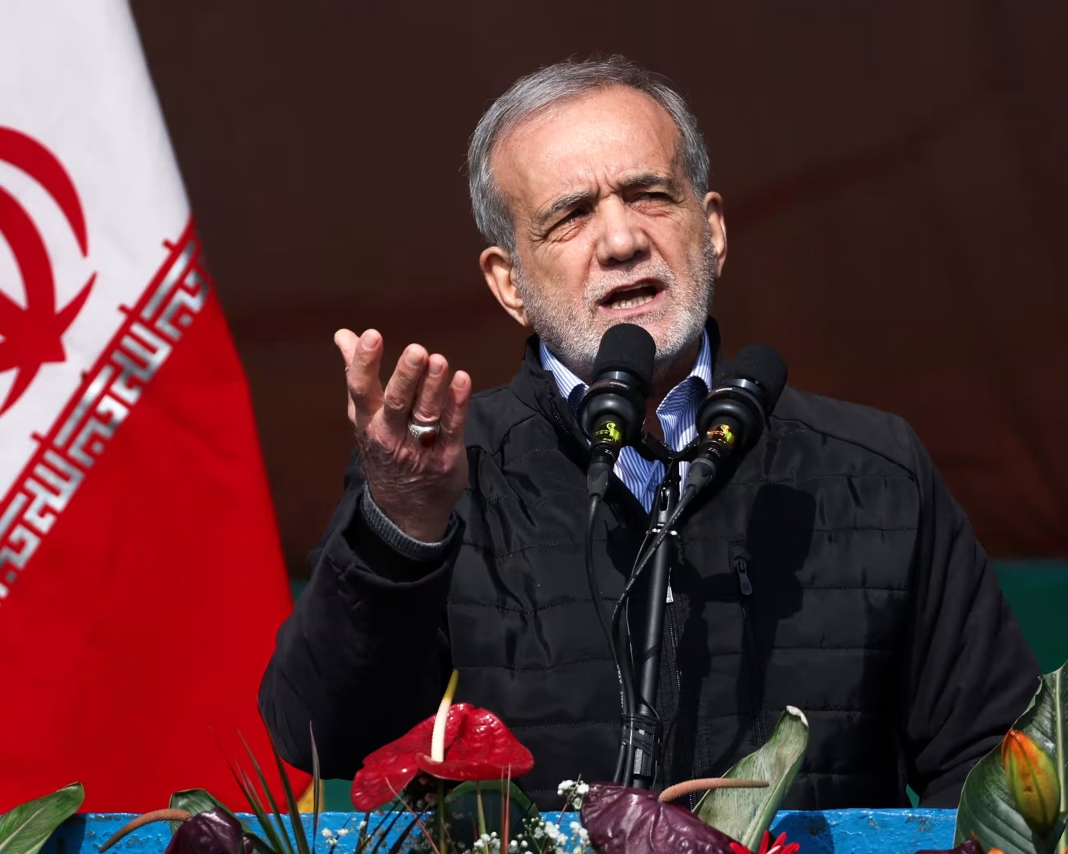

The President of Iran, Masoud Pezeshkian, has informed Emmanuel Macron that trust in the International Atomic Energy Agency (IAEA), the UN nuclear inspectorate, is broken within Iran. This was in response to a statement issued by European nations in support of the inspectorate’s head, Rafael Grossi.
Pezeshkian criticized IAEA Director General Grossi for not condemning Israeli and US attacks, which he said violated the UN charter and the NPT. In contrast, the conservative Iranian newspaper Kayhan suggested Grossi should face trial and death for alleged ties to Mossad if he visited Iran.
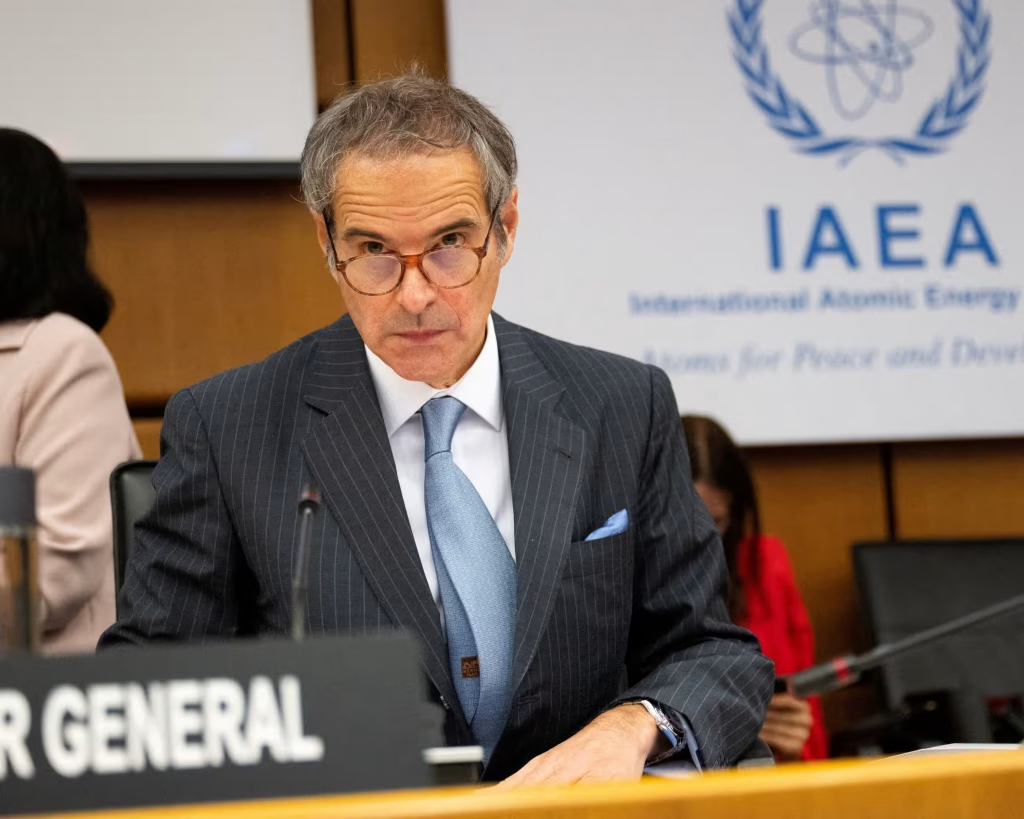
The UK, Germany, and France condemned threats against Grossi in a joint statement on Monday, expressing “our full support to the agency and [Grossi] in carrying out their mandate,” and calling on Iran to cooperate with the AIEA.
“We call on Iranian authorities to refrain from any steps to cease cooperation with the IAEA. We urge Iran to immediately resume full cooperation in line with its legally binding obligations, and to take all necessary steps to ensure the safety and security of IAEA personnel,” the joint statement said.
The perception in Iran of western double standards is contributing to a strong sense of grievance. This has led to Iran’s refusal to allow the IAEA access for an independent assessment of the damage to its nuclear sites, leaving such assessments to highly politicized reports by the U.S.
During the Sunday evening call, Pezeshkian asked the French president how Iran could be assured their facilities wouldn’t be attacked again, even if they cooperated. He also questioned why non-NPT member Israel was allowed to provide evidence for IAEA reports.
Despite reports of potential indirect talks via Oman, Iran’s deputy foreign minister Majid Takht-Ravanchi confirmed no dates have been set. A proposal by U.S. envoy Steve Witkoff suggests allowing Iran to enrich uranium under strict conditions on Kish Island.
During a seminar hosted by the Royal United Services Institute, a UK defense think tank, Nicholas Hopton, a former UK ambassador to Iran, stated that notable damaging impacts had been made on the Iranian regime. Nevertheless, he raised concerns regarding whether Israel had accomplished any of its key objectives, including regime change. He noted that there was minimal evidence of Iran rushing to develop a bomb three weeks ago, and 400 kilograms of highly enriched uranium are now unaccounted for.
“It will be a long time before the IAEA can comment authoritatively on the extent to which Iran’s nuclear programme has even degraded,” Hopton said.
Iranian officials have also reported that during the 12-day air conflict with Israel and the US, there have been a total of 935 Iranian deaths, including 38 children and 132 women.