
Monday, February 16, 2026
39.1 C
Abuja

The PDP, Wike, and the Media 

It was in one of my courses in the master’s degree in journalism program titled: “Media, Democracy and Development,” at Harvard, that I learned that the media significantly influences political communication by media framing and dissemination of narratives concerning key actors and their activities. 

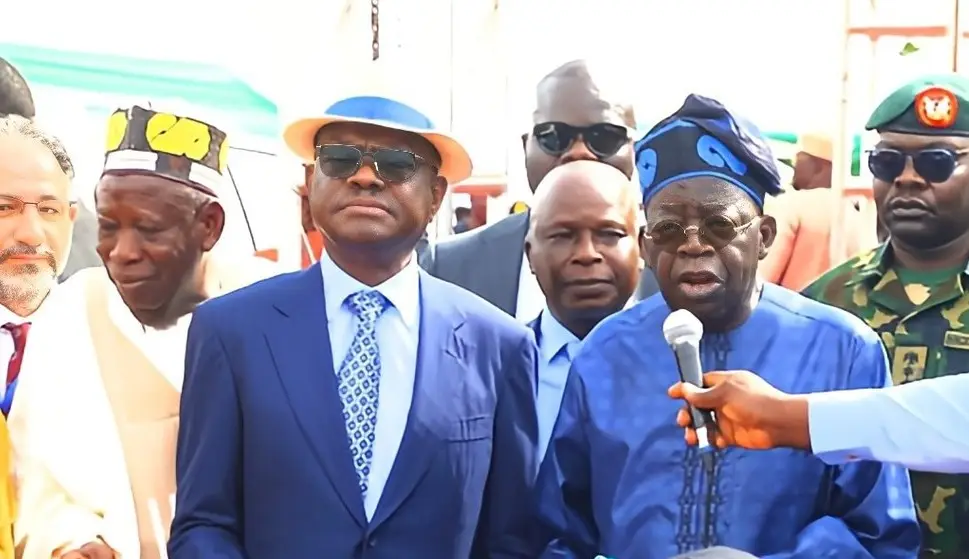
It is in this context that I have fathomed how the Federal Capital Territory (FCT) Minister, Barrister Nyesome Wike, has played a central role in both national and party politics, attracting considerable media scrutiny. I examine here, the relationship between media coverage, Wike’s public statements, and intra-party dynamics within the People’s Democratic Party (PDP), evaluating how media support may affect public perceptions and impact the evolving prospects of the party. 

Wike’s tenure as FCT Minister and his previous role as Governor of Rivers State – including his role under the G-5 during the 2023 presidential electioneering period, have been consistently covered by both traditional and digital media outlets. His outspoken style, willingness to challenge adversaries, and assertive policy positions often command headlines. In many cases, the media’s choice to spotlight Wike’s remarks, especially those critical of political opponents or party rivals, has the effect of increasing their reach and impact.  

The media, functioning as both mirror and megaphone in the political landscape, reflects ongoing power struggles and public sentiments, while also amplifying particular voices and narratives. In our media environment, editorial slants, ownership interests, the brown envelop factor, and audience preferences frequently shape how politicians are portrayed. As a result, politicians like Wike can benefit from sustained media focus, especially when their statements or actions generate controversy or public debate.   

Some media platforms frame Wike’s rhetoric as candid and refreshing, positioning him as a political figure willing to speak uncomfortable truths. Others highlight the divisive or confrontational aspects of his communication, sometimes portraying him as a destabilizing force within the PDP. This duality creates a complex media environment in which narratives about Wike can serve both to bolster his profile and to exacerbate tensions within his party. 

Supportive media coverage can inadvertently validate disparaging remarks or aggressive criticism directed at political adversaries. When platforms, particularly those in bed with the ruling All Progressives Congress (APC), provide extensive airtime to statements that undermine opposition party unity or target specific individuals, the result may be an erosion of internal cohesion. In the case of the PDP, frequent media reporting on internal disagreements, particularly those involving high-profile figures like Wike, can contribute to perceptions of division and crisis, regardless of the underlying realities.  

The power of amplification means that even relatively minor disputes can be magnified into significant narratives. Media commentators, talk shows (especially in the media stable favorable to the APC), and social media influencers often seize on provocative statements, retelling and reframing them for wider audiences. This recursive cycle can shift public attention away from policy debates and toward personality clashes or party infighting. 

Like many large political organizations, the PDP experiences internal dissent and competition for influence. Nevertheless, persistent media focus on internal conflicts or negative statements by party leaders can negatively impact morale, discourage grassroots engagement, and diminish voter confidence. In a period of ongoing political realignment, such coverage may exacerbate divisions within the party and increase the risk of defections or the emergence of factions. 

It is essential to acknowledge that the media is not the sole factor influencing the trajectory of political parties. The decisions and strategies adopted by party leadership, the participation of members at all levels, and wider sociopolitical dynamics also have significant impacts. However, persistent negative media attention, particularly when prominent individuals or political organizations are involved, can introduce additional challenges in restoring public confidence and demonstrating party cohesion. 

Within this context, the interplay among the media, Wike’s public image, and the stability of the PDP demonstrates the significant role of narrative framing and amplification within political discourse. Media involvement, whether deliberate or incidental, has the capacity to shape public opinion, intensify internal conflicts, and affect the prospects of political parties. A comprehensive understanding of these factors is crucial for both political stakeholders and the general public, underscoring the importance of objective reporting and thoughtful engagement with substantive issues instead of focusing on individual personalities. 

Hot this week

President Tinubu Felicitates NNPC Board Chair Musa Kida at 65

President Tinubu Felicitates NNPC Board Chair Musa Kida at 65

We Are Better Together: A Caution to the Advocates of Separation

It must first be clearly stated that the North’s preference for Nigerian unity is not because it is incapable of standing on its own, nor because it is uniquely dependent on the present federal arrangement for its existence. Historically, the North demonstrated a strong capacity for political cohesion and governance under the regional system, where the Caliphate produced the Premier and the Sultanate provided the Governor. With a vast, geographically contiguous landmass, a dominant lingua franca and largely shared religious and cultural frameworks, a substantial part of Northern Nigeria has historically functioned as a coherent political space.

PDP Disputes Ibadan Court, Affirms NWC Validity 

The PDP chairman noted that the Ibadan ruling was only one of several judgments of the Federal High Court on the matter and that the core issues were already before the Court of Appeal. He described the decision as “technically academic” pending an authoritative pronouncement by the appellate court. Turaki reassured party members that the National Working Committee produced by the Ibadan Convention remained “legally intact and firmly in place,” and committed to what he described as the party’s ongoing rebirth.

A Setback for Wike in PDP Crisis 

While the Supreme Court’s earlier intervention briefly revived Anyanwu’s standing, Tuesday’s dismissal signals that legal victories alone may no longer be enough to secure long-term control. The struggle within the PDP is increasingly shifting from courtrooms to internal political negotiations, and in that arena, the momentum appears to be slipping away from the Wike camp.

NNPC Ltd. Debt: FG Forgave Interest, Not Principal, Officials Say 

Fresh details have emerged that challenge the widespread belief that the...

Topics

President Tinubu Felicitates NNPC Board Chair Musa Kida at 65

President Tinubu Felicitates NNPC Board Chair Musa Kida at 65

We Are Better Together: A Caution to the Advocates of Separation

It must first be clearly stated that the North’s preference for Nigerian unity is not because it is incapable of standing on its own, nor because it is uniquely dependent on the present federal arrangement for its existence. Historically, the North demonstrated a strong capacity for political cohesion and governance under the regional system, where the Caliphate produced the Premier and the Sultanate provided the Governor. With a vast, geographically contiguous landmass, a dominant lingua franca and largely shared religious and cultural frameworks, a substantial part of Northern Nigeria has historically functioned as a coherent political space.

PDP Disputes Ibadan Court, Affirms NWC Validity 

The PDP chairman noted that the Ibadan ruling was only one of several judgments of the Federal High Court on the matter and that the core issues were already before the Court of Appeal. He described the decision as “technically academic” pending an authoritative pronouncement by the appellate court. Turaki reassured party members that the National Working Committee produced by the Ibadan Convention remained “legally intact and firmly in place,” and committed to what he described as the party’s ongoing rebirth.

A Setback for Wike in PDP Crisis 

While the Supreme Court’s earlier intervention briefly revived Anyanwu’s standing, Tuesday’s dismissal signals that legal victories alone may no longer be enough to secure long-term control. The struggle within the PDP is increasingly shifting from courtrooms to internal political negotiations, and in that arena, the momentum appears to be slipping away from the Wike camp.

NNPC Ltd. Debt: FG Forgave Interest, Not Principal, Officials Say 

Fresh details have emerged that challenge the widespread belief that the...

No Terrorists Were Killed in U.S. Strike on ‘ISIS’ in Nigeria 

Abu Jabo dismissed reports that terrorists were killed in the strike, stressing that Jabo has no history of insurgency or bandit activity. “There are no terrorists here. There are no Christians here either. Jabo is a peaceful, Muslim community. We do not have security problems,” he added. Local sources also dispute claims that the area harbors ISIS-linked elements, describing Jabo as a quiet farming settlement with no record of extremist activity.

Trump: U.S. Hit Terror Targets in Nigeria 

In a strongly worded statement posted on his verified social media account, Trump said the United States, acting under his direction as Commander-in-Chief, had launched “powerful and deadly” strikes against what he described as ISIS-linked terrorists operating in Northwest Nigeria. He claimed the operation was in response to the killing of Christians and warned of further military action if such attacks continued. 

NNPC Limited: Early Signals from the Kida–Ojulari Era 

As a non-executive chairman with decades of industry experience, Engr. Kida’s influence lies less in operational detail and more in direction-setting and discipline. The reconstituted board signals a renewed emphasis on corporate governance, professionalism and alignment with the spirit of the PIA, that NNPC Limited should operate as a business, not a government department. 
spot_img

Related Articles

Popular Categories

spot_imgspot_img