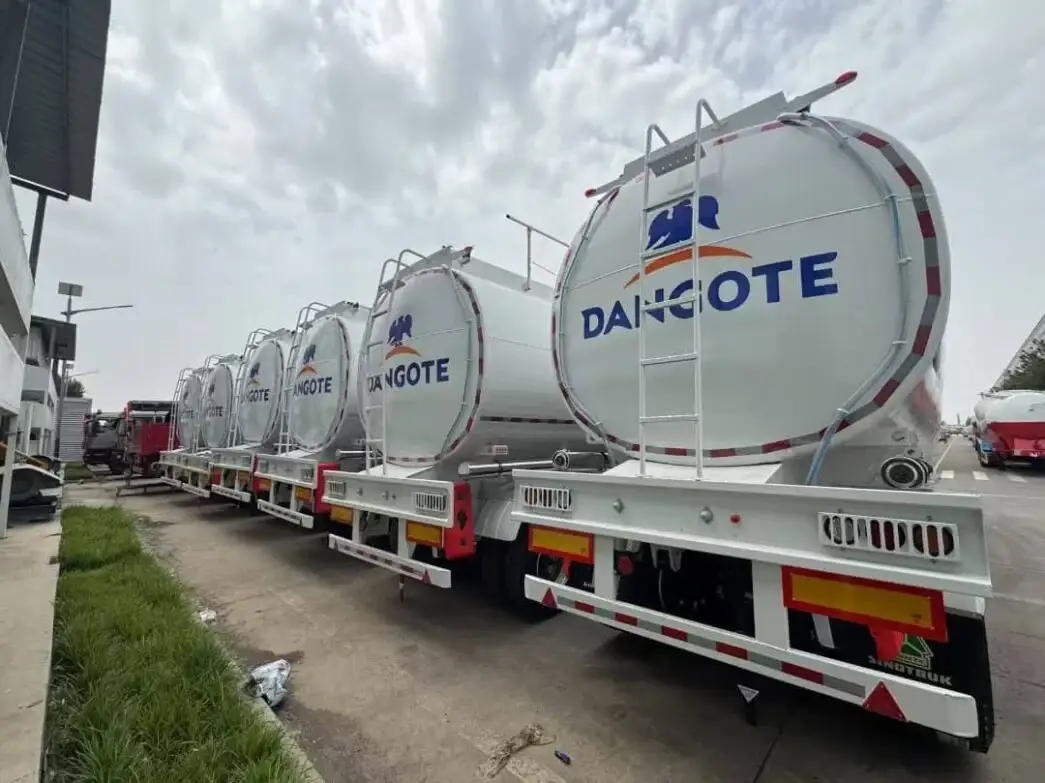

Aliko Dangote, Africa’s leading industrialist, recently acquired 4,000 Compressed Natural Gas (CNG) trucks to facilitate the direct supply of petroleum products from his refinery to filling stations across Nigeria. Dangote’s decision, described as existential for his business, is viewed as a proactive measure to guard against potential supply disruptions. He cited concerns that independent marketers might boycott his products, placing his operations at significant risk if he did not control his logistics chain.
In a move that sparked controversy, Dangote announced that drivers of his new fleet would not be permitted to join the National Union of Petroleum and Natural Gas Workers (NUPENG). Our constitution guarantees that both employers and employees have the right to freedom of association, which allows Dangote to withhold affiliation with the union. Conversely, drivers are also entitled to join a union if they choose, highlighting a legal and ethical dilemma in the current dispute.
Dangote’s refusal to allow NUPENG oversight is rooted in concerns over corporate survival. He argues that the union’s actions could potentially disrupt his operations, a scenario he equates to economic suicide for his refinery and related businesses. Over the years, NUPENG has become known for activities that can impede logistics within the oil industry, wielding significant influence over product movement nationwide.
On the other hand, NUPENG’s opposition to Dangote’s stance is driven by what critics describe as vested interests. For every litre of petroleum loaded at depots nationwide, NUPENG reportedly collects a loading fee of one naira (N1), amounting to billions in revenue each day. Critics claim these funds benefit union leaders rather than rank-and-file members, with scant evidence of union-provided infrastructure or welfare services for drivers.
With Dangote Refinery’s current output at 57 million litres of petrol daily, plus an additional 104 million litres of other petroleum products, the stakes are considerable. If NUPENG loses influence over Dangote’s operations, estimates suggest a daily revenue loss of N4.8 billion for the union—fueling fierce resistance and industrial action threats.
Historically, NUPENG has prevailed in confrontations with both private sector players and government authorities. Only during the late General Sani Abacha’s regime was the union’s power curtailed, when the government temporarily replaced union drivers with military personnel to ensure product delivery.
The ongoing Dangote-NUPENG dispute underscores broader questions regarding the balance between corporate autonomy and union power in Nigeria’s energy sector. As both parties invoke legal rights and economic imperatives, the ultimate outcome carries significant implications for the nation’s fuel distribution and industrial relations climate. However, the question is: what best serves the national interest?
Nuhu Aliyu is a Public Affairs Analyst.