
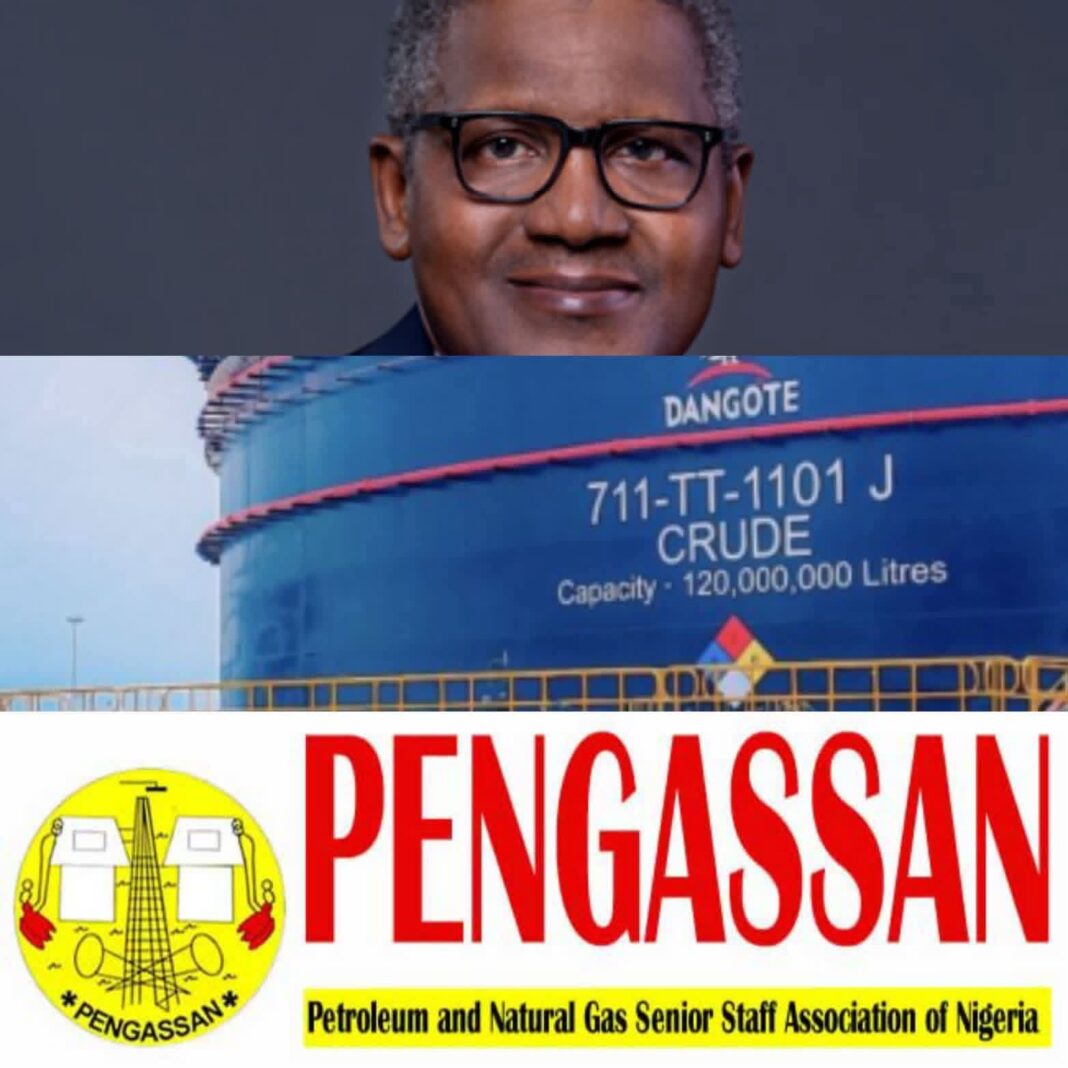

The Petroleum and Natural Gas Senior Staff Association of Nigeria (PENGASSAN) has concluded its recent nationwide strike following a settlement facilitated by the federal government. The industrial action, which was met with limited support among the general public, led to significant criticism directed at PENGASSAN and other related oil and gas trade unions, resulting in challenges for the unions’ continued operations. The strike was initiated in response to the Dangote Refinery’s decision to lay off 800 employees whom PENGASSAN asserted were dismissed due to their union membership, prompting the association to request their reinstatement.
Given PENGASSAN’s history of creating hardship for Nigerians through its strikes, Dangote’s acceptance to reabsorb the sacked staffers into its other companies, notably Dangote Sugar and Dangote Cement, gave PENGASSAN a soft landing to call off the strike.
Going into the genesis of the crisis, Dangote Refinery had, in early September, announced the termination of 800 employees, citing operational restructuring and cost management. PENGASSAN, representing senior staff in the petroleum sector, responded swiftly, demanding the reinstatement of the dismissed workers. The union argued that the layoffs violated labor agreements and threatened the livelihoods of hundreds of families. When negotiations stalled, PENGASSAN called for a nationwide strike with the potential of paralyzing fuel distribution nationwide.
The nationwide strike produced immediate, albeit limited, effects. Fuel shortages emerged in select regions, and the possibility of extended industrial action posed risks to Nigeria’s vulnerable economy. In response, the government encouraged both parties to pursue a resolution. Nevertheless, public sentiment largely opposed the union’s actions due to concerns regarding the potential for widespread economic impact.
Behind closed doors, intense negotiations unfolded. PENGASSAN demanded not just the reinstatement of the laid-off staff but also assurances against future mass terminations. Dangote Group proposed a compromise: while the refinery would not reabsorb the 800 staffers directly, it would offer them positions in other Dangote-owned companies, including Dangote Cement and Dangote Sugar.
This “soft landing” approach provided an alternative to outright reinstatement, enabling affected employees to retain employment—albeit in different sectors. For PENGASSAN, the deal represented an acceptable outcome even though it would lose these 800 members and their monthly dues to the union because it would provide a window to calling off the strike without losing face.
With the agreement finalized, PENGASSAN called off the strike. Fuel supplies gradually resumed in the affected parts of the country, and the country’s oil sector returned to normalcy. The union hailed the outcome as a victory for labor rights, emphasizing the importance of protecting workers in the face of corporate restructuring. Dangote Group, meanwhile, managed to avoid further disruptions that may be caused by the actions of PENGASSAN, now and in the future.