
Monday, February 16, 2026
30 C
Abuja

Impact of Trump’s Tariffs on Global Trade 

Introduction 

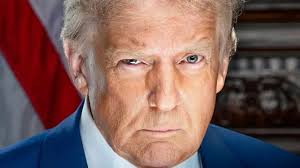
In recent years, the global trade landscape has been significantly influenced by the tariffs imposed by former U.S. President Donald Trump. These measures, aimed at protecting American industries and reducing the trade deficit, have sparked widespread debate and have led to substantial consequences for both the international markets and the domestic economy. This news story delves into the origin, implementation, and aftermath of Trump’s tariffs, providing insights into their diverse impacts. 

Background 

Trump’s tariffs were part of his broader “America First” policy, which focused on reshoring American jobs and reviving the country’s manufacturing sector. The tariffs targeted a range of imported goods, with steel and aluminum being among the most prominent. The decision to impose tariffs was justified on the grounds of national security and the necessity to protect American industries from unfair foreign competition, particularly from China. 

Implementation and Initial Reactions 

The first wave of tariffs was announced in March 2018, with a 25% tariff on steel and a 10% tariff on aluminum imports. The announcement was met with mixed reactions both domestically and internationally. While some American manufacturers and workers welcomed the move, hoping for a resurgence in local production, others raised concerns about the potential for increased production costs and retaliatory measures from trading partners. 

Internationally, key trade allies such as the European Union, Canada, and Mexico expressed their discontent. They argued that the tariffs violated World Trade Organization (WTO) rules and threatened to undermine the global trading system. In response, many of these countries imposed their retaliatory tariffs on American goods, sparking a series of trade disputes. 

Impact on Global Trade 

The tariffs led to disruptions in global supply chains, impacting various industries reliant on steel and aluminum. The automotive sector, for instance, faced increased costs due to the higher prices of raw materials. This, in turn, affected consumer prices and led to tensions between multinational companies and their suppliers. 

China, being one of the primary targets of the tariffs, experienced a significant reduction in its exports to the United States. The trade tensions between the two largest economies in the world escalated into a full-blown trade war, with both countries imposing tariffs on billions of dollars’ worth of each other’s goods. This had a ripple effect on global markets, leading to uncertainties and fluctuations in stock prices. 

Domestic Economic Consequences 

At home, the tariffs had varied impacts on different sectors. While the steel and aluminum industries saw a temporary boost, other sectors were not as fortunate. The agricultural sector, for example, suffered due to retaliatory tariffs from China, which targeted American soybeans, pork, and other agricultural products. Farmers faced decreased demand and lower prices for their produce, leading to financial strain and a call for government aid. 

Additionally, manufacturing sectors that relied on imported components saw their costs rise. This increased the prices of finished goods, leading to higher costs for consumers and businesses. Small and medium-sized enterprises, in particular, struggled to absorb these increased costs, leading to concerns about their long-term viability. 

Political Ramifications 

Trump’s tariffs also had substantial political implications. They became a focal point in the debate over trade policy, with proponents arguing that they were necessary to protect American jobs and industries. Critics, on the other hand, contended that the tariffs were a blunt instrument that ultimately harmed American consumers and businesses. 

The tariffs also played a role in the 2020 presidential election, with trade policy emerging as a key issue. President Joe Biden, who succeeded Trump, faced the challenge of navigating the complex terrain of trade relations and determining the future of the tariffs. While some tariffs have been rolled back, others remain in place as part of ongoing negotiations and strategic considerations. 

Conclusion 

Trump’s tariffs have left a lasting mark on global trade and the U.S. economy. While they aimed to protect American industries and reduce the trade deficit, their implementation led to a series of economic and political consequences. The tariffs disrupted global supply chains, strained international relationships, and had mixed effects on the domestic economy. 

As the world continues to grapple with the aftermath of these measures, the debate over the role of tariffs in modern trade policy remains ongoing. Policymakers and stakeholders must carefully consider the lessons learned from this period and strive to strike a balance between protecting national interests and fostering a healthy, cooperative global trading environment. 

Hot this week

President Tinubu Felicitates NNPC Board Chair Musa Kida at 65

President Tinubu Felicitates NNPC Board Chair Musa Kida at 65

We Are Better Together: A Caution to the Advocates of Separation

It must first be clearly stated that the North’s preference for Nigerian unity is not because it is incapable of standing on its own, nor because it is uniquely dependent on the present federal arrangement for its existence. Historically, the North demonstrated a strong capacity for political cohesion and governance under the regional system, where the Caliphate produced the Premier and the Sultanate provided the Governor. With a vast, geographically contiguous landmass, a dominant lingua franca and largely shared religious and cultural frameworks, a substantial part of Northern Nigeria has historically functioned as a coherent political space.

PDP Disputes Ibadan Court, Affirms NWC Validity 

The PDP chairman noted that the Ibadan ruling was only one of several judgments of the Federal High Court on the matter and that the core issues were already before the Court of Appeal. He described the decision as “technically academic” pending an authoritative pronouncement by the appellate court. Turaki reassured party members that the National Working Committee produced by the Ibadan Convention remained “legally intact and firmly in place,” and committed to what he described as the party’s ongoing rebirth.

A Setback for Wike in PDP Crisis 

While the Supreme Court’s earlier intervention briefly revived Anyanwu’s standing, Tuesday’s dismissal signals that legal victories alone may no longer be enough to secure long-term control. The struggle within the PDP is increasingly shifting from courtrooms to internal political negotiations, and in that arena, the momentum appears to be slipping away from the Wike camp.

NNPC Ltd. Debt: FG Forgave Interest, Not Principal, Officials Say 

Fresh details have emerged that challenge the widespread belief that the...

Topics

President Tinubu Felicitates NNPC Board Chair Musa Kida at 65

President Tinubu Felicitates NNPC Board Chair Musa Kida at 65

We Are Better Together: A Caution to the Advocates of Separation

It must first be clearly stated that the North’s preference for Nigerian unity is not because it is incapable of standing on its own, nor because it is uniquely dependent on the present federal arrangement for its existence. Historically, the North demonstrated a strong capacity for political cohesion and governance under the regional system, where the Caliphate produced the Premier and the Sultanate provided the Governor. With a vast, geographically contiguous landmass, a dominant lingua franca and largely shared religious and cultural frameworks, a substantial part of Northern Nigeria has historically functioned as a coherent political space.

PDP Disputes Ibadan Court, Affirms NWC Validity 

The PDP chairman noted that the Ibadan ruling was only one of several judgments of the Federal High Court on the matter and that the core issues were already before the Court of Appeal. He described the decision as “technically academic” pending an authoritative pronouncement by the appellate court. Turaki reassured party members that the National Working Committee produced by the Ibadan Convention remained “legally intact and firmly in place,” and committed to what he described as the party’s ongoing rebirth.

A Setback for Wike in PDP Crisis 

While the Supreme Court’s earlier intervention briefly revived Anyanwu’s standing, Tuesday’s dismissal signals that legal victories alone may no longer be enough to secure long-term control. The struggle within the PDP is increasingly shifting from courtrooms to internal political negotiations, and in that arena, the momentum appears to be slipping away from the Wike camp.

NNPC Ltd. Debt: FG Forgave Interest, Not Principal, Officials Say 

Fresh details have emerged that challenge the widespread belief that the...

No Terrorists Were Killed in U.S. Strike on ‘ISIS’ in Nigeria 

Abu Jabo dismissed reports that terrorists were killed in the strike, stressing that Jabo has no history of insurgency or bandit activity. “There are no terrorists here. There are no Christians here either. Jabo is a peaceful, Muslim community. We do not have security problems,” he added. Local sources also dispute claims that the area harbors ISIS-linked elements, describing Jabo as a quiet farming settlement with no record of extremist activity.

Trump: U.S. Hit Terror Targets in Nigeria 

In a strongly worded statement posted on his verified social media account, Trump said the United States, acting under his direction as Commander-in-Chief, had launched “powerful and deadly” strikes against what he described as ISIS-linked terrorists operating in Northwest Nigeria. He claimed the operation was in response to the killing of Christians and warned of further military action if such attacks continued. 

NNPC Limited: Early Signals from the Kida–Ojulari Era 

As a non-executive chairman with decades of industry experience, Engr. Kida’s influence lies less in operational detail and more in direction-setting and discipline. The reconstituted board signals a renewed emphasis on corporate governance, professionalism and alignment with the spirit of the PIA, that NNPC Limited should operate as a business, not a government department. 
spot_img

Related Articles

Popular Categories

spot_imgspot_img