
Tehran Reopens Missile Museum, Showcasing Iran’s Growing Military Strength

The outskirts of Tehran saw the reopening this week of the National Aerospace Park, a sprawling exhibition space locals have nicknamed the “missile museum.” More than a mere display of military technology, the facility serves as a public testament to the Islamic Republic’s resolve in the face of a tumultuous year marked by attacks from Israel and the United States.

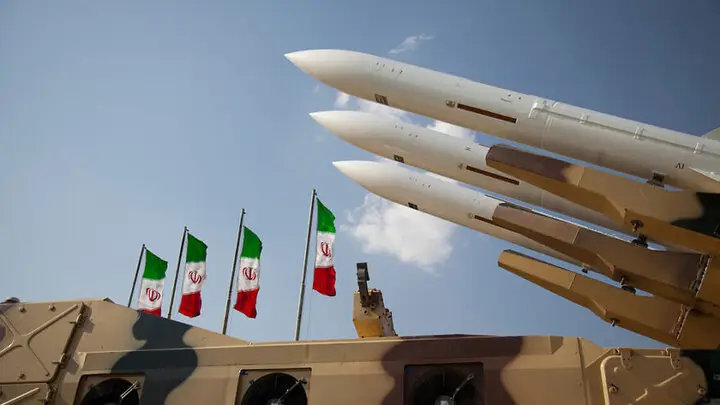
Visitors to the museum are offered an up-close look at the formidable arsenal of missiles and drones developed by the Islamic Revolutionary Guard Corps (IRGC), the country’s most powerful military force. Among the exhibits, citizens can pose for photos in front of truck-mounted missile launchers, gaze at floor-to-ceiling rockets, and even inscribe their own messages on replicas—some expressing strong anti-American sentiments.

“This place is a symbol of believing in ourselves, a place that says we can,” said IRGC Maj. Gen. Ali Balali, the museum’s director, in an interview with NBC News. “Most of the missiles here were used in the recent war, and these aren’t even our latest.” He emphasized the domestic origin of all displayed missiles, underscoring Iran’s determination to continue its weapons program regardless of international pressure. “Even if they surround our country with cement and barbed wire, we will still build,” Balali added.

Amidst rising tension, Iranian officials have been increasingly vocal about the nation’s military capabilities. This is following vulnerabilities exposed during a 12-day conflict with Israel this summer, which included U.S. strikes on Iranian nuclear facilities. The sense that renewed conflict may be imminent is palpable among museum visitors and staff alike.

The ballistic missile program, declared “nonnegotiable” by Supreme Leader Ayatollah Ali Khamenei, remains a key sticking point in diplomatic efforts with the United States over Iran’s disputed nuclear ambitions.

Founded in 2020 by IRGC Gen. Amir Ali Hajizadeh—himself killed in an Israeli strike earlier this year—the museum pays homage to prominent figures in Iran’s “axis of resistance.” Life-size cutouts of Gen. Qassem Soleimani, slain by a U.S. drone strike in 2020, and Yahya Sinwar, the Hamas leader killed by Israel in Gaza in 2024, greet visitors at the entrance.

The museum’s first exhibits feature missiles like the Fattah, which the IRGC claims can penetrate Israel’s Iron Dome defense system and boasts a range of approximately 870 miles. Iran’s missile and drone arsenal was on full display during last summer’s attacks on Israel, when hundreds of projectiles were launched, resulting in the deaths of at least 29 Israelis and more than 1,000 Iranians.

This week, as part of “Aerospace Week,” the museum hosted a public test of a Shahed stealth drone engine, as reported by the Mehr news agency. While these drones are best known for their deployment by Russian forces in Ukraine, Iranian officials say they will play a central role in any future conflict involving Iran.

Also on display, are drones purportedly belonging to Israel and the U.S., which the IRGC claims to have captured and reverse-engineered. Visitors entering this section step over painted Israeli and American flags, a symbolic gesture reflecting ongoing hostilities.

Like many museums, the Aerospace Park includes a gift shop, selling miniature models of drones and missiles. A sign beside a hypersonic missile replica reads, “7 Minutes to Tel Aviv,” highlighting Iran’s ambitions and capabilities.

The exhibition offers Iranians who support the government an opportunity to take pride in their country’s military achievements, especially in light of recent conflicts that exposed defensive weaknesses. Ayat, a Basij militia member, summed up the sentiment: “After the 12-day war, we realized our strength. The world also recognized it. We come here with our Basij group often to see this power.”

For some, the museum is more than a showcase—it’s a site of reverence. Hussein, a university student, reflected, “It’s a pity this place isn’t always open. For us, it’s like visiting a holy shrine,” he told NBC News.


Hot this week

What They Never Told You: Ayatollah Khomeini Was a Great Jurist, Not a Fanatic

The West gave Iran a name — theocracy — and buried the reality beneath it. They never told you that Khomeini spent decades mastering one of the most rigorous legal traditions in human history, or that he built a constitutional republic ratified by 98 percent of the Iranian people in a free referendum. A nation of fanatics can be bombed with a clear conscience. A constitutional republic of 93 million people, founded by a supremely gifted jurist, is harder to dispose of.

‘We Won’t Be Silenced’: ADC Rejects Court-Ordered Deregistration

Abdullahi said: We did not expect the level of judicial rascality that was demonstrated. When a Court of Appeal says stay proceedings until October 27 and a lower court goes ahead to deliver judgment on the same matter, it is bizarre and dangerous."

Sheikh Gumi and the Case for Dialogue

It is against this background that I offer my views on the issues of banditry and kidnappings, particularly in northern Nigeria. My perspective is informed by knowledge acquired during my graduate studies at the Fletcher School of Law and Diplomacy, Tufts University, in the United States. Two courses, in particular, shaped my understanding of conflicts and their resolution. The first was International Security Studies, taught by Professor Richard Shultz, a consultant to the Pentagon. The second was International Negotiation, taught by Professor Diana Chigas, a member of the team that helped negotiate the end of apartheid in South Africa.

June 12: Democracy’s Sacred Mandate and Nigeria’s Unfinished Journey

Democracy has delivered some notable gains. The country has witnessed peaceful transfers of power, expanded political participation, a more vibrant media landscape, and greater civic engagement. These achievements should not be dismissed. They are evidence that democratic governance, despite its imperfections, remains preferable to military rule. However, democracy cannot survive on political rituals alone. For millions of Nigerians battling insecurity, unemployment, poverty, inflation, and inadequate infrastructure, democracy must mean more than periodic elections.

Atiku Picks Amaechi as Running Mate in Strategic Move

In a move that could significantly reshape Nigeria's political landscape ahead of the next presidential election, the presidential candidate of the African Democratic Congress (ADC), Alhaji Atiku Abubakar, has nominated former Minister of Transportation, Chief Chibuike Rotimi Amaechi, as his running mate.

Topics

What They Never Told You: Ayatollah Khomeini Was a Great Jurist, Not a Fanatic

The West gave Iran a name — theocracy — and buried the reality beneath it. They never told you that Khomeini spent decades mastering one of the most rigorous legal traditions in human history, or that he built a constitutional republic ratified by 98 percent of the Iranian people in a free referendum. A nation of fanatics can be bombed with a clear conscience. A constitutional republic of 93 million people, founded by a supremely gifted jurist, is harder to dispose of.

‘We Won’t Be Silenced’: ADC Rejects Court-Ordered Deregistration

Abdullahi said: We did not expect the level of judicial rascality that was demonstrated. When a Court of Appeal says stay proceedings until October 27 and a lower court goes ahead to deliver judgment on the same matter, it is bizarre and dangerous."

Sheikh Gumi and the Case for Dialogue

It is against this background that I offer my views on the issues of banditry and kidnappings, particularly in northern Nigeria. My perspective is informed by knowledge acquired during my graduate studies at the Fletcher School of Law and Diplomacy, Tufts University, in the United States. Two courses, in particular, shaped my understanding of conflicts and their resolution. The first was International Security Studies, taught by Professor Richard Shultz, a consultant to the Pentagon. The second was International Negotiation, taught by Professor Diana Chigas, a member of the team that helped negotiate the end of apartheid in South Africa.

June 12: Democracy’s Sacred Mandate and Nigeria’s Unfinished Journey

Democracy has delivered some notable gains. The country has witnessed peaceful transfers of power, expanded political participation, a more vibrant media landscape, and greater civic engagement. These achievements should not be dismissed. They are evidence that democratic governance, despite its imperfections, remains preferable to military rule. However, democracy cannot survive on political rituals alone. For millions of Nigerians battling insecurity, unemployment, poverty, inflation, and inadequate infrastructure, democracy must mean more than periodic elections.

Atiku Picks Amaechi as Running Mate in Strategic Move

In a move that could significantly reshape Nigeria's political landscape ahead of the next presidential election, the presidential candidate of the African Democratic Congress (ADC), Alhaji Atiku Abubakar, has nominated former Minister of Transportation, Chief Chibuike Rotimi Amaechi, as his running mate.

Three Killed as Gunmen Raid Kogi School

The Kogi State Police Command said the attackers arrived in large numbers, travelling on about 40 motorcycles, and targeted the school and nearby surroundings in what authorities believe may have been an attempt to carry out kidnappings.

Kwankwaso Weighs NDC Exit as Candidate Purge Deepens Party Crisis

Amid the growing controversy, there is a call urging Kwankwaso to leave the NDC if he believes he is being unfairly treated by the party leadership. Supporters of Kwankwaso say he should pursue his political ambitions on another platform if he feels constrained, marginalized, or denied a fair role within the party.

Sheikh Gumi: An Asset Nigeria Should Not Ignore

For many years, Gumi has attracted criticism because of his contacts with bandits. Some commentators have accused him of being too sympathetic to them. Others have questioned why he meets with them in their forest hideouts. But instead of seeing him as part of the problem, Nigerians should ask whether he can be part of the solution.
spot_img

Related Articles

Popular Categories

spot_imgspot_img