

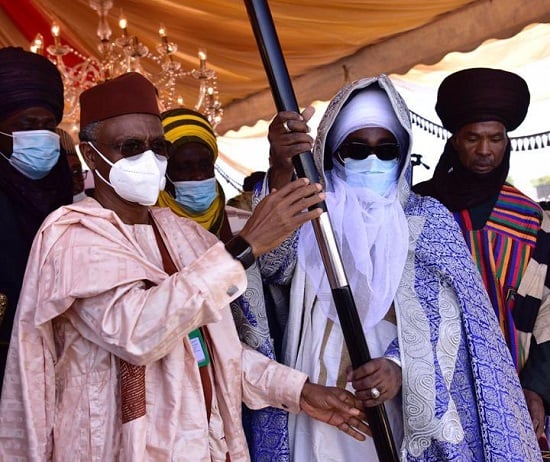

In a constitutional democracy where traditions and modern governance must harmonize, the 2020 succession crisis in Zazzau Emirate stands as a devastating example of how political power can hijack heritage. With the recent petition by the deposed Wazirin Zazzau, Ibrahim Aminu, now before the Kaduna State House of Assembly—a matter pending before the Supreme Court—it is imperative that legislative bodies across the federation take note. What is at stake is not merely the fate of a royal stool, but the soul of our traditional institutions, which have become vulnerable to the reckless ambitions of transient political actors.
Following the death of Emir Shehu Idris in 2020, the Zazzau Kingmakers, led by the then Waziri undertook a meticulous process, guided by native customs, Islamic tenets, and the Chiefs [Appointment and Deposition] Law of Kaduna State. Eleven princes contested. Each candidate was evaluated against stringent criteria: royal lineage, educational background, religious standing, moral record, administrative experience, and community service.
Iyan Zazzau Bashari Aminu, secured the majority vote of the kingmakers (3 out of 5). The runners-up were the then Yariman Zazzau, Muhammad Munir Ja’afaru, and Turakin Zazzau, Aminu Shehu Idris, each with one vote. Ahmad Nuhu Bamalli, the eventual appointee, received no vote. He failed to meet the minimum requirement of having served as a District or Village Head within the Emirate—an essential qualification long upheld in Zazzau’s succession norms. By all logic, law, and tradition, he was not eligible.
Yet, under the shadow of night and in utter contempt for tradition, then-Governor Nasir El-Rufai imposed his will. Upon receiving the report from the kingmakers, the governor, enraged that his favored candidate had not been shortlisted, summoned the Kingmakers to the Government House and demanded a reversal. When they refused—standing firm on their oath and ancestral integrity—he sidestepped them and unilaterally appointed Bamalli.
This is not just executive overreach. It is cultural desecration. It is political banditry against an institution that predates the Nigerian state itself.
The implications of El-Rufai’s action go beyond Zaria. This crisis is a cautionary tale for every emirate, every traditional stool, and every cultural custodian across Nigeria. When governors can dismiss kingmakers like clerks, nullify sacred processes like mere bureaucracy, and substitute the voice of tradition with the noise of ambition, then no throne is safe, no culture sacred, and no institution immune.
This warning is even more urgent today, as we witness a similar storm gathering in Kano. The recent attempt to dethrone Emir Aminu Ado Bayero has raised deep constitutional and moral questions. Just as El-Rufai bypassed process to impose his will, the current political elite in Kano appears to be using the law as a tool for vendetta—undoing a lawful emirship on the altar of political realignment. In Zaria, the kingmakers were ignored; in Kano, the law is being retrofitted. In both cases, tradition has become the casualty of political ambition.
Let it be stated clearly: the removal of Emir Aminu Ado Bayero is not only injudicious—it is destabilizing. The office of the Emir is not a prize to be passed between governors; it is a sacred covenant between the crown and the community. To unseat a sitting Emir for no reason other than political convenience is a grievous affront to both law and legacy.
We cannot protest Zazzau and ignore Kano. The principle must be consistent. The politicization of traditional institutions—whether through imposition or dethronement—must be rejected in all its forms.
The Kaduna House of Assembly now has the rare opportunity to restore dignity to the emirate and sanity to the system. The petition by the former Waziri is not an act of rebellion; it is an act of restitution. He has called for justice—not vengeance. He is not asking for political favor but for traditional order to be restored. His demands are modest yet principled: reverse the appointment of the imposed Emir, reinstate the legitimate process, restore the Waziri’s wrongfully revoked title and position, and respect the customs that have guided the emirate for centuries.
What El-Rufai did in 2020 was not just a political miscalculation. It was a deliberate assault on Zazzau’s heritage, a manipulation of process to reward loyalty over legitimacy. It must be condemned unequivocally by all who believe in the rule of law and the sanctity of traditional institutions. His preference for Bamalli may have stemmed from political convenience or private alignment—but a governor has no right to substitute meritocracy and tradition with mediocrity and banditry.
We must reject the precedent that has been set. The Emirate is not a political appointment; it is a sacred trust passed down generations, with rituals, checks, and spiritual significance. To violate it is to imperil the soul, identity and historical consequence of the people it serves.
It is incumbent upon all Houses of Assembly across Northern Nigeria to consider motions in solidarity. Let them send a message that traditional councils are not extensions of state bureaucracy, but independent repositories of community identity and moral authority. Let this be a turning point in the protection of cultural heritage from political vandalism.
The Supreme Court, when it eventually rules, must treat this not just as an administrative dispute but as a constitutional question of federalism and traditional autonomy. In the meantime, the Kaduna State Assembly must act decisively to halt the continuing erosion of public confidence and historical dignity.
This is not about restoring a man; it is about restoring a principle. If we do not stop the politicization of our traditional institutions today, our children will inherit a Nigeria where governors anoint Emirs, not customs. Where laws bow to preferences. And where tradition and history become a footnote to power.
Muhammad DanAsabe Umar can be reached at abulfaidx@gmail.com