

Fuel Distribution: Is NUPENG a National Security Threat? 

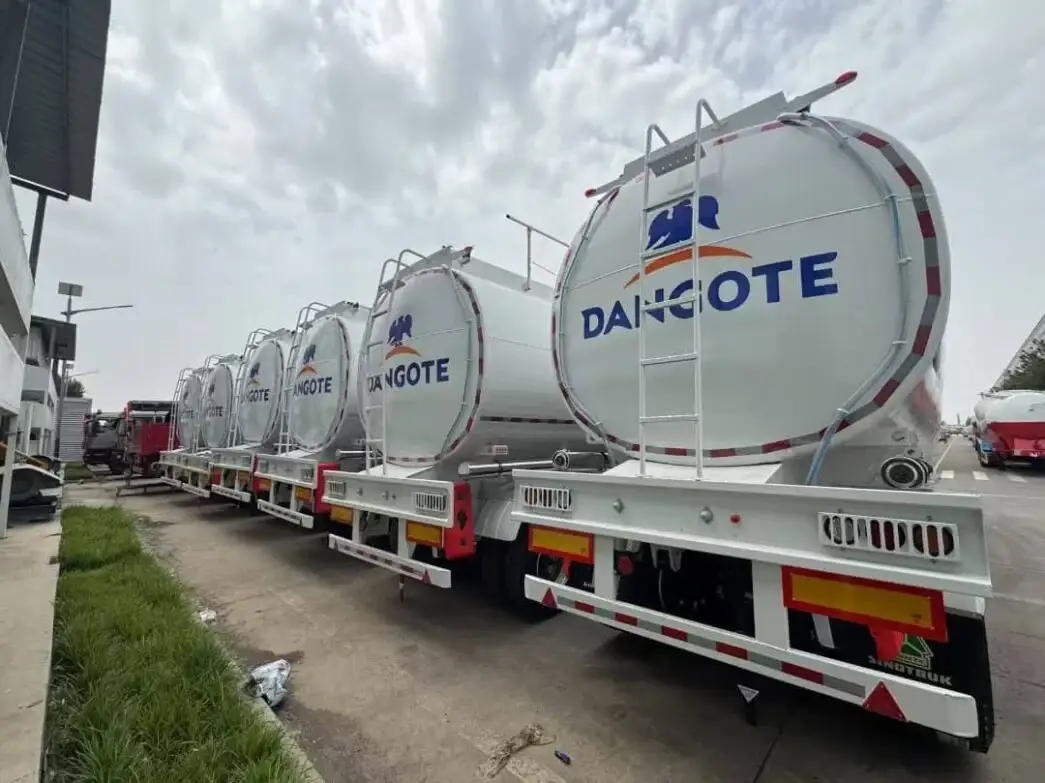
Aliko Dangote, Africa’s leading industrialist, recently acquired 4,000 Compressed Natural Gas (CNG) trucks to facilitate the direct supply of petroleum products from his refinery to filling stations across Nigeria. Dangote’s decision, described as existential for his business, is viewed as a proactive measure to guard against potential supply disruptions. He cited concerns that independent marketers might boycott his products, placing his operations at significant risk if he did not control his logistics chain. 

In a move that sparked controversy, Dangote announced that drivers of his new fleet would not be permitted to join the National Union of Petroleum and Natural Gas Workers (NUPENG). Our constitution guarantees that both employers and employees have the right to freedom of association, which allows Dangote to withhold affiliation with the union. Conversely, drivers are also entitled to join a union if they choose, highlighting a legal and ethical dilemma in the current dispute. 

Dangote’s refusal to allow NUPENG oversight is rooted in concerns over corporate survival. He argues that the union’s actions could potentially disrupt his operations, a scenario he equates to economic suicide for his refinery and related businesses. Over the years, NUPENG has become known for activities that can impede logistics within the oil industry, wielding significant influence over product movement nationwide. 

On the other hand, NUPENG’s opposition to Dangote’s stance is driven by what critics describe as vested interests. For every litre of petroleum loaded at depots nationwide, NUPENG reportedly collects a loading fee of one naira (N1), amounting to billions in revenue each day. Critics claim these funds benefit union leaders rather than rank-and-file members, with scant evidence of union-provided infrastructure or welfare services for drivers. 

With Dangote Refinery’s current output at 57 million litres of petrol daily, plus an additional 104 million litres of other petroleum products, the stakes are considerable. If NUPENG loses influence over Dangote’s operations, estimates suggest a daily revenue loss of N4.8 billion for the union—fueling fierce resistance and industrial action threats. 

Historically, NUPENG has prevailed in confrontations with both private sector players and government authorities. Only during the late General Sani Abacha’s regime was the union’s power curtailed, when the government temporarily replaced union drivers with military personnel to ensure product delivery. 

The ongoing Dangote-NUPENG dispute underscores broader questions regarding the balance between corporate autonomy and union power in Nigeria’s energy sector. As both parties invoke legal rights and economic imperatives, the ultimate outcome carries significant implications for the nation’s fuel distribution and industrial relations climate. However, the question is: what best serves the national interest?

Nuhu Aliyu is a Public Affairs Analyst. 

Hot this week

What They Never Told You: Ayatollah Khomeini Was a Great Jurist, Not a Fanatic

The West gave Iran a name — theocracy — and buried the reality beneath it. They never told you that Khomeini spent decades mastering one of the most rigorous legal traditions in human history, or that he built a constitutional republic ratified by 98 percent of the Iranian people in a free referendum. A nation of fanatics can be bombed with a clear conscience. A constitutional republic of 93 million people, founded by a supremely gifted jurist, is harder to dispose of.

‘We Won’t Be Silenced’: ADC Rejects Court-Ordered Deregistration

Abdullahi said: We did not expect the level of judicial rascality that was demonstrated. When a Court of Appeal says stay proceedings until October 27 and a lower court goes ahead to deliver judgment on the same matter, it is bizarre and dangerous."

Sheikh Gumi and the Case for Dialogue

It is against this background that I offer my views on the issues of banditry and kidnappings, particularly in northern Nigeria. My perspective is informed by knowledge acquired during my graduate studies at the Fletcher School of Law and Diplomacy, Tufts University, in the United States. Two courses, in particular, shaped my understanding of conflicts and their resolution. The first was International Security Studies, taught by Professor Richard Shultz, a consultant to the Pentagon. The second was International Negotiation, taught by Professor Diana Chigas, a member of the team that helped negotiate the end of apartheid in South Africa.

June 12: Democracy’s Sacred Mandate and Nigeria’s Unfinished Journey

Democracy has delivered some notable gains. The country has witnessed peaceful transfers of power, expanded political participation, a more vibrant media landscape, and greater civic engagement. These achievements should not be dismissed. They are evidence that democratic governance, despite its imperfections, remains preferable to military rule. However, democracy cannot survive on political rituals alone. For millions of Nigerians battling insecurity, unemployment, poverty, inflation, and inadequate infrastructure, democracy must mean more than periodic elections.

Atiku Picks Amaechi as Running Mate in Strategic Move

In a move that could significantly reshape Nigeria's political landscape ahead of the next presidential election, the presidential candidate of the African Democratic Congress (ADC), Alhaji Atiku Abubakar, has nominated former Minister of Transportation, Chief Chibuike Rotimi Amaechi, as his running mate.

Topics

What They Never Told You: Ayatollah Khomeini Was a Great Jurist, Not a Fanatic

The West gave Iran a name — theocracy — and buried the reality beneath it. They never told you that Khomeini spent decades mastering one of the most rigorous legal traditions in human history, or that he built a constitutional republic ratified by 98 percent of the Iranian people in a free referendum. A nation of fanatics can be bombed with a clear conscience. A constitutional republic of 93 million people, founded by a supremely gifted jurist, is harder to dispose of.

‘We Won’t Be Silenced’: ADC Rejects Court-Ordered Deregistration

Abdullahi said: We did not expect the level of judicial rascality that was demonstrated. When a Court of Appeal says stay proceedings until October 27 and a lower court goes ahead to deliver judgment on the same matter, it is bizarre and dangerous."

Sheikh Gumi and the Case for Dialogue

It is against this background that I offer my views on the issues of banditry and kidnappings, particularly in northern Nigeria. My perspective is informed by knowledge acquired during my graduate studies at the Fletcher School of Law and Diplomacy, Tufts University, in the United States. Two courses, in particular, shaped my understanding of conflicts and their resolution. The first was International Security Studies, taught by Professor Richard Shultz, a consultant to the Pentagon. The second was International Negotiation, taught by Professor Diana Chigas, a member of the team that helped negotiate the end of apartheid in South Africa.

June 12: Democracy’s Sacred Mandate and Nigeria’s Unfinished Journey

Democracy has delivered some notable gains. The country has witnessed peaceful transfers of power, expanded political participation, a more vibrant media landscape, and greater civic engagement. These achievements should not be dismissed. They are evidence that democratic governance, despite its imperfections, remains preferable to military rule. However, democracy cannot survive on political rituals alone. For millions of Nigerians battling insecurity, unemployment, poverty, inflation, and inadequate infrastructure, democracy must mean more than periodic elections.

Atiku Picks Amaechi as Running Mate in Strategic Move

In a move that could significantly reshape Nigeria's political landscape ahead of the next presidential election, the presidential candidate of the African Democratic Congress (ADC), Alhaji Atiku Abubakar, has nominated former Minister of Transportation, Chief Chibuike Rotimi Amaechi, as his running mate.

Three Killed as Gunmen Raid Kogi School

The Kogi State Police Command said the attackers arrived in large numbers, travelling on about 40 motorcycles, and targeted the school and nearby surroundings in what authorities believe may have been an attempt to carry out kidnappings.

Kwankwaso Weighs NDC Exit as Candidate Purge Deepens Party Crisis

Amid the growing controversy, there is a call urging Kwankwaso to leave the NDC if he believes he is being unfairly treated by the party leadership. Supporters of Kwankwaso say he should pursue his political ambitions on another platform if he feels constrained, marginalized, or denied a fair role within the party.

Sheikh Gumi: An Asset Nigeria Should Not Ignore

For many years, Gumi has attracted criticism because of his contacts with bandits. Some commentators have accused him of being too sympathetic to them. Others have questioned why he meets with them in their forest hideouts. But instead of seeing him as part of the problem, Nigerians should ask whether he can be part of the solution.
spot_img

Related Articles

Popular Categories

spot_imgspot_img