
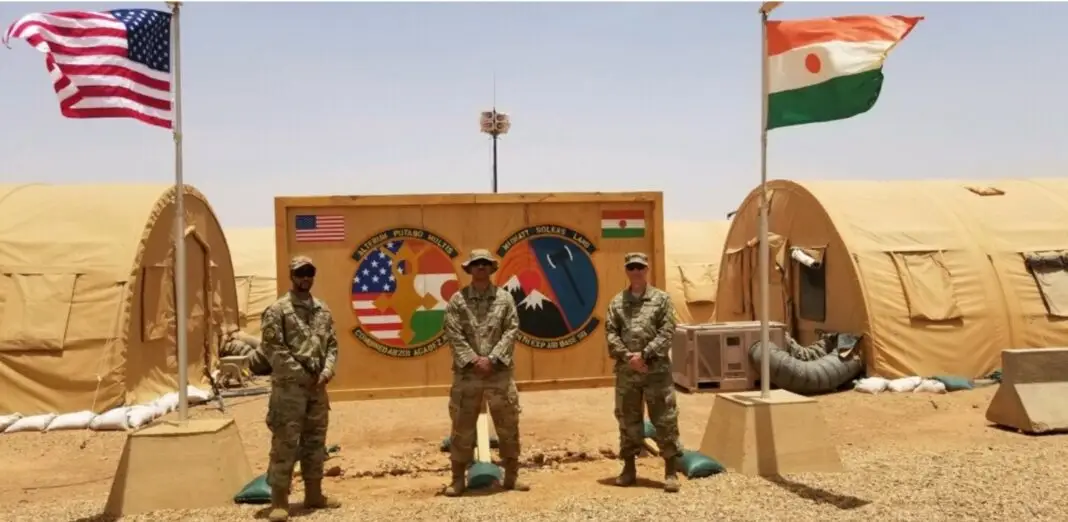

Conservative commentator Walid Phares has urged the Trump administration to consider the immediate establishment of a U.S. emergency base in Nigeria and to weigh the possibility of targeted military strikes. Phares, a former advisor to the 2016 Trump presidential campaign, shared his recommendations on social media, emphasizing that a base in Port Harcourt—the principal port city of the Biafra region—would serve as a critical hub for deterring violence and delivering rapid humanitarian aid to affected communities.
Phares emphasized the urgency of the situation, citing ongoing massacres of Christian communities and threats against moderate Muslims in Nigeria. He argued that the creation of an emergency base would not only enable swift deployment of international humanitarian aid but also facilitate targeted assistance from American churches and organizations. Such a move, he contends, would help protect vulnerable populations and bolster the international response to the crisis.
According to Phares, President Donald Trump has already issued two strong statements condemning recent jihadist attacks on Nigerian Christian communities. The president has reportedly directed the Secretary of War to prepare contingency plans to protect affected communities, particularly in the event that the Nigerian federal government fails to address the ongoing violence—a scenario Phares notes has persisted for years in the country’s northern and central regions.
In addition to humanitarian support and contingency planning, Phares suggested that the Trump administration consider targeted military strikes against jihadist forces as a means to deter further attacks. While it is unclear whether such action is imminent, the proposal reflects growing frustration among U.S. conservatives over the continued instability and violence in Nigeria.
Phares directed his message to several key U.S. officials and agencies, including President Trump, Vice President JD Vance, Senator Marco Rubio, the Secretary of War, and leaders at U.S. Africa Command, signaling a desire for coordinated, high-level engagement on the issue. He also highlighted the role of American churches in providing humanitarian aid, underscoring the multi-faceted approach he believes is necessary to address the crisis.
As the situation in Nigeria remains volatile, Phares’s recommendations add to the ongoing debate over the appropriate level of U.S. involvement in combating extremist violence and supporting at-risk communities abroad.
However, commenting on Phares’ tweet, Jane Duru, a Nigerian software developer based in Portugal wrote, “This talk about a ‘US emergency base in Port Harcourt’ isn’t about humanitarian aid. It’s about oil, geopolitical control, and strategic positioning.
“Port Harcourt is Nigeria’s oil heart. That’s the entry point to the Niger Delta, where most of Nigeria’s crude is refined and exported. Whoever controls that region controls Nigeria’s economic pulse. ‘Protection of Christians’ is the narrative oil, is the motive. They use religion because it divides and distracts. But if their goal was purely humanitarian, they’d build hospitals, schools, and trauma centers not military bases beside oil pipelines and export terminals.
“History repeats itself. In Iraq, they said it was about weapons of mass destruction it was oil. In Libya, they said it was about human rights it was oil. In Venezuela, they said it was about democracy it was oil. And now, in Nigeria, they say it’s about Christians but again, it’s oil.
“A base in Port Harcourt is not ‘help’, its leverage. It gives them military control over the Gulf of Guinea, proximity to West Africa’s energy routes, and influence over OPEC’s largest African producer.
“Let’s not fall for the same script written decades ago. Nigeria must protect its sovereignty, its people, and its oil because whoever controls our energy, controls our freedom. We don’t need a foreign base; we need a reformed system that ensures our oil wealth finally serves Nigerians not outsiders or the same corrupt elite.”