
Wednesday, May 20, 2026
24.1 C
Abuja

Editorial: The Alarming Return of Coups in Africa 

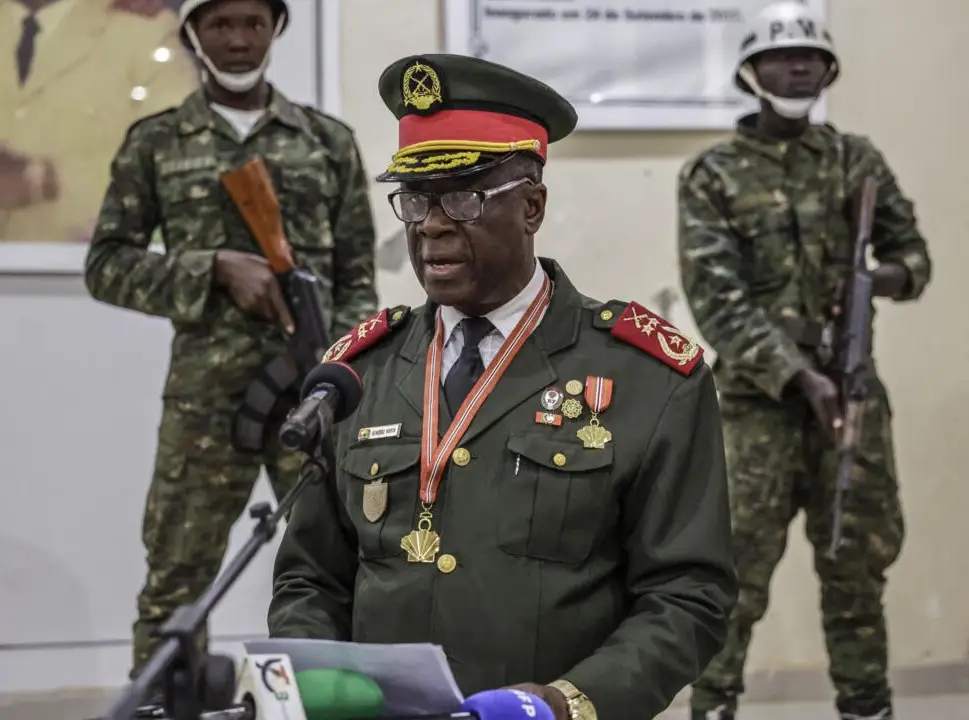
The recent coup attempt in Guinea-Bissau is more than just another headline in a region accustomed to political turbulence. It is a warning siren for the entire sub-Saharan African continent, and for all who care about the future of democracy. Each military intervention chips away at the hard-won gains of civilian governance, and the trend is growing too dire to ignore. 

Time and again, Guinea-Bissau has found itself in the grip of military actors who upend the popular will. The latest coup is yet another chapter in the country’s long and tumultuous political saga. It disrupts reform, paralyzes progress, and shatters the fragile trust between citizens and their leaders. But Guinea-Bissau is not alone. Since 2020, the region has been rocked by coups in Mali, Burkina Faso, Niger, Chad, and Gabon. Once, it seemed that sub-Saharan Africa was turning the page toward greater constitutionalism. Now, that hope is imperiled. 

Why do these events matter beyond their borders? Because each successful coup emboldens others elsewhere. It is a contagion that infects weak institutions, making the rule of law seem optional, and civilian governance appears expendable. The result? The slow, grinding erosion of democracy. People lose faith in elections; politicians lose incentives to build consensus. The cycle of instability becomes self-reinforcing. 

Political uncertainty is not an abstract cost. When soldiers topple governments, everyday life is upended. Foreign investment dries up, economic planning stalls, and social divisions deepen. With each power grab, the promise of a better future slips further away for ordinary Africans. The international community, despite words of condemnation and the occasional sanction, has so far failed to halt this dangerous slide. 

It is tempting to dismiss these coups as simply the product of ambitious generals. The truth is more complex. Endemic corruption, rigged elections, economic inequality, and the exclusion of marginalized groups all lay the groundwork for military intervention. The weakness of regional institutions means few effective deterrents exist. Too often, coups are presented as solutions, when in reality, they are symptoms of deeper decay. 

Here lies the challenge, and the hope. If the region is to break free of this cycle, it must overhaul its democratic institutions and build resilient systems that can withstand shocks. Civil society must be empowered, and governments must listen to the grievances that make coups appear attractive to some. International actors, meanwhile, should coordinate more forcefully to support constitutional order, but ultimately, the drive for reform must come from within. 

The coup in Guinea-Bissau stands as a stark reminder: Democracy is fragile, and its gains are easily lost. Sub-Saharan Africa can either recommit to the rule of law and accountable governance or risk a return to the dark days of endless instability. The choice could not be more urgent, or more consequential. 

Hot this week

NNPC Limited Alerts Public to False Claims Over Refinery Scrap Sales 

 In its release signed by Andy Odeh, its Chief Corporate Communications Officer, the company clarified that it has not authorized or issued requests for bids, tenders, expressions of interest, or approvals concerning the sale of scrap materials, refinery components, or other items from its warehouses or inventories. The company underscored that any information circulating in public forums suggesting otherwise is inaccurate and should be disregarded. 

Supreme Court Cancels PDP Convention; BoT Assumes Leadership 

In a dramatic turn on Thursday, the apex court invalidated the November 15–16, 2025 convention held in Ibadan, which produced the Kabiru Tanimu Turaki-led National Working Committee (NWC). The ruling also upheld the suspension of key party officials, including Samuel Anyanwu, Umar Bature and Kamaldeen Ajibade. 

Opposition Parties Unite in Ibadan, Vow Single Candidate for 2027

Opposition political parties in Nigeria on Saturday resolved to form a united front ahead of the 2027 general elections, including plans to field a single presidential candidate, as they accused the ruling All Progressives Congress (APC) of undermining democracy. The resolution, contained in a communiqué issued at the end of a national summit in Ibadan, warned against what participants described as attempts by the APC to impose a one-party state on the country. The parties pledged to “resist all machinations” that could threaten Nigeria’s multi-party system.

White House Correspondents’ Dinner Interrupted by Shooting Incident 

Just after 8:30 p.m., while President Trump and Melania Trump were engaging with entertainer Oz Pearlman on stage, a man, later identified as Cole Tomas Allen, sprinted through a security checkpoint carrying a shotgun. Secret Service agents pursued and exchanged gunfire with him, quickly subduing Allen before he could reach the ballroom. Inside, guests enjoying their salads were startled by loud, cracking sounds, leading to confusion and panic as armed law enforcement swept in and shouted for everyone to get down. 

President Tinubu Felicitates NNPC Board Chair Musa Kida at 65

President Tinubu Felicitates NNPC Board Chair Musa Kida at 65

Topics

NNPC Limited Alerts Public to False Claims Over Refinery Scrap Sales 

 In its release signed by Andy Odeh, its Chief Corporate Communications Officer, the company clarified that it has not authorized or issued requests for bids, tenders, expressions of interest, or approvals concerning the sale of scrap materials, refinery components, or other items from its warehouses or inventories. The company underscored that any information circulating in public forums suggesting otherwise is inaccurate and should be disregarded. 

Supreme Court Cancels PDP Convention; BoT Assumes Leadership 

In a dramatic turn on Thursday, the apex court invalidated the November 15–16, 2025 convention held in Ibadan, which produced the Kabiru Tanimu Turaki-led National Working Committee (NWC). The ruling also upheld the suspension of key party officials, including Samuel Anyanwu, Umar Bature and Kamaldeen Ajibade. 

Opposition Parties Unite in Ibadan, Vow Single Candidate for 2027

Opposition political parties in Nigeria on Saturday resolved to form a united front ahead of the 2027 general elections, including plans to field a single presidential candidate, as they accused the ruling All Progressives Congress (APC) of undermining democracy. The resolution, contained in a communiqué issued at the end of a national summit in Ibadan, warned against what participants described as attempts by the APC to impose a one-party state on the country. The parties pledged to “resist all machinations” that could threaten Nigeria’s multi-party system.

White House Correspondents’ Dinner Interrupted by Shooting Incident 

Just after 8:30 p.m., while President Trump and Melania Trump were engaging with entertainer Oz Pearlman on stage, a man, later identified as Cole Tomas Allen, sprinted through a security checkpoint carrying a shotgun. Secret Service agents pursued and exchanged gunfire with him, quickly subduing Allen before he could reach the ballroom. Inside, guests enjoying their salads were startled by loud, cracking sounds, leading to confusion and panic as armed law enforcement swept in and shouted for everyone to get down. 

President Tinubu Felicitates NNPC Board Chair Musa Kida at 65

President Tinubu Felicitates NNPC Board Chair Musa Kida at 65

We Are Better Together: A Caution to the Advocates of Separation

It must first be clearly stated that the North’s preference for Nigerian unity is not because it is incapable of standing on its own, nor because it is uniquely dependent on the present federal arrangement for its existence. Historically, the North demonstrated a strong capacity for political cohesion and governance under the regional system, where the Caliphate produced the Premier and the Sultanate provided the Governor. With a vast, geographically contiguous landmass, a dominant lingua franca and largely shared religious and cultural frameworks, a substantial part of Northern Nigeria has historically functioned as a coherent political space.

PDP Disputes Ibadan Court, Affirms NWC Validity 

The PDP chairman noted that the Ibadan ruling was only one of several judgments of the Federal High Court on the matter and that the core issues were already before the Court of Appeal. He described the decision as “technically academic” pending an authoritative pronouncement by the appellate court. Turaki reassured party members that the National Working Committee produced by the Ibadan Convention remained “legally intact and firmly in place,” and committed to what he described as the party’s ongoing rebirth.

A Setback for Wike in PDP Crisis 

While the Supreme Court’s earlier intervention briefly revived Anyanwu’s standing, Tuesday’s dismissal signals that legal victories alone may no longer be enough to secure long-term control. The struggle within the PDP is increasingly shifting from courtrooms to internal political negotiations, and in that arena, the momentum appears to be slipping away from the Wike camp.
spot_img

Related Articles

Popular Categories

spot_imgspot_img