

Marketers across Nigeria are updating their strategies as Dangote Petroleum Refinery prepares to start direct petrol distribution domestically on August 15. This move aims to secure stable, competitive prices amid ongoing fuel scarcity and fluctuating import and production costs driven by volatile exchange rates.
Major and independent marketers are negotiating with Dangote Petroleum Refinery Ltd. before its launch. IPMAN President Abubakar Shettima said many members have registered to benefit from direct supply, which could lower prices through reduced logistics or petrol costs—a positive step for Nigeria’s economy.
IPMAN, with over 30,000 members and more than 150,000 service stations across Nigeria, aims to leverage changes in the country’s fuel supply chain. Data from Dangote Refinery indicates that its existing distribution partners include MRS, Heyden, Ardova (AP), Hyde, Optima, Techno Oil, TotalEnergies, Garima Petroleum, Sunbeth Energies, Sobaz Nigeria Ltd., Virgin Forest Energy, Sixxco Oil Ltd., N.U. Synergy Ltd., Soroman Nigeria Ltd., Jezco Oil Nigeria Ltd., Jengre, Cocean, Kifayat, Triumph Golden, Sifem Global, Riquest, and Mamu Oil, among others.
Sources at the Dangote Refinery report plans to partner with the Major Energies Marketers Association of Nigeria (MEMAN), which will use its 5,000-truck fleet for nationwide fuel distribution. MEMAN members include 11 Plc (352 trucks), Ardova Plc (496), Conoil Plc (349), MRS Oil (305), NNPC (3,153), and TotalEnergies (647). The Dangote Group also stated that Ardova Plc and MRS Oil have signed bulk purchase agreements with the refinery.
Marketers and Dangote Petroleum Refinery Ltd. are in talks for direct fuel supply to manufacturers and large industrial users. A Manufacturers’ Association of Nigeria representative noted they are seeking agreements with Dangote Refinery, emphasizing the need for stable, affordable fuel amidst market volatility.
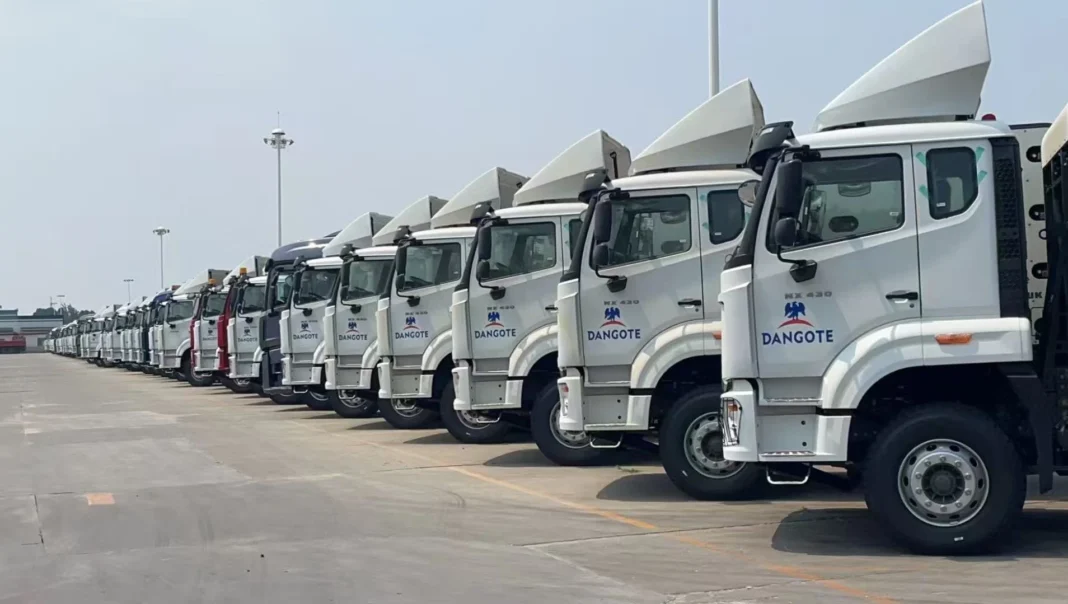
Dangote Refinery, with a capacity of 650,000 barrels per day, plans to use a fleet of 4,000 CNG-powered trucks for direct deliveries to petrol stations, industrial firms, and major consumers. This approach removes dependence on traditional depot owners, simplifies the distribution process, and includes features such as free delivery and credit options for bulk purchases.
This change is likely to help marketers, rural filling stations, and industrial users, but may pose challenges for depot owners, import-dependent marketers, truckers, and tanker operators. Muda Yusuf, CEO of the Centre for the Promotion of Private Enterprise (CPPE), noted that it could lower transport premiums for consumers outside Lagos and reduce risks linked to unionized truck drivers, while also improving safety protocols for moving petroleum products after past incidents involving property damage and fatalities.