


A New Security Agreement Reflects Growing Gulf Concerns Over U.S. Commitments
Saudi Arabia and nuclear-armed Pakistan have taken a pivotal step in regional security by formally signing a mutual defense pact on Wednesday, solidifying their decades-old partnership as geopolitical tensions rise across the Middle East.
The agreement comes at a time when Gulf Arab states increasingly question the reliability of U.S. security guarantees, especially in light of recent events. Notably, Israel’s attack on Qatar last week—targeting political leaders of Hamas during ceasefire discussions in Doha—has further unsettled the region and infuriated Arab countries. The Gaza war has already upended regional dynamics, with Qatar suffering direct strikes twice in a year, once each from Iran and Israel.
The pact, which was described by a senior Saudi official as the “culmination of years of discussions,” is intended to institutionalize longstanding cooperation rather than respond to any single event or country. “This is not a response to specific countries or specific events but an institutionalization of longstanding and deep cooperation between our two countries,” the official told Reuters, emphasizing its strategic and enduring nature.
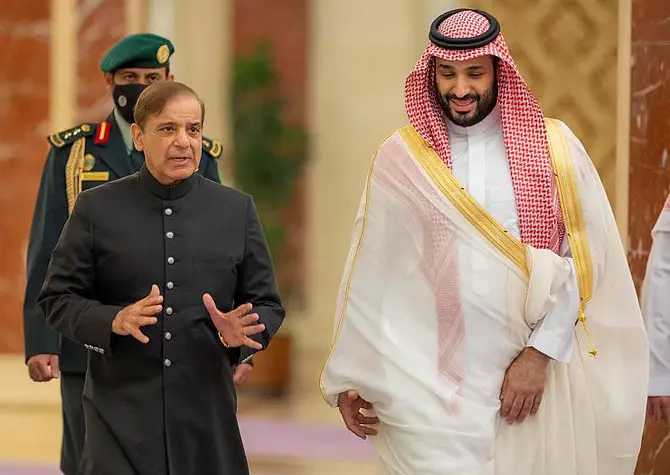
Underlining the significance of the agreement, Pakistani state television broadcast images of Prime Minister Shehbaz Sharif and Saudi Crown Prince Mohammed bin Salman—widely regarded as the kingdom’s de facto ruler—embracing after the signing ceremony. Also present was Pakistan’s influential army chief, Field Marshal Asim Munir.
The Pakistani prime minister’s office stated, “This agreement, which reflects the shared commitment of both nations to enhance their security and to achieving security and peace in the region and the world, aims to develop aspects of defense cooperation between the two countries and strengthen joint deterrence against any aggression. The agreement states that any aggression against either country shall be considered an aggression against both.”
In a statement, Pakistan’s Ministry of Foreign Affairs stated that its agreement with Saudi Arabia demonstrates both countries’ commitment to security and regional peace, including a pledge for joint deterrence. The ministry added that any aggression against one nation will be seen as aggression against both.
The timing of the defense pact is notable, coming just months after Pakistan engaged in a brief military conflict with its rival, India, in May. India’s ministry of external affairs spokesman, Randhir Jaiswal, commented in a post on social media platform X that India is closely monitoring the development and will assess its implications for New Delhi’s security and regional stability. Balancing relations with both South Asian nuclear powers, a senior Saudi official remarked, “Our relationship with India is more robust than it has ever been. We will continue to grow this relationship and seek to contribute to regional peace whichever way we can.”
The new agreement could potentially shift the strategic calculus in a region where Gulf monarchies, long allied with Washington, are now seeking to manage ties with both Iran and Israel to address persistent security challenges. When asked if Pakistan would be obliged to extend a nuclear umbrella to Saudi Arabia under the new arrangement, the Saudi official responded, “This is a comprehensive defensive agreement that encompasses all military means.”