

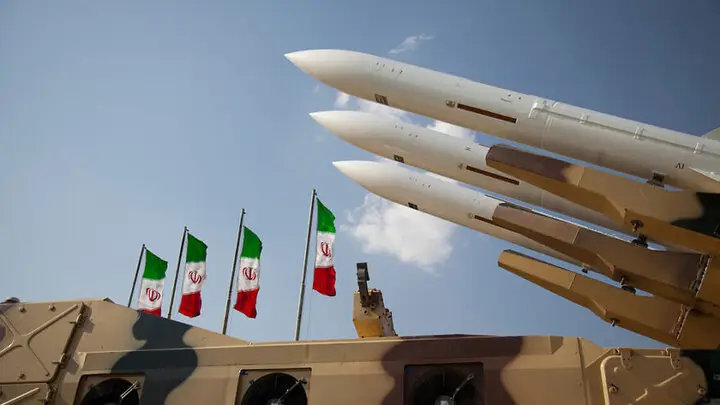

The outskirts of Tehran saw the reopening this week of the National Aerospace Park, a sprawling exhibition space locals have nicknamed the “missile museum.” More than a mere display of military technology, the facility serves as a public testament to the Islamic Republic’s resolve in the face of a tumultuous year marked by attacks from Israel and the United States.
Visitors to the museum are offered an up-close look at the formidable arsenal of missiles and drones developed by the Islamic Revolutionary Guard Corps (IRGC), the country’s most powerful military force. Among the exhibits, citizens can pose for photos in front of truck-mounted missile launchers, gaze at floor-to-ceiling rockets, and even inscribe their own messages on replicas—some expressing strong anti-American sentiments.
“This place is a symbol of believing in ourselves, a place that says we can,” said IRGC Maj. Gen. Ali Balali, the museum’s director, in an interview with NBC News. “Most of the missiles here were used in the recent war, and these aren’t even our latest.” He emphasized the domestic origin of all displayed missiles, underscoring Iran’s determination to continue its weapons program regardless of international pressure. “Even if they surround our country with cement and barbed wire, we will still build,” Balali added.
Amidst rising tension, Iranian officials have been increasingly vocal about the nation’s military capabilities. This is following vulnerabilities exposed during a 12-day conflict with Israel this summer, which included U.S. strikes on Iranian nuclear facilities. The sense that renewed conflict may be imminent is palpable among museum visitors and staff alike.
The ballistic missile program, declared “nonnegotiable” by Supreme Leader Ayatollah Ali Khamenei, remains a key sticking point in diplomatic efforts with the United States over Iran’s disputed nuclear ambitions.
Founded in 2020 by IRGC Gen. Amir Ali Hajizadeh—himself killed in an Israeli strike earlier this year—the museum pays homage to prominent figures in Iran’s “axis of resistance.” Life-size cutouts of Gen. Qassem Soleimani, slain by a U.S. drone strike in 2020, and Yahya Sinwar, the Hamas leader killed by Israel in Gaza in 2024, greet visitors at the entrance.
The museum’s first exhibits feature missiles like the Fattah, which the IRGC claims can penetrate Israel’s Iron Dome defense system and boasts a range of approximately 870 miles. Iran’s missile and drone arsenal was on full display during last summer’s attacks on Israel, when hundreds of projectiles were launched, resulting in the deaths of at least 29 Israelis and more than 1,000 Iranians.
This week, as part of “Aerospace Week,” the museum hosted a public test of a Shahed stealth drone engine, as reported by the Mehr news agency. While these drones are best known for their deployment by Russian forces in Ukraine, Iranian officials say they will play a central role in any future conflict involving Iran.
Also on display, are drones purportedly belonging to Israel and the U.S., which the IRGC claims to have captured and reverse-engineered. Visitors entering this section step over painted Israeli and American flags, a symbolic gesture reflecting ongoing hostilities.
Like many museums, the Aerospace Park includes a gift shop, selling miniature models of drones and missiles. A sign beside a hypersonic missile replica reads, “7 Minutes to Tel Aviv,” highlighting Iran’s ambitions and capabilities.
The exhibition offers Iranians who support the government an opportunity to take pride in their country’s military achievements, especially in light of recent conflicts that exposed defensive weaknesses. Ayat, a Basij militia member, summed up the sentiment: “After the 12-day war, we realized our strength. The world also recognized it. We come here with our Basij group often to see this power.”
For some, the museum is more than a showcase—it’s a site of reverence. Hussein, a university student, reflected, “It’s a pity this place isn’t always open. For us, it’s like visiting a holy shrine,” he told NBC News.