
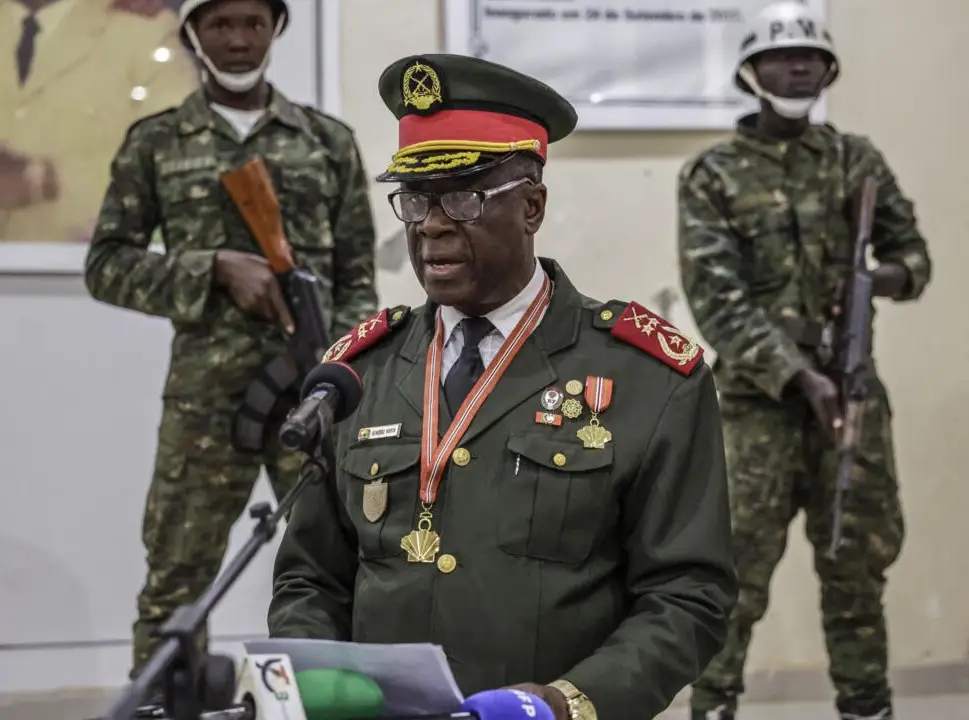

The recent coup attempt in Guinea-Bissau is more than just another headline in a region accustomed to political turbulence. It is a warning siren for the entire sub-Saharan African continent, and for all who care about the future of democracy. Each military intervention chips away at the hard-won gains of civilian governance, and the trend is growing too dire to ignore.
Time and again, Guinea-Bissau has found itself in the grip of military actors who upend the popular will. The latest coup is yet another chapter in the country’s long and tumultuous political saga. It disrupts reform, paralyzes progress, and shatters the fragile trust between citizens and their leaders. But Guinea-Bissau is not alone. Since 2020, the region has been rocked by coups in Mali, Burkina Faso, Niger, Chad, and Gabon. Once, it seemed that sub-Saharan Africa was turning the page toward greater constitutionalism. Now, that hope is imperiled.
Why do these events matter beyond their borders? Because each successful coup emboldens others elsewhere. It is a contagion that infects weak institutions, making the rule of law seem optional, and civilian governance appears expendable. The result? The slow, grinding erosion of democracy. People lose faith in elections; politicians lose incentives to build consensus. The cycle of instability becomes self-reinforcing.
Political uncertainty is not an abstract cost. When soldiers topple governments, everyday life is upended. Foreign investment dries up, economic planning stalls, and social divisions deepen. With each power grab, the promise of a better future slips further away for ordinary Africans. The international community, despite words of condemnation and the occasional sanction, has so far failed to halt this dangerous slide.
It is tempting to dismiss these coups as simply the product of ambitious generals. The truth is more complex. Endemic corruption, rigged elections, economic inequality, and the exclusion of marginalized groups all lay the groundwork for military intervention. The weakness of regional institutions means few effective deterrents exist. Too often, coups are presented as solutions, when in reality, they are symptoms of deeper decay.
Here lies the challenge, and the hope. If the region is to break free of this cycle, it must overhaul its democratic institutions and build resilient systems that can withstand shocks. Civil society must be empowered, and governments must listen to the grievances that make coups appear attractive to some. International actors, meanwhile, should coordinate more forcefully to support constitutional order, but ultimately, the drive for reform must come from within.
The coup in Guinea-Bissau stands as a stark reminder: Democracy is fragile, and its gains are easily lost. Sub-Saharan Africa can either recommit to the rule of law and accountable governance or risk a return to the dark days of endless instability. The choice could not be more urgent, or more consequential.