



Contrary to claims by U.S. President Donald Trump that American airstrikes carried out on Christmas night eliminated “ISIS-linked terrorists” in northwestern Nigeria, residents of Jabo village in Sokoto State say no person was killed and no terrorist camp existed in the area where the explosion occurred.
President Trump had announced via social media that the United States conducted what he described as a “powerful and deadly” strike against ISIS elements in Nigeria, claiming the operation was in retaliation for attacks on Christians and warning of further military action if such attacks continued.
However, eyewitness accounts from Jabo sharply contradict that narrative.
Speaking to Veritas Media, Abu Jabo, a resident of the village, said the incident occurred around 10:45 p.m. on Christmas night, just as residents were preparing to retire for the night.
“We saw something flying over the village, then suddenly there was a loud explosion and fire. Everyone ran in different directions in fear,” he said.
According to him, after about 20 minutes of silence, villagers cautiously returned to the area to assess the situation.
“It landed on a farm where sorghum had already been harvested. Only the dry stalks caught fire. No one was injured, and no one died,” he said.
Abu Jabo dismissed reports that terrorists were killed in the strike, stressing that Jabo has no history of insurgency or bandit activity.
“There are no terrorists here. There are no Christians here either. Jabo is a peaceful, Muslim community. We do not have security problems,” he added.
Images taken from the site and reviewed by Veritas Media show fragments of what appear to be aerospace-grade components, including metallic assemblies bearing U.S. military manufacturing codes and serial numbers.
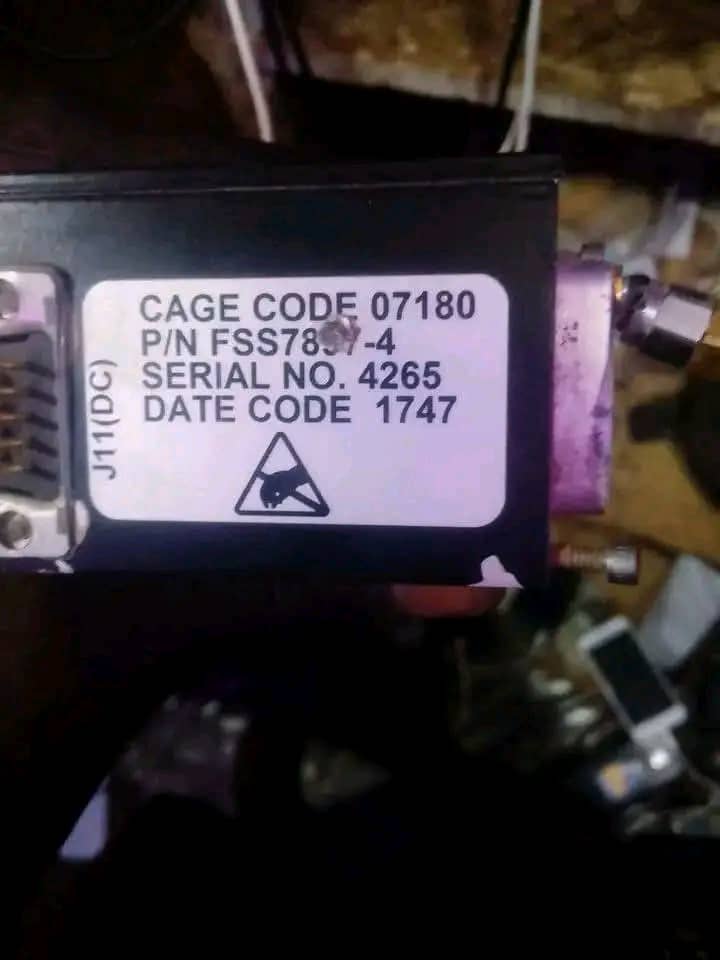
Experts who examined the markings identified them as U.S.-manufactured electro-hydraulic servo or flight-control components, typically used in military aircraft, drones, or guided munitions. The parts bear CAGE codes linked to U.S. defense contractor Moog Inc., a major supplier of flight-control systems for American military aircraft and unmanned aerial vehicles.
The components also carried manufacturing date codes pointing to 2017, indicating they were not improvised devices but parts of a professionally manufactured aerospace system.
Security analysts say such components are commonly found in: Guided missiles, Armed drones, and Aircraft flight-control systems.
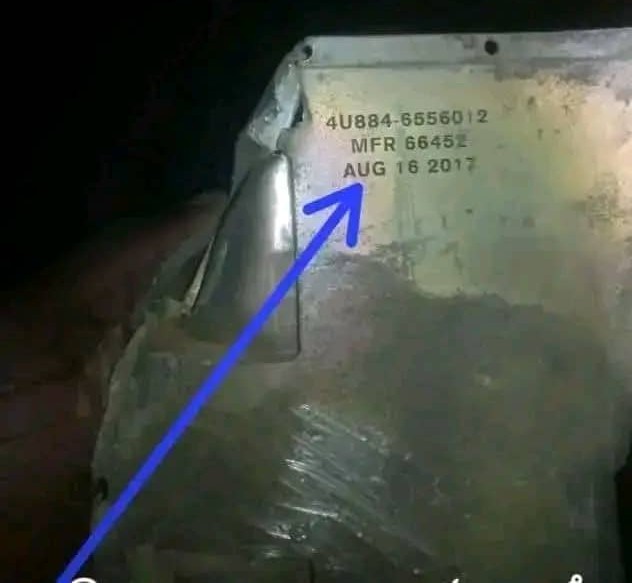
Their presence strongly suggests that a military aerial platform or munition malfunctioned or released debris over the area, rather than a targeted strike on ground-based militants.
Residents insist that no armed group, camp, or gathering existed in the area at the time of the incident. The explosion occurred in an open farmland with no structures or people present.
Local sources also dispute claims that the area harbors ISIS-linked elements, describing Jabo as a quiet farming settlement with no record of extremist activity.
The incident raises serious questions about intelligence accuracy and targeting, particularly in light of claims by U.S. authorities that the strike was a successful counterterrorism operation.
While Washington has not released operational details, the physical evidence and eyewitness accounts from Jabo suggest the strike did not hit any terrorist target and resulted in no casualties.
As investigations continue, residents are calling for clarity and accountability, warning that misidentification of peaceful communities could have deadly consequences in the future.