
Monday, February 16, 2026
39.1 C
Abuja

NNPC Ltd. Debt: FG Forgave Interest, Not Principal, Officials Say 

Fresh details have emerged that challenge the widespread belief that the Federal Government recently wiped out the Nigerian National Petroleum Company Limited’s (NNPC Limited) multitrillion-naira debt. An investigation by VERITAS MEDIA reveals that what the government wrote off was only the accumulated interest, not the principal debt itself, contradicting reports that the entire liability had been erased. 

A top NNPC official with direct knowledge of the reconciliation process, who spoke in confidence, said the public had been misled by the framing of earlier reports. 

“It was the interest that was removed, not the debt. The principal remains very much on the books,” the official insisted. “This is a government-to-government obligation. So, cancelling interest that accumulated over many years is not the same as forgiving the debt itself.” 

Earlier this month, documents circulated suggesting that about ₦5.57 trillion and $1.42 billion in legacy liabilities had been completely written off following a reconciliation between NNPC Limited, the Federal Ministry of Finance, and the Office of the Accountant-General of the Federation. But internal sources say that interpretation is inaccurate and that the reconciliation focused specifically on long-standing interest charges tied to: disputed remittances, delayed cost-recovery settlements, unresolved upstream royalties, and historic cash-call obligations. 

According to the official, many of these obligations were never commercial debts in the traditional sense, but inter-agency fiscal entries, where compounding interest had distorted the true level of exposure. 

“How can government keep charging itself interest on intra-government entries that were still under reconciliation? It inflated the numbers. What was removed was the interest. The real obligations are still there,” he clarified. 

Investigations found that years of fiscal opacity within the old NNPC structure allowed interest on disputed figures to accumulate without anyone taking responsibility. Different administrations recorded the liabilities differently, leading to inconsistent books and inflated totals. By the time the new reconciliation committee intervened, some of the interest entries were based on outdated assumptions, unverified cost-recovery disputes, and penalty charges carried forward without audit confirmation. 

A senior official familiar with the reconciliation described the interest portion as “legacy noise that made the real numbers ungovernable.” 

Despite public impressions, NNPC Limited still carries substantial outstanding obligations. Sources say these debts will now be settled through: upstream revenue flows, crude-for-cash arrangements, internal restructuring under the Petroleum Industry Act (PIA), and enhanced commercial operations under the new CAMA-driven corporate structure. No official timeline for repayment has, however, been disclosed, and the figures remain politically sensitive. 

The revelation that only interest, not principal, was forgiven raises tough questions: Who allowed interest to accumulate unchecked for decades? How accurate were the original liability figures? Why was the public led to believe the entire debt was cancelled? Who benefits from the perception of a full bailout? 

VERITAS MEDIA investigations suggest that without full transparency, Nigeria risks repeating the same accounting practices that created the opaque fiscal ecosystem in which such massive interest liabilities could grow unnoticed. 

The Federal Government has not formally addressed the distinction between interest write-offs and debt forgiveness. Meanwhile, NNPC Limited has yet to publish a detailed breakdown of the reconciled figures. But insiders insist the clarification is necessary to protect the integrity of ongoing reforms. 

“People must not think NNPC Limited got a blanket bailout,” the official said. “Nothing like that happened.” 

As VERITAS MEDIA continues its investigation, one thing is clear: the real story of NNPC Limited’s legacy debt is more complicated, and far more revealing, than the public was initially told. 

Hot this week

President Tinubu Felicitates NNPC Board Chair Musa Kida at 65

President Tinubu Felicitates NNPC Board Chair Musa Kida at 65

We Are Better Together: A Caution to the Advocates of Separation

It must first be clearly stated that the North’s preference for Nigerian unity is not because it is incapable of standing on its own, nor because it is uniquely dependent on the present federal arrangement for its existence. Historically, the North demonstrated a strong capacity for political cohesion and governance under the regional system, where the Caliphate produced the Premier and the Sultanate provided the Governor. With a vast, geographically contiguous landmass, a dominant lingua franca and largely shared religious and cultural frameworks, a substantial part of Northern Nigeria has historically functioned as a coherent political space.

PDP Disputes Ibadan Court, Affirms NWC Validity 

The PDP chairman noted that the Ibadan ruling was only one of several judgments of the Federal High Court on the matter and that the core issues were already before the Court of Appeal. He described the decision as “technically academic” pending an authoritative pronouncement by the appellate court. Turaki reassured party members that the National Working Committee produced by the Ibadan Convention remained “legally intact and firmly in place,” and committed to what he described as the party’s ongoing rebirth.

A Setback for Wike in PDP Crisis 

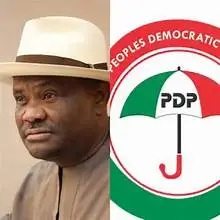
While the Supreme Court’s earlier intervention briefly revived Anyanwu’s standing, Tuesday’s dismissal signals that legal victories alone may no longer be enough to secure long-term control. The struggle within the PDP is increasingly shifting from courtrooms to internal political negotiations, and in that arena, the momentum appears to be slipping away from the Wike camp.

No Terrorists Were Killed in U.S. Strike on ‘ISIS’ in Nigeria 

Abu Jabo dismissed reports that terrorists were killed in the strike, stressing that Jabo has no history of insurgency or bandit activity. “There are no terrorists here. There are no Christians here either. Jabo is a peaceful, Muslim community. We do not have security problems,” he added. Local sources also dispute claims that the area harbors ISIS-linked elements, describing Jabo as a quiet farming settlement with no record of extremist activity.

Topics

President Tinubu Felicitates NNPC Board Chair Musa Kida at 65

President Tinubu Felicitates NNPC Board Chair Musa Kida at 65

We Are Better Together: A Caution to the Advocates of Separation

It must first be clearly stated that the North’s preference for Nigerian unity is not because it is incapable of standing on its own, nor because it is uniquely dependent on the present federal arrangement for its existence. Historically, the North demonstrated a strong capacity for political cohesion and governance under the regional system, where the Caliphate produced the Premier and the Sultanate provided the Governor. With a vast, geographically contiguous landmass, a dominant lingua franca and largely shared religious and cultural frameworks, a substantial part of Northern Nigeria has historically functioned as a coherent political space.

PDP Disputes Ibadan Court, Affirms NWC Validity 

The PDP chairman noted that the Ibadan ruling was only one of several judgments of the Federal High Court on the matter and that the core issues were already before the Court of Appeal. He described the decision as “technically academic” pending an authoritative pronouncement by the appellate court. Turaki reassured party members that the National Working Committee produced by the Ibadan Convention remained “legally intact and firmly in place,” and committed to what he described as the party’s ongoing rebirth.

A Setback for Wike in PDP Crisis 

While the Supreme Court’s earlier intervention briefly revived Anyanwu’s standing, Tuesday’s dismissal signals that legal victories alone may no longer be enough to secure long-term control. The struggle within the PDP is increasingly shifting from courtrooms to internal political negotiations, and in that arena, the momentum appears to be slipping away from the Wike camp.

No Terrorists Were Killed in U.S. Strike on ‘ISIS’ in Nigeria 

Abu Jabo dismissed reports that terrorists were killed in the strike, stressing that Jabo has no history of insurgency or bandit activity. “There are no terrorists here. There are no Christians here either. Jabo is a peaceful, Muslim community. We do not have security problems,” he added. Local sources also dispute claims that the area harbors ISIS-linked elements, describing Jabo as a quiet farming settlement with no record of extremist activity.

Trump: U.S. Hit Terror Targets in Nigeria 

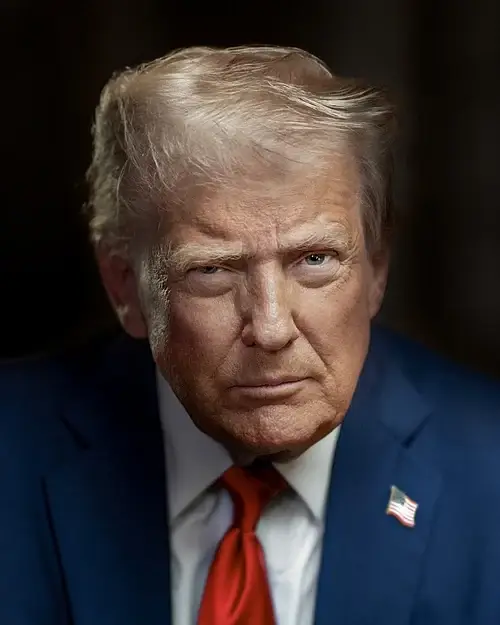
In a strongly worded statement posted on his verified social media account, Trump said the United States, acting under his direction as Commander-in-Chief, had launched “powerful and deadly” strikes against what he described as ISIS-linked terrorists operating in Northwest Nigeria. He claimed the operation was in response to the killing of Christians and warned of further military action if such attacks continued. 

NNPC Limited: Early Signals from the Kida–Ojulari Era 

As a non-executive chairman with decades of industry experience, Engr. Kida’s influence lies less in operational detail and more in direction-setting and discipline. The reconstituted board signals a renewed emphasis on corporate governance, professionalism and alignment with the spirit of the PIA, that NNPC Limited should operate as a business, not a government department. 

Dangote, NMDPRA and the Battle for Nigeria’s Downstream Future

At the heart of the controversy are grave allegations by Dangote against the Chief Executive of the Nigerian Midstream and Downstream Petroleum Regulatory Authority (NMDPRA), Farouk Ahmed, whom he accuses of economic sabotage and possible corruption. Dangote claims the regulator has continued to issue large volumes of fuel import licences despite Nigeria’s growing local refining capacity, a practice he argues undermines domestic investment and keeps the country trapped in import dependency.
spot_img

Related Articles

Popular Categories

spot_imgspot_img