
Kwankwaso: Between Political Expediency and Principled Politics – Crossing the Red Line

In 2013, when Senator Rabiu Musa Kwankwaso defected from the PDP to the APC, many of us justified his decision on the grounds of public interest. The PDP having ruled for over a decade has failed so many people and was beginning to show all signs of political fatigue and internal decay.

Then came the APC, a party which presented itself as a fresh coalition with reformist energy and the promise of rescuing Nigeria from a complacent one-party dominance. Kwankwaso, also justifiably, joined the new party claiming that the PDP had become irredeemably factionalized and unreformable. But in 2018, he reversed course, returning to the PDP due to mounting disillusionment with the APC’s governance style, broken promises, and internal intolerance. No much comments to make about this particular defection.

Fast forward to 2022, Kwankwaso exited the PDP again for the NNPP, due understandably to unfair treatment and lack of a level playing ground. Since then, Kwankwaso made publicly scathing comments about both PDP and APC describing the PDP as “dead” and the APC as “a failed party no person of conscience should associate with.”

Now, with growing rumors of a potential return to the APC, the unavoidable question Kwankwaso must answer is: What has changed? Has the APC corrected the ills he once condemned? Has public interest improved under the party’s reign? Or is this a moment not of ideological realignment but of political expediency masquerading as strategy? If 2013 was about rescuing democracy, what is 2025 about?

Those of us who voted for Kwankwaso and openly advocated for him in the last presidential election did so not because he had the strongest chances of winning. In truth, his chances were the slimmest among the major contenders. But we supported him because we believed that in spite of his endless cross-carpeting and apparent political backpedaling, he possessed the most coherent political ideology, the clearest image of pro-masses leadership, and the strongest reformist features. We cast our votes in the hope of triggering a long-overdue shift in Nigeria. A shift from the politics of party loyalty to the politics of values, competence, and character. We envisioned a country where leaders with track records and integrity could emerge based not on godfathers or party platforms, but on merit. We believed Kwankwaso had the moral standing to lead that fateful and necessary journey.

Should Kwankwaso now leave the NNPP and return to the APC, and do so at a time when the APC’s popularity has visibly declined, when the economy is battered, when insecurity is still widespread and making strong comeback even in areas where sanity had began to return, and when, Idris Abdulkareem’s new song – Country Hard – is trending across Nigeria with acceptability, it will become painfully clear that those of us who saw a leader in Kwankwaso, who wanted to use his example to trigger the much needed political revolution, were wrong and mistaken.

This is more so that Kwankwaso is approaching the golden age of 70. It would not only be ill-timed; it would be tragic. At that age, a man ought to consolidate legacy, not squander it.

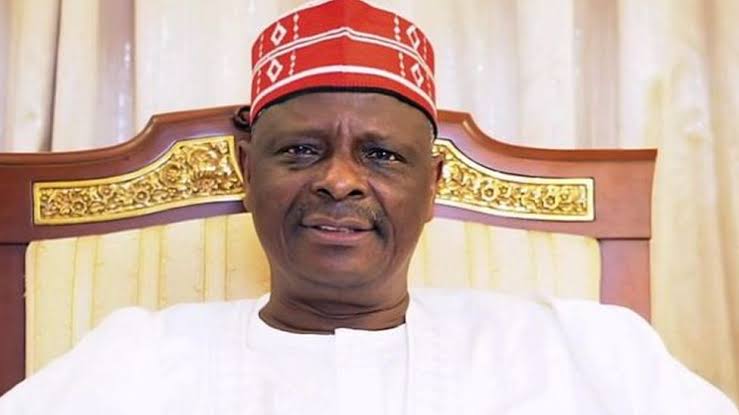
The over one million votes Kwankwaso secured in Kano duriing the last election were not merely from red-cap-wearing adherents of Kwankwasiyya. They were from Nigerians, young and old, who saw in him a flicker of hope and voted based on character, record, and integrity.

If Kwankwaso now switches allegiance once more, I believe many of those who followed him with clear eyes and open minds will walk away and leave him to journey on with only his loyal but blinded followers.

I call on Kwankwaso the soon-to-be septuagenarian, to prioritize legacy, political integrity and faith over convenience, expediency and personal interests.


Hot this week

What They Never Told You: Ayatollah Khomeini Was a Great Jurist, Not a Fanatic

The West gave Iran a name — theocracy — and buried the reality beneath it. They never told you that Khomeini spent decades mastering one of the most rigorous legal traditions in human history, or that he built a constitutional republic ratified by 98 percent of the Iranian people in a free referendum. A nation of fanatics can be bombed with a clear conscience. A constitutional republic of 93 million people, founded by a supremely gifted jurist, is harder to dispose of.

‘We Won’t Be Silenced’: ADC Rejects Court-Ordered Deregistration

Abdullahi said: We did not expect the level of judicial rascality that was demonstrated. When a Court of Appeal says stay proceedings until October 27 and a lower court goes ahead to deliver judgment on the same matter, it is bizarre and dangerous."

Sheikh Gumi and the Case for Dialogue

It is against this background that I offer my views on the issues of banditry and kidnappings, particularly in northern Nigeria. My perspective is informed by knowledge acquired during my graduate studies at the Fletcher School of Law and Diplomacy, Tufts University, in the United States. Two courses, in particular, shaped my understanding of conflicts and their resolution. The first was International Security Studies, taught by Professor Richard Shultz, a consultant to the Pentagon. The second was International Negotiation, taught by Professor Diana Chigas, a member of the team that helped negotiate the end of apartheid in South Africa.

June 12: Democracy’s Sacred Mandate and Nigeria’s Unfinished Journey

Democracy has delivered some notable gains. The country has witnessed peaceful transfers of power, expanded political participation, a more vibrant media landscape, and greater civic engagement. These achievements should not be dismissed. They are evidence that democratic governance, despite its imperfections, remains preferable to military rule. However, democracy cannot survive on political rituals alone. For millions of Nigerians battling insecurity, unemployment, poverty, inflation, and inadequate infrastructure, democracy must mean more than periodic elections.

Atiku Picks Amaechi as Running Mate in Strategic Move

In a move that could significantly reshape Nigeria's political landscape ahead of the next presidential election, the presidential candidate of the African Democratic Congress (ADC), Alhaji Atiku Abubakar, has nominated former Minister of Transportation, Chief Chibuike Rotimi Amaechi, as his running mate.

Topics

What They Never Told You: Ayatollah Khomeini Was a Great Jurist, Not a Fanatic

The West gave Iran a name — theocracy — and buried the reality beneath it. They never told you that Khomeini spent decades mastering one of the most rigorous legal traditions in human history, or that he built a constitutional republic ratified by 98 percent of the Iranian people in a free referendum. A nation of fanatics can be bombed with a clear conscience. A constitutional republic of 93 million people, founded by a supremely gifted jurist, is harder to dispose of.

‘We Won’t Be Silenced’: ADC Rejects Court-Ordered Deregistration

Abdullahi said: We did not expect the level of judicial rascality that was demonstrated. When a Court of Appeal says stay proceedings until October 27 and a lower court goes ahead to deliver judgment on the same matter, it is bizarre and dangerous."

Sheikh Gumi and the Case for Dialogue

It is against this background that I offer my views on the issues of banditry and kidnappings, particularly in northern Nigeria. My perspective is informed by knowledge acquired during my graduate studies at the Fletcher School of Law and Diplomacy, Tufts University, in the United States. Two courses, in particular, shaped my understanding of conflicts and their resolution. The first was International Security Studies, taught by Professor Richard Shultz, a consultant to the Pentagon. The second was International Negotiation, taught by Professor Diana Chigas, a member of the team that helped negotiate the end of apartheid in South Africa.

June 12: Democracy’s Sacred Mandate and Nigeria’s Unfinished Journey

Democracy has delivered some notable gains. The country has witnessed peaceful transfers of power, expanded political participation, a more vibrant media landscape, and greater civic engagement. These achievements should not be dismissed. They are evidence that democratic governance, despite its imperfections, remains preferable to military rule. However, democracy cannot survive on political rituals alone. For millions of Nigerians battling insecurity, unemployment, poverty, inflation, and inadequate infrastructure, democracy must mean more than periodic elections.

Atiku Picks Amaechi as Running Mate in Strategic Move

In a move that could significantly reshape Nigeria's political landscape ahead of the next presidential election, the presidential candidate of the African Democratic Congress (ADC), Alhaji Atiku Abubakar, has nominated former Minister of Transportation, Chief Chibuike Rotimi Amaechi, as his running mate.

Three Killed as Gunmen Raid Kogi School

The Kogi State Police Command said the attackers arrived in large numbers, travelling on about 40 motorcycles, and targeted the school and nearby surroundings in what authorities believe may have been an attempt to carry out kidnappings.

Kwankwaso Weighs NDC Exit as Candidate Purge Deepens Party Crisis

Amid the growing controversy, there is a call urging Kwankwaso to leave the NDC if he believes he is being unfairly treated by the party leadership. Supporters of Kwankwaso say he should pursue his political ambitions on another platform if he feels constrained, marginalized, or denied a fair role within the party.

Sheikh Gumi: An Asset Nigeria Should Not Ignore

For many years, Gumi has attracted criticism because of his contacts with bandits. Some commentators have accused him of being too sympathetic to them. Others have questioned why he meets with them in their forest hideouts. But instead of seeing him as part of the problem, Nigerians should ask whether he can be part of the solution.
spot_img

Related Articles

Popular Categories

spot_imgspot_img