
Re:Why Northern Nigeria Needs Professor Attahiru Jega Now More Than Ever

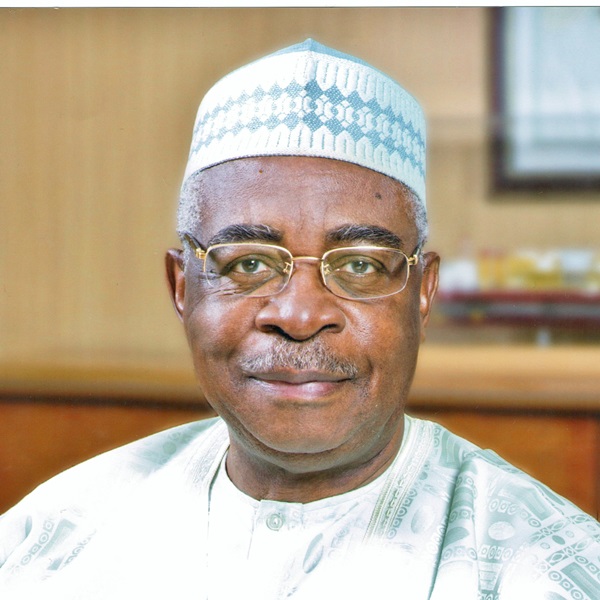
At a pivotal point in the socio-political trajectory of Northern Nigeria, Dr. Jazuli Lawal’s call for a transformative and principled leader resonates deeply with the yearnings of a region in search of direction. His endorsement of Professor Attahiru Jega is both timely and justified. With insecurity, youth unemployment, declining education, and political disillusionment threatening the region’s stability, the North cannot afford business-as-usual politics. It needs a leader whose integrity is tested, whose vision is clear, and whose commitment to national unity is unwavering. That leader, many agree, is Professor Attahiru Jega.

Professor Jega is a man whose public service record speaks louder than any political slogan. As Chairman of the Independent National Electoral Commission (INEC), he delivered what is widely regarded as Nigeria’s most credible and peaceful general election in 2015. He demonstrated rare courage, neutrality, and professionalism – qualities that have become endangered in the country’s political climate. His conduct at INEC raised the bar for electoral integrity and restored a measure of public confidence in Nigeria’s democratic process.

Beyond his electoral achievements, Jega is a renowned academic and former Vice-Chancellor of Bayero University Kano, where he left an indelible legacy of excellence. He understands the power of education in nation-building and has continuously championed reforms that empower the youth, expand access to knowledge, and promote inclusive development. His deep-rooted understanding of governance, policy, and academia uniquely positions him as a bridge between Nigeria’s intellectual elite and its political leadership.

Yet, while the need for someone of Jega’s caliber is undeniable, there are significant concerns that must be addressed.

First, there is the question of his immediate constituency the academics, many of whom have been complicit in the flawed electoral processes as returning officers and election administrators. Can Jega truly galvanize this class to uphold the values he stands for? The answer lies in his track record. He did it before at INEC, despite systemic challenges. With the right leadership and clear standards, reform is possible even within compromised structures.

Second, the pervasive culture of vote-buying among the masses presents another challenge. Northern Nigeria’s voters especially the youth and rural poor have too often been induced with money and materials to trade away their votes. Changing this requires more than rhetoric, it demands sustained advocacy, civic education, and mass enlightenment. The people must come to see their vote not as a transaction, but as a tool for true empowerment. Jega’s image and message can serve as a catalyst for this shift if amplified effectively.

Third, the entrenched political class and their sponsors will undoubtedly resist any effort to bring in a non-aligned figure like Jega. For them, politics is a business, and they expect loyalty, not principles. They may attempt to sabotage or sideline him. But history shows that when the people are united, the power of the political class can be overcome. What is needed is a strategic movement that transcends party lines and tribal boundaries one that rallies around a shared vision for a better North.

Northern Nigeria stands at a crossroads. It can continue down the path of recycled leadership, patronage politics, and institutional decay, or it can embrace a new era defined by integrity, competence, and inclusive governance. Professor Jega offers that alternative. He is not without challenges, but he is undeniably one of the most credible options available.

Dr. Jazuli’s call is therefore more than a political opinion,it is a wake-up call. If the North is to reclaim its place in Nigeria’s future, it must rally behind leaders who are not beholden to corrupt interests. The journey will not be easy, but it is necessary. And it must begin now with advocacy, with enlightenment, and with the courage to choose differently.

Professor Jega may not fit into the traditional political mold, but perhaps that’s exactly why he is needed. It’s time for the North to choose vision over vendetta, integrity over impunity, and progress over politics as usual.

Tijjani Sarki
Wrote from Zawaciki,Kano

Hot this week

What They Never Told You: Ayatollah Khomeini Was a Great Jurist, Not a Fanatic

The West gave Iran a name — theocracy — and buried the reality beneath it. They never told you that Khomeini spent decades mastering one of the most rigorous legal traditions in human history, or that he built a constitutional republic ratified by 98 percent of the Iranian people in a free referendum. A nation of fanatics can be bombed with a clear conscience. A constitutional republic of 93 million people, founded by a supremely gifted jurist, is harder to dispose of.

‘We Won’t Be Silenced’: ADC Rejects Court-Ordered Deregistration

Abdullahi said: We did not expect the level of judicial rascality that was demonstrated. When a Court of Appeal says stay proceedings until October 27 and a lower court goes ahead to deliver judgment on the same matter, it is bizarre and dangerous."

Sheikh Gumi and the Case for Dialogue

It is against this background that I offer my views on the issues of banditry and kidnappings, particularly in northern Nigeria. My perspective is informed by knowledge acquired during my graduate studies at the Fletcher School of Law and Diplomacy, Tufts University, in the United States. Two courses, in particular, shaped my understanding of conflicts and their resolution. The first was International Security Studies, taught by Professor Richard Shultz, a consultant to the Pentagon. The second was International Negotiation, taught by Professor Diana Chigas, a member of the team that helped negotiate the end of apartheid in South Africa.

June 12: Democracy’s Sacred Mandate and Nigeria’s Unfinished Journey

Democracy has delivered some notable gains. The country has witnessed peaceful transfers of power, expanded political participation, a more vibrant media landscape, and greater civic engagement. These achievements should not be dismissed. They are evidence that democratic governance, despite its imperfections, remains preferable to military rule. However, democracy cannot survive on political rituals alone. For millions of Nigerians battling insecurity, unemployment, poverty, inflation, and inadequate infrastructure, democracy must mean more than periodic elections.

Atiku Picks Amaechi as Running Mate in Strategic Move

In a move that could significantly reshape Nigeria's political landscape ahead of the next presidential election, the presidential candidate of the African Democratic Congress (ADC), Alhaji Atiku Abubakar, has nominated former Minister of Transportation, Chief Chibuike Rotimi Amaechi, as his running mate.

Topics

What They Never Told You: Ayatollah Khomeini Was a Great Jurist, Not a Fanatic

The West gave Iran a name — theocracy — and buried the reality beneath it. They never told you that Khomeini spent decades mastering one of the most rigorous legal traditions in human history, or that he built a constitutional republic ratified by 98 percent of the Iranian people in a free referendum. A nation of fanatics can be bombed with a clear conscience. A constitutional republic of 93 million people, founded by a supremely gifted jurist, is harder to dispose of.

‘We Won’t Be Silenced’: ADC Rejects Court-Ordered Deregistration

Abdullahi said: We did not expect the level of judicial rascality that was demonstrated. When a Court of Appeal says stay proceedings until October 27 and a lower court goes ahead to deliver judgment on the same matter, it is bizarre and dangerous."

Sheikh Gumi and the Case for Dialogue

It is against this background that I offer my views on the issues of banditry and kidnappings, particularly in northern Nigeria. My perspective is informed by knowledge acquired during my graduate studies at the Fletcher School of Law and Diplomacy, Tufts University, in the United States. Two courses, in particular, shaped my understanding of conflicts and their resolution. The first was International Security Studies, taught by Professor Richard Shultz, a consultant to the Pentagon. The second was International Negotiation, taught by Professor Diana Chigas, a member of the team that helped negotiate the end of apartheid in South Africa.

June 12: Democracy’s Sacred Mandate and Nigeria’s Unfinished Journey

Democracy has delivered some notable gains. The country has witnessed peaceful transfers of power, expanded political participation, a more vibrant media landscape, and greater civic engagement. These achievements should not be dismissed. They are evidence that democratic governance, despite its imperfections, remains preferable to military rule. However, democracy cannot survive on political rituals alone. For millions of Nigerians battling insecurity, unemployment, poverty, inflation, and inadequate infrastructure, democracy must mean more than periodic elections.

Atiku Picks Amaechi as Running Mate in Strategic Move

In a move that could significantly reshape Nigeria's political landscape ahead of the next presidential election, the presidential candidate of the African Democratic Congress (ADC), Alhaji Atiku Abubakar, has nominated former Minister of Transportation, Chief Chibuike Rotimi Amaechi, as his running mate.

Three Killed as Gunmen Raid Kogi School

The Kogi State Police Command said the attackers arrived in large numbers, travelling on about 40 motorcycles, and targeted the school and nearby surroundings in what authorities believe may have been an attempt to carry out kidnappings.

Kwankwaso Weighs NDC Exit as Candidate Purge Deepens Party Crisis

Amid the growing controversy, there is a call urging Kwankwaso to leave the NDC if he believes he is being unfairly treated by the party leadership. Supporters of Kwankwaso say he should pursue his political ambitions on another platform if he feels constrained, marginalized, or denied a fair role within the party.

Sheikh Gumi: An Asset Nigeria Should Not Ignore

For many years, Gumi has attracted criticism because of his contacts with bandits. Some commentators have accused him of being too sympathetic to them. Others have questioned why he meets with them in their forest hideouts. But instead of seeing him as part of the problem, Nigerians should ask whether he can be part of the solution.
spot_img

Related Articles

Popular Categories

spot_imgspot_img