

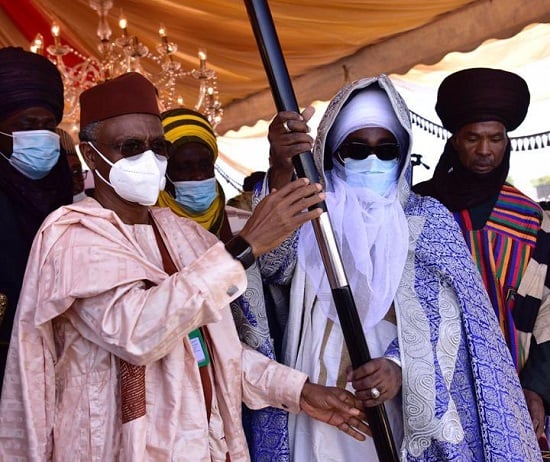
Governors are Not Kingmakers: Stop them at the Palace Gates 

In a constitutional democracy where traditions and modern governance must harmonize, the 2020 succession crisis in Zazzau Emirate stands as a devastating example of how political power can hijack heritage. With the recent petition by the deposed Wazirin Zazzau, Ibrahim Aminu, now before the Kaduna State House of Assembly—a matter pending before the Supreme Court—it is imperative that legislative bodies across the federation take note. What is at stake is not merely the fate of a royal stool, but the soul of our traditional institutions, which have become vulnerable to the reckless ambitions of transient political actors. 

Following the death of Emir Shehu Idris in 2020, the Zazzau Kingmakers, led by the then Waziri undertook a meticulous process, guided by native customs, Islamic tenets, and the Chiefs [Appointment and Deposition] Law of Kaduna State. Eleven princes contested. Each candidate was evaluated against stringent criteria: royal lineage, educational background, religious standing, moral record, administrative experience, and community service. 

Iyan Zazzau Bashari Aminu, secured the majority vote of the kingmakers (3 out of 5). The runners-up were the then Yariman Zazzau, Muhammad Munir Ja’afaru, and Turakin Zazzau, Aminu Shehu Idris, each with one vote. Ahmad Nuhu Bamalli, the eventual appointee, received no vote. He failed to meet the minimum requirement of having served as a District or Village Head within the Emirate—an essential qualification long upheld in Zazzau’s succession norms. By all logic, law, and tradition, he was not eligible. 

Yet, under the shadow of night and in utter contempt for tradition, then-Governor Nasir El-Rufai imposed his will. Upon receiving the report from the kingmakers, the governor, enraged that his favored candidate had not been shortlisted, summoned the Kingmakers to the Government House and demanded a reversal. When they refused—standing firm on their oath and ancestral integrity—he sidestepped them and unilaterally appointed Bamalli. 

This is not just executive overreach. It is cultural desecration. It is political banditry against an institution that predates the Nigerian state itself. 

The implications of El-Rufai’s action go beyond Zaria. This crisis is a cautionary tale for every emirate, every traditional stool, and every cultural custodian across Nigeria. When governors can dismiss kingmakers like clerks, nullify sacred processes like mere bureaucracy, and substitute the voice of tradition with the noise of ambition, then no throne is safe, no culture sacred, and no institution immune. 

This warning is even more urgent today, as we witness a similar storm gathering in Kano. The recent attempt to dethrone Emir Aminu Ado Bayero has raised deep constitutional and moral questions. Just as El-Rufai bypassed process to impose his will, the current political elite in Kano appears to be using the law as a tool for vendetta—undoing a lawful emirship on the altar of political realignment. In Zaria, the kingmakers were ignored; in Kano, the law is being retrofitted. In both cases, tradition has become the casualty of political ambition. 

Let it be stated clearly: the removal of Emir Aminu Ado Bayero is not only injudicious—it is destabilizing. The office of the Emir is not a prize to be passed between governors; it is a sacred covenant between the crown and the community. To unseat a sitting Emir for no reason other than political convenience is a grievous affront to both law and legacy. 

We cannot protest Zazzau and ignore Kano. The principle must be consistent. The politicization of traditional institutions—whether through imposition or dethronement—must be rejected in all its forms. 

The Kaduna House of Assembly now has the rare opportunity to restore dignity to the emirate and sanity to the system. The petition by the former Waziri is not an act of rebellion; it is an act of restitution. He has called for justice—not vengeance. He is not asking for political favor but for traditional order to be restored. His demands are modest yet principled: reverse the appointment of the imposed Emir, reinstate the legitimate process, restore the Waziri’s wrongfully revoked title and position, and respect the customs that have guided the emirate for centuries. 

What El-Rufai did in 2020 was not just a political miscalculation. It was a deliberate assault on Zazzau’s heritage, a manipulation of process to reward loyalty over legitimacy. It must be condemned unequivocally by all who believe in the rule of law and the sanctity of traditional institutions. His preference for Bamalli may have stemmed from political convenience or private alignment—but a governor has no right to substitute meritocracy and tradition with mediocrity and banditry. 

We must reject the precedent that has been set. The Emirate is not a political appointment; it is a sacred trust passed down generations, with rituals, checks, and spiritual significance. To violate it is to imperil the soul, identity and historical consequence of the people it serves. 

It is incumbent upon all Houses of Assembly across Northern Nigeria to consider motions in solidarity. Let them send a message that traditional councils are not extensions of state bureaucracy, but independent repositories of community identity and moral authority. Let this be a turning point in the protection of cultural heritage from political vandalism. 

The Supreme Court, when it eventually rules, must treat this not just as an administrative dispute but as a constitutional question of federalism and traditional autonomy. In the meantime, the Kaduna State Assembly must act decisively to halt the continuing erosion of public confidence and historical dignity. 

This is not about restoring a man; it is about restoring a principle. If we do not stop the politicization of our traditional institutions today, our children will inherit a Nigeria where governors anoint Emirs, not customs. Where laws bow to preferences. And where tradition and history become a footnote to power. 

Muhammad DanAsabe Umar can be reached at abulfaidx@gmail.com 

Hot this week

What They Never Told You: Ayatollah Khomeini Was a Great Jurist, Not a Fanatic

The West gave Iran a name — theocracy — and buried the reality beneath it. They never told you that Khomeini spent decades mastering one of the most rigorous legal traditions in human history, or that he built a constitutional republic ratified by 98 percent of the Iranian people in a free referendum. A nation of fanatics can be bombed with a clear conscience. A constitutional republic of 93 million people, founded by a supremely gifted jurist, is harder to dispose of.

‘We Won’t Be Silenced’: ADC Rejects Court-Ordered Deregistration

Abdullahi said: We did not expect the level of judicial rascality that was demonstrated. When a Court of Appeal says stay proceedings until October 27 and a lower court goes ahead to deliver judgment on the same matter, it is bizarre and dangerous."

Sheikh Gumi and the Case for Dialogue

It is against this background that I offer my views on the issues of banditry and kidnappings, particularly in northern Nigeria. My perspective is informed by knowledge acquired during my graduate studies at the Fletcher School of Law and Diplomacy, Tufts University, in the United States. Two courses, in particular, shaped my understanding of conflicts and their resolution. The first was International Security Studies, taught by Professor Richard Shultz, a consultant to the Pentagon. The second was International Negotiation, taught by Professor Diana Chigas, a member of the team that helped negotiate the end of apartheid in South Africa.

June 12: Democracy’s Sacred Mandate and Nigeria’s Unfinished Journey

Democracy has delivered some notable gains. The country has witnessed peaceful transfers of power, expanded political participation, a more vibrant media landscape, and greater civic engagement. These achievements should not be dismissed. They are evidence that democratic governance, despite its imperfections, remains preferable to military rule. However, democracy cannot survive on political rituals alone. For millions of Nigerians battling insecurity, unemployment, poverty, inflation, and inadequate infrastructure, democracy must mean more than periodic elections.

Atiku Picks Amaechi as Running Mate in Strategic Move

In a move that could significantly reshape Nigeria's political landscape ahead of the next presidential election, the presidential candidate of the African Democratic Congress (ADC), Alhaji Atiku Abubakar, has nominated former Minister of Transportation, Chief Chibuike Rotimi Amaechi, as his running mate.

Topics

What They Never Told You: Ayatollah Khomeini Was a Great Jurist, Not a Fanatic

The West gave Iran a name — theocracy — and buried the reality beneath it. They never told you that Khomeini spent decades mastering one of the most rigorous legal traditions in human history, or that he built a constitutional republic ratified by 98 percent of the Iranian people in a free referendum. A nation of fanatics can be bombed with a clear conscience. A constitutional republic of 93 million people, founded by a supremely gifted jurist, is harder to dispose of.

‘We Won’t Be Silenced’: ADC Rejects Court-Ordered Deregistration

Abdullahi said: We did not expect the level of judicial rascality that was demonstrated. When a Court of Appeal says stay proceedings until October 27 and a lower court goes ahead to deliver judgment on the same matter, it is bizarre and dangerous."

Sheikh Gumi and the Case for Dialogue

It is against this background that I offer my views on the issues of banditry and kidnappings, particularly in northern Nigeria. My perspective is informed by knowledge acquired during my graduate studies at the Fletcher School of Law and Diplomacy, Tufts University, in the United States. Two courses, in particular, shaped my understanding of conflicts and their resolution. The first was International Security Studies, taught by Professor Richard Shultz, a consultant to the Pentagon. The second was International Negotiation, taught by Professor Diana Chigas, a member of the team that helped negotiate the end of apartheid in South Africa.

June 12: Democracy’s Sacred Mandate and Nigeria’s Unfinished Journey

Democracy has delivered some notable gains. The country has witnessed peaceful transfers of power, expanded political participation, a more vibrant media landscape, and greater civic engagement. These achievements should not be dismissed. They are evidence that democratic governance, despite its imperfections, remains preferable to military rule. However, democracy cannot survive on political rituals alone. For millions of Nigerians battling insecurity, unemployment, poverty, inflation, and inadequate infrastructure, democracy must mean more than periodic elections.

Atiku Picks Amaechi as Running Mate in Strategic Move

In a move that could significantly reshape Nigeria's political landscape ahead of the next presidential election, the presidential candidate of the African Democratic Congress (ADC), Alhaji Atiku Abubakar, has nominated former Minister of Transportation, Chief Chibuike Rotimi Amaechi, as his running mate.

Three Killed as Gunmen Raid Kogi School

The Kogi State Police Command said the attackers arrived in large numbers, travelling on about 40 motorcycles, and targeted the school and nearby surroundings in what authorities believe may have been an attempt to carry out kidnappings.

Kwankwaso Weighs NDC Exit as Candidate Purge Deepens Party Crisis

Amid the growing controversy, there is a call urging Kwankwaso to leave the NDC if he believes he is being unfairly treated by the party leadership. Supporters of Kwankwaso say he should pursue his political ambitions on another platform if he feels constrained, marginalized, or denied a fair role within the party.

Sheikh Gumi: An Asset Nigeria Should Not Ignore

For many years, Gumi has attracted criticism because of his contacts with bandits. Some commentators have accused him of being too sympathetic to them. Others have questioned why he meets with them in their forest hideouts. But instead of seeing him as part of the problem, Nigerians should ask whether he can be part of the solution.
spot_img

Related Articles

Popular Categories

spot_imgspot_img