
Dangote and the Cabal   

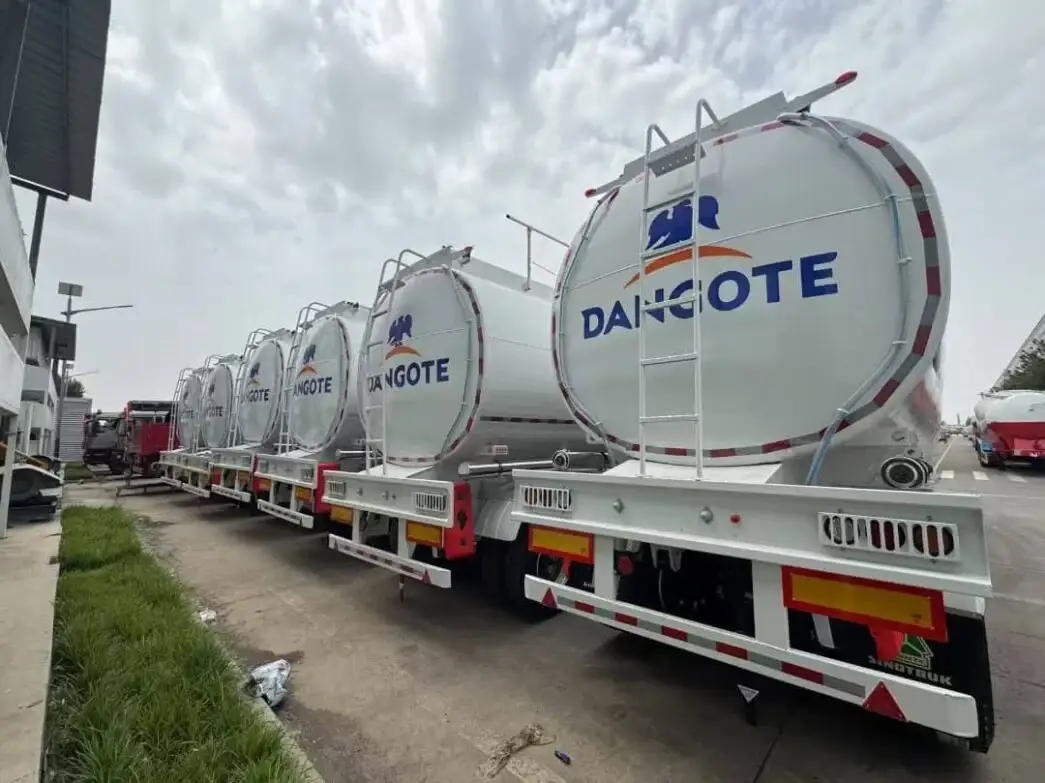
When a group of independent oil transporters and petroleum marketers threatened to shut down distribution because Aliko Dangote dared to buy gas-powered trucks for his refinery, Nigerians shook their heads in disbelief. The audacity is stunning. Here we are, a country suffocating under fuel queues, high inflation, and broken supply chains — yet a cabal of truck owners wants to drag us backwards in the name of “protecting their business.” Let’s call it what it is: a battle of survival for a cartel that refuses to face reality. 

This is not about patriotism. It is not about protecting consumers. It is not even about the economy. It is raw self-interest dressed up as collective struggle. And if history teaches us anything, it is that those who stand in the way of innovation are eventually buried under its wheels.  

The unions say Dangote is “killing their livelihood” with gas-powered trucks. But let’s be honest: what they are really crying about is losing their stranglehold on petroleum logistics. For decades, they thrived on inefficiency, broken roads, and endless scarcity. They got rich while ordinary Nigerians suffered. 

Now, one refinery dares to modernize distribution — cutting costs, reducing pollution, improving efficiency — and suddenly they discover their voice. Nigerians must not fall for this crocodile sympathy. These transporters are not fighting for us; they are fighting against the future.  

From the Industrial Revolution to today’s digital economy, history has always been brutal on those who resist change.  

The horse-and-carriage industry collapsed when the automobile roared onto the streets. No strike could stop Henry Ford’s assembly line. 

The mighty typewriter empires died when computers took over. You don’t see Olivetti or Remington leading global trade fairs anymore. 

 NITEL, once Nigeria’s telecommunication monopoly, crumbled because it couldn’t see past its rusting landlines while mobile phones conquered the world. 

 Traders who mocked online shopping now watch helplessly as Jumia, Amazon, and Alibaba dominate markets. 

The lesson? Technology does not ask for permission. It sweeps aside the timid, the lazy, and the fearful. 

 If these transporters make good on their strike threat, who suffers? Not Dangote. Not the politicians. Not the wealthy elite. It is the ordinary Nigerian who will line up under the burning sun for petrol. It is the bus driver whose costs will soar. It is the market woman who will pay double to transport her goods. It is the student who cannot afford transportation to class. A strike is nothing but blackmail — and the ransom is the suffering of 200 million people. How shameless.  

This is where leadership matters. Government must not stand idle, wringing its hands while cartels threaten the people. The state cannot play the role of a cowardly referee in a match where the citizens are the ball. Nigerians elected leaders to protect their interests, not to act as errand boys for vested groups. 

If government sides with the unions in the name of “peace,” it will only embolden every greedy cartel that holds the economy hostage. From fuel scarcity to food hoarding, Nigerians have suffered enough. This is the moment for government to show courage: protect the people, enforce the law, and ensure that progress is not strangled by selfish middlemen. 

The truth is simple: modernization is not optional. Gas-powered trucks are cheaper, cleaner, and more sustainable. They are the future of logistics, not only in Nigeria but across the globe. If transporters have sense, they will retool, invest in gas-powered fleets, and join the race forward. If they don’t, they will be remembered like the typewriter — nostalgic, irrelevant, and extinct. 

Instead of blackmail, they should be negotiating partnerships with Dangote, lobbying for government support to transition to new fleets, and carving a role in Nigeria’s future energy ecosystem. But to sit on their old trucks, puffing smoke into the sky, and demand that 200 million people pause progress for their sake? That is economic terrorism, not activism. 

We must be clear: this fight is not about Dangote alone. It is about whether Nigeria moves forward or remains stuck in the past. The Independent Oil Transporters have a choice: embrace change and grow or resist change and die. 

The government must not sit on the fence. It must side with Nigerians, not with cartels. As Karl Marx once said, history repeats itself — first as tragedy, then as farce. If these unions insist on making themselves the farce of Nigeria’s energy story, they alone will carry the shame. 

Hot this week

What They Never Told You: Ayatollah Khomeini Was a Great Jurist, Not a Fanatic

The West gave Iran a name — theocracy — and buried the reality beneath it. They never told you that Khomeini spent decades mastering one of the most rigorous legal traditions in human history, or that he built a constitutional republic ratified by 98 percent of the Iranian people in a free referendum. A nation of fanatics can be bombed with a clear conscience. A constitutional republic of 93 million people, founded by a supremely gifted jurist, is harder to dispose of.

‘We Won’t Be Silenced’: ADC Rejects Court-Ordered Deregistration

Abdullahi said: We did not expect the level of judicial rascality that was demonstrated. When a Court of Appeal says stay proceedings until October 27 and a lower court goes ahead to deliver judgment on the same matter, it is bizarre and dangerous."

Sheikh Gumi and the Case for Dialogue

It is against this background that I offer my views on the issues of banditry and kidnappings, particularly in northern Nigeria. My perspective is informed by knowledge acquired during my graduate studies at the Fletcher School of Law and Diplomacy, Tufts University, in the United States. Two courses, in particular, shaped my understanding of conflicts and their resolution. The first was International Security Studies, taught by Professor Richard Shultz, a consultant to the Pentagon. The second was International Negotiation, taught by Professor Diana Chigas, a member of the team that helped negotiate the end of apartheid in South Africa.

June 12: Democracy’s Sacred Mandate and Nigeria’s Unfinished Journey

Democracy has delivered some notable gains. The country has witnessed peaceful transfers of power, expanded political participation, a more vibrant media landscape, and greater civic engagement. These achievements should not be dismissed. They are evidence that democratic governance, despite its imperfections, remains preferable to military rule. However, democracy cannot survive on political rituals alone. For millions of Nigerians battling insecurity, unemployment, poverty, inflation, and inadequate infrastructure, democracy must mean more than periodic elections.

Atiku Picks Amaechi as Running Mate in Strategic Move

In a move that could significantly reshape Nigeria's political landscape ahead of the next presidential election, the presidential candidate of the African Democratic Congress (ADC), Alhaji Atiku Abubakar, has nominated former Minister of Transportation, Chief Chibuike Rotimi Amaechi, as his running mate.

Topics

What They Never Told You: Ayatollah Khomeini Was a Great Jurist, Not a Fanatic

The West gave Iran a name — theocracy — and buried the reality beneath it. They never told you that Khomeini spent decades mastering one of the most rigorous legal traditions in human history, or that he built a constitutional republic ratified by 98 percent of the Iranian people in a free referendum. A nation of fanatics can be bombed with a clear conscience. A constitutional republic of 93 million people, founded by a supremely gifted jurist, is harder to dispose of.

‘We Won’t Be Silenced’: ADC Rejects Court-Ordered Deregistration

Abdullahi said: We did not expect the level of judicial rascality that was demonstrated. When a Court of Appeal says stay proceedings until October 27 and a lower court goes ahead to deliver judgment on the same matter, it is bizarre and dangerous."

Sheikh Gumi and the Case for Dialogue

It is against this background that I offer my views on the issues of banditry and kidnappings, particularly in northern Nigeria. My perspective is informed by knowledge acquired during my graduate studies at the Fletcher School of Law and Diplomacy, Tufts University, in the United States. Two courses, in particular, shaped my understanding of conflicts and their resolution. The first was International Security Studies, taught by Professor Richard Shultz, a consultant to the Pentagon. The second was International Negotiation, taught by Professor Diana Chigas, a member of the team that helped negotiate the end of apartheid in South Africa.

June 12: Democracy’s Sacred Mandate and Nigeria’s Unfinished Journey

Democracy has delivered some notable gains. The country has witnessed peaceful transfers of power, expanded political participation, a more vibrant media landscape, and greater civic engagement. These achievements should not be dismissed. They are evidence that democratic governance, despite its imperfections, remains preferable to military rule. However, democracy cannot survive on political rituals alone. For millions of Nigerians battling insecurity, unemployment, poverty, inflation, and inadequate infrastructure, democracy must mean more than periodic elections.

Atiku Picks Amaechi as Running Mate in Strategic Move

In a move that could significantly reshape Nigeria's political landscape ahead of the next presidential election, the presidential candidate of the African Democratic Congress (ADC), Alhaji Atiku Abubakar, has nominated former Minister of Transportation, Chief Chibuike Rotimi Amaechi, as his running mate.

Three Killed as Gunmen Raid Kogi School

The Kogi State Police Command said the attackers arrived in large numbers, travelling on about 40 motorcycles, and targeted the school and nearby surroundings in what authorities believe may have been an attempt to carry out kidnappings.

Kwankwaso Weighs NDC Exit as Candidate Purge Deepens Party Crisis

Amid the growing controversy, there is a call urging Kwankwaso to leave the NDC if he believes he is being unfairly treated by the party leadership. Supporters of Kwankwaso say he should pursue his political ambitions on another platform if he feels constrained, marginalized, or denied a fair role within the party.

Sheikh Gumi: An Asset Nigeria Should Not Ignore

For many years, Gumi has attracted criticism because of his contacts with bandits. Some commentators have accused him of being too sympathetic to them. Others have questioned why he meets with them in their forest hideouts. But instead of seeing him as part of the problem, Nigerians should ask whether he can be part of the solution.
spot_img

Related Articles

Popular Categories

spot_imgspot_img