
Conservative Pundit Urges Emergency U.S. Base and Possible Strike in Nigeria

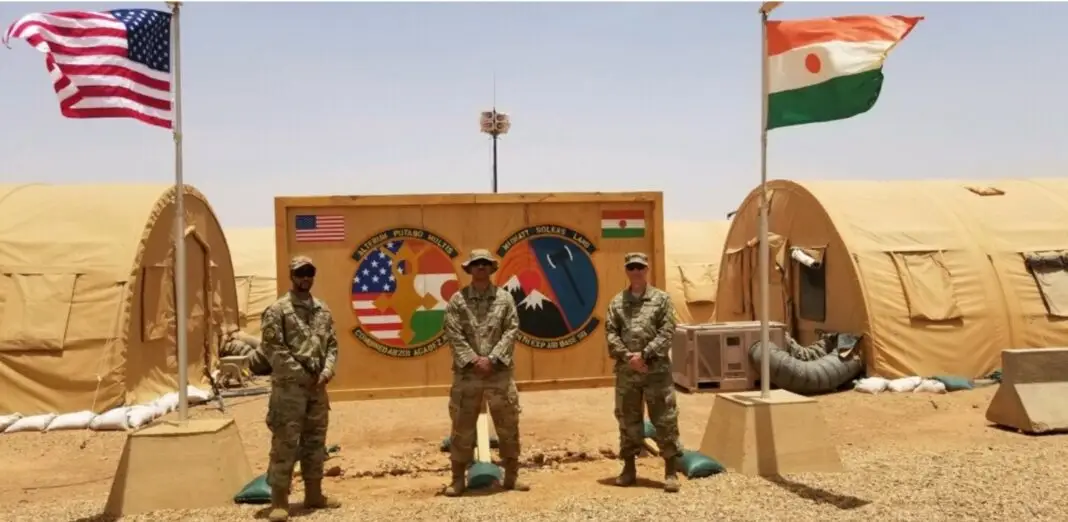
Conservative commentator Walid Phares has urged the Trump administration to consider the immediate establishment of a U.S. emergency base in Nigeria and to weigh the possibility of targeted military strikes. Phares, a former advisor to the 2016 Trump presidential campaign, shared his recommendations on social media, emphasizing that a base in Port Harcourt—the principal port city of the Biafra region—would serve as a critical hub for deterring violence and delivering rapid humanitarian aid to affected communities.

Phares emphasized the urgency of the situation, citing ongoing massacres of Christian communities and threats against moderate Muslims in Nigeria. He argued that the creation of an emergency base would not only enable swift deployment of international humanitarian aid but also facilitate targeted assistance from American churches and organizations. Such a move, he contends, would help protect vulnerable populations and bolster the international response to the crisis.

According to Phares, President Donald Trump has already issued two strong statements condemning recent jihadist attacks on Nigerian Christian communities. The president has reportedly directed the Secretary of War to prepare contingency plans to protect affected communities, particularly in the event that the Nigerian federal government fails to address the ongoing violence—a scenario Phares notes has persisted for years in the country’s northern and central regions.

In addition to humanitarian support and contingency planning, Phares suggested that the Trump administration consider targeted military strikes against jihadist forces as a means to deter further attacks. While it is unclear whether such action is imminent, the proposal reflects growing frustration among U.S. conservatives over the continued instability and violence in Nigeria.

Phares directed his message to several key U.S. officials and agencies, including President Trump, Vice President JD Vance, Senator Marco Rubio, the Secretary of War, and leaders at U.S. Africa Command, signaling a desire for coordinated, high-level engagement on the issue. He also highlighted the role of American churches in providing humanitarian aid, underscoring the multi-faceted approach he believes is necessary to address the crisis.

As the situation in Nigeria remains volatile, Phares’s recommendations add to the ongoing debate over the appropriate level of U.S. involvement in combating extremist violence and supporting at-risk communities abroad.

However, commenting on Phares’ tweet, Jane Duru, a Nigerian software developer based in Portugal wrote, “This talk about a ‘US emergency base in Port Harcourt’ isn’t about humanitarian aid. It’s about oil, geopolitical control, and strategic positioning.

“Port Harcourt is Nigeria’s oil heart. That’s the entry point to the Niger Delta, where most of Nigeria’s crude is refined and exported. Whoever controls that region controls Nigeria’s economic pulse. ‘Protection of Christians’ is the narrative oil, is the motive. They use religion because it divides and distracts. But if their goal was purely humanitarian, they’d build hospitals, schools, and trauma centers not military bases beside oil pipelines and export terminals.

“History repeats itself. In Iraq, they said it was about weapons of mass destruction it was oil. In Libya, they said it was about human rights it was oil. In Venezuela, they said it was about democracy it was oil. And now, in Nigeria, they say it’s about Christians but again, it’s oil.

“A base in Port Harcourt is not ‘help’, its leverage. It gives them military control over the Gulf of Guinea, proximity to West Africa’s energy routes, and influence over OPEC’s largest African producer.

“Let’s not fall for the same script written decades ago. Nigeria must protect its sovereignty, its people, and its oil because whoever controls our energy, controls our freedom. We don’t need a foreign base; we need a reformed system that ensures our oil wealth finally serves Nigerians not outsiders or the same corrupt elite.”


Hot this week

What They Never Told You: Ayatollah Khomeini Was a Great Jurist, Not a Fanatic

The West gave Iran a name — theocracy — and buried the reality beneath it. They never told you that Khomeini spent decades mastering one of the most rigorous legal traditions in human history, or that he built a constitutional republic ratified by 98 percent of the Iranian people in a free referendum. A nation of fanatics can be bombed with a clear conscience. A constitutional republic of 93 million people, founded by a supremely gifted jurist, is harder to dispose of.

‘We Won’t Be Silenced’: ADC Rejects Court-Ordered Deregistration

Abdullahi said: We did not expect the level of judicial rascality that was demonstrated. When a Court of Appeal says stay proceedings until October 27 and a lower court goes ahead to deliver judgment on the same matter, it is bizarre and dangerous."

Sheikh Gumi and the Case for Dialogue

It is against this background that I offer my views on the issues of banditry and kidnappings, particularly in northern Nigeria. My perspective is informed by knowledge acquired during my graduate studies at the Fletcher School of Law and Diplomacy, Tufts University, in the United States. Two courses, in particular, shaped my understanding of conflicts and their resolution. The first was International Security Studies, taught by Professor Richard Shultz, a consultant to the Pentagon. The second was International Negotiation, taught by Professor Diana Chigas, a member of the team that helped negotiate the end of apartheid in South Africa.

June 12: Democracy’s Sacred Mandate and Nigeria’s Unfinished Journey

Democracy has delivered some notable gains. The country has witnessed peaceful transfers of power, expanded political participation, a more vibrant media landscape, and greater civic engagement. These achievements should not be dismissed. They are evidence that democratic governance, despite its imperfections, remains preferable to military rule. However, democracy cannot survive on political rituals alone. For millions of Nigerians battling insecurity, unemployment, poverty, inflation, and inadequate infrastructure, democracy must mean more than periodic elections.

Atiku Picks Amaechi as Running Mate in Strategic Move

In a move that could significantly reshape Nigeria's political landscape ahead of the next presidential election, the presidential candidate of the African Democratic Congress (ADC), Alhaji Atiku Abubakar, has nominated former Minister of Transportation, Chief Chibuike Rotimi Amaechi, as his running mate.

Topics

What They Never Told You: Ayatollah Khomeini Was a Great Jurist, Not a Fanatic

The West gave Iran a name — theocracy — and buried the reality beneath it. They never told you that Khomeini spent decades mastering one of the most rigorous legal traditions in human history, or that he built a constitutional republic ratified by 98 percent of the Iranian people in a free referendum. A nation of fanatics can be bombed with a clear conscience. A constitutional republic of 93 million people, founded by a supremely gifted jurist, is harder to dispose of.

‘We Won’t Be Silenced’: ADC Rejects Court-Ordered Deregistration

Abdullahi said: We did not expect the level of judicial rascality that was demonstrated. When a Court of Appeal says stay proceedings until October 27 and a lower court goes ahead to deliver judgment on the same matter, it is bizarre and dangerous."

Sheikh Gumi and the Case for Dialogue

It is against this background that I offer my views on the issues of banditry and kidnappings, particularly in northern Nigeria. My perspective is informed by knowledge acquired during my graduate studies at the Fletcher School of Law and Diplomacy, Tufts University, in the United States. Two courses, in particular, shaped my understanding of conflicts and their resolution. The first was International Security Studies, taught by Professor Richard Shultz, a consultant to the Pentagon. The second was International Negotiation, taught by Professor Diana Chigas, a member of the team that helped negotiate the end of apartheid in South Africa.

June 12: Democracy’s Sacred Mandate and Nigeria’s Unfinished Journey

Democracy has delivered some notable gains. The country has witnessed peaceful transfers of power, expanded political participation, a more vibrant media landscape, and greater civic engagement. These achievements should not be dismissed. They are evidence that democratic governance, despite its imperfections, remains preferable to military rule. However, democracy cannot survive on political rituals alone. For millions of Nigerians battling insecurity, unemployment, poverty, inflation, and inadequate infrastructure, democracy must mean more than periodic elections.

Atiku Picks Amaechi as Running Mate in Strategic Move

In a move that could significantly reshape Nigeria's political landscape ahead of the next presidential election, the presidential candidate of the African Democratic Congress (ADC), Alhaji Atiku Abubakar, has nominated former Minister of Transportation, Chief Chibuike Rotimi Amaechi, as his running mate.

Three Killed as Gunmen Raid Kogi School

The Kogi State Police Command said the attackers arrived in large numbers, travelling on about 40 motorcycles, and targeted the school and nearby surroundings in what authorities believe may have been an attempt to carry out kidnappings.

Kwankwaso Weighs NDC Exit as Candidate Purge Deepens Party Crisis

Amid the growing controversy, there is a call urging Kwankwaso to leave the NDC if he believes he is being unfairly treated by the party leadership. Supporters of Kwankwaso say he should pursue his political ambitions on another platform if he feels constrained, marginalized, or denied a fair role within the party.

Sheikh Gumi: An Asset Nigeria Should Not Ignore

For many years, Gumi has attracted criticism because of his contacts with bandits. Some commentators have accused him of being too sympathetic to them. Others have questioned why he meets with them in their forest hideouts. But instead of seeing him as part of the problem, Nigerians should ask whether he can be part of the solution.
spot_img

Related Articles

Popular Categories

spot_imgspot_img