
Monday, February 16, 2026
34.1 C
Abuja

Judicial and Political Suppression of Opposition: Threats to our Democracy

Democracy thrives on the principles of pluralism, open debate, and the existence of a viable opposition. The interplay between the judiciary and political actors has historically influenced the health and resilience of our democratic institutions. The suppression of opposition, whether through legal manipulation or political intimidation, poses a grave risk to democratic stability, as evidenced during the presidency of Shehu Shagari (1979–1983). We are now back to that era as evidenced by contradicting judicial pronouncements and the actions of politicians aligned with the All Progressives Congress (APC), the ruling party, against the opposition. If lessons from the Shehu Shagari era were to be drawn, the implication of current happenings in the political space, appears to be a clear and present danger to our democracy.

During President Shehu Shagari’s administration, Nigeria witnessed several instances of opposition suppression. The ruling National Party of Nigeria (NPN) was accused of using state resources and institutions to undermine rival parties, notably the Unity Party of Nigeria (UPN) and the Nigerian People’s Party (NPP). Allegations included manipulation of electoral processes, biased rulings by the judiciary, and the use of security agencies to intimidate political opponents.

Elections during this era were marred by accusations of vote rigging and judicial endorsement of controversial results. The judiciary, in some cases, upheld questionable electoral victories, fueling public distrust in both the courts and the democratic process. Such actions created a climate of political instability and contributed to the eventual military coup in December 1983, which ended the Second Republic.

Similar patterns persist in Nigeria’s current political landscape. Politicians continue to leverage legal technicalities to disqualify opposition candidates or to delay court cases that challenge their authority. Judicial decisions in high-profile election petitions and deliberately created intraparty squabbles often raise questions about impartiality, with accusations of political interference not uncommon.

For instance, opposition leaders have faced charges widely perceived as politically motivated, such as corruption or treason. This has seen important opposition figures both in office and out of it, decamping to the ruling party and keeping their offices against extant laws.

The suppression of opposition undermines the fundamental tenets of democracy by stifling dissent, eroding public trust in institutions, and limiting voter choice. When the judiciary and politicians collaborate, wittingly or unwittingly, to silence alternative voices, accountability suffers and democratic norms weaken.

As seen during the Shagari era, these practices can precipitate political crises, disenfranchise citizens, and pave the way for authoritarian interventions, such as military coups. In the long term, continuous suppression risks entrenching a culture of impunity and reducing the effectiveness of checks and balances that are essential for democratic governance.

The lessons from the Shehu Shagari era underscore the dangers of judicial and political suppression of the opposition. To safeguard democracy, it is imperative for institutions to uphold independence and fairness, and for political leaders to respect the rights of dissenting voices. Only through genuine pluralism and institutional integrity can we avoid repeating the mistakes of the past and build a resilient democratic future.

As a prodemocracy activist, President Bola Tinubu should do the needful to save our democracy from collapse. He has the power and Nigerians hope he will use it.


Hot this week

President Tinubu Felicitates NNPC Board Chair Musa Kida at 65

President Tinubu Felicitates NNPC Board Chair Musa Kida at 65

We Are Better Together: A Caution to the Advocates of Separation

It must first be clearly stated that the North’s preference for Nigerian unity is not because it is incapable of standing on its own, nor because it is uniquely dependent on the present federal arrangement for its existence. Historically, the North demonstrated a strong capacity for political cohesion and governance under the regional system, where the Caliphate produced the Premier and the Sultanate provided the Governor. With a vast, geographically contiguous landmass, a dominant lingua franca and largely shared religious and cultural frameworks, a substantial part of Northern Nigeria has historically functioned as a coherent political space.

PDP Disputes Ibadan Court, Affirms NWC Validity 

The PDP chairman noted that the Ibadan ruling was only one of several judgments of the Federal High Court on the matter and that the core issues were already before the Court of Appeal. He described the decision as “technically academic” pending an authoritative pronouncement by the appellate court. Turaki reassured party members that the National Working Committee produced by the Ibadan Convention remained “legally intact and firmly in place,” and committed to what he described as the party’s ongoing rebirth.

A Setback for Wike in PDP Crisis 

While the Supreme Court’s earlier intervention briefly revived Anyanwu’s standing, Tuesday’s dismissal signals that legal victories alone may no longer be enough to secure long-term control. The struggle within the PDP is increasingly shifting from courtrooms to internal political negotiations, and in that arena, the momentum appears to be slipping away from the Wike camp.

NNPC Ltd. Debt: FG Forgave Interest, Not Principal, Officials Say 

Fresh details have emerged that challenge the widespread belief that the...

Topics

President Tinubu Felicitates NNPC Board Chair Musa Kida at 65

President Tinubu Felicitates NNPC Board Chair Musa Kida at 65

We Are Better Together: A Caution to the Advocates of Separation

It must first be clearly stated that the North’s preference for Nigerian unity is not because it is incapable of standing on its own, nor because it is uniquely dependent on the present federal arrangement for its existence. Historically, the North demonstrated a strong capacity for political cohesion and governance under the regional system, where the Caliphate produced the Premier and the Sultanate provided the Governor. With a vast, geographically contiguous landmass, a dominant lingua franca and largely shared religious and cultural frameworks, a substantial part of Northern Nigeria has historically functioned as a coherent political space.

PDP Disputes Ibadan Court, Affirms NWC Validity 

The PDP chairman noted that the Ibadan ruling was only one of several judgments of the Federal High Court on the matter and that the core issues were already before the Court of Appeal. He described the decision as “technically academic” pending an authoritative pronouncement by the appellate court. Turaki reassured party members that the National Working Committee produced by the Ibadan Convention remained “legally intact and firmly in place,” and committed to what he described as the party’s ongoing rebirth.

A Setback for Wike in PDP Crisis 

While the Supreme Court’s earlier intervention briefly revived Anyanwu’s standing, Tuesday’s dismissal signals that legal victories alone may no longer be enough to secure long-term control. The struggle within the PDP is increasingly shifting from courtrooms to internal political negotiations, and in that arena, the momentum appears to be slipping away from the Wike camp.

NNPC Ltd. Debt: FG Forgave Interest, Not Principal, Officials Say 

Fresh details have emerged that challenge the widespread belief that the...

No Terrorists Were Killed in U.S. Strike on ‘ISIS’ in Nigeria 

Abu Jabo dismissed reports that terrorists were killed in the strike, stressing that Jabo has no history of insurgency or bandit activity. “There are no terrorists here. There are no Christians here either. Jabo is a peaceful, Muslim community. We do not have security problems,” he added. Local sources also dispute claims that the area harbors ISIS-linked elements, describing Jabo as a quiet farming settlement with no record of extremist activity.

Trump: U.S. Hit Terror Targets in Nigeria 

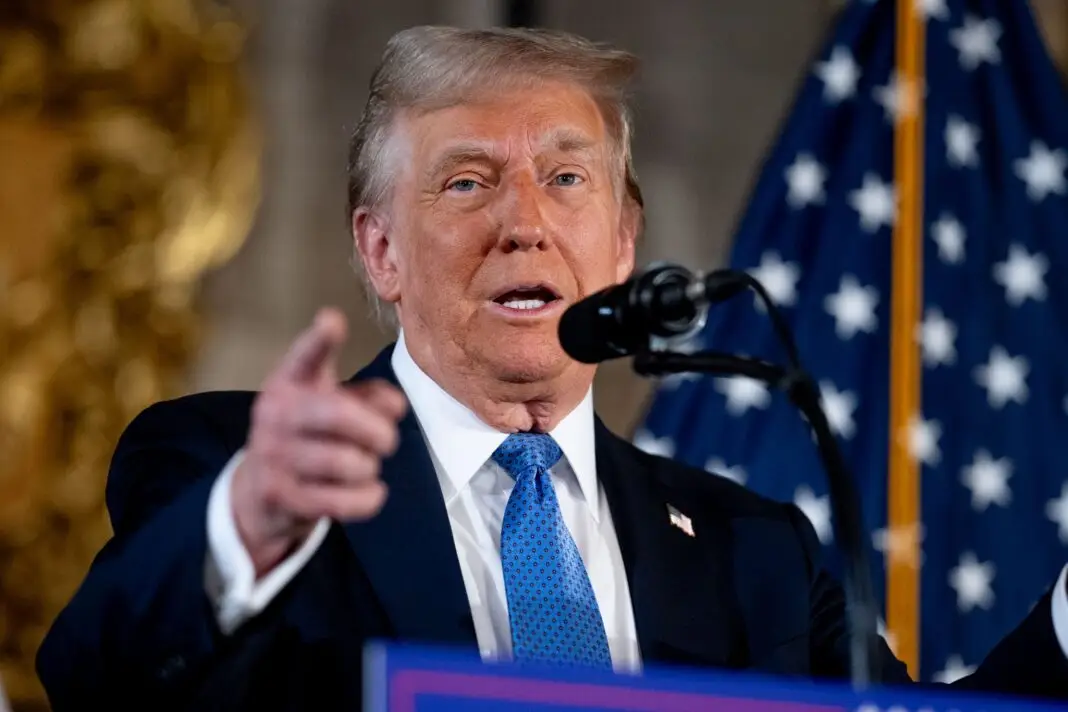
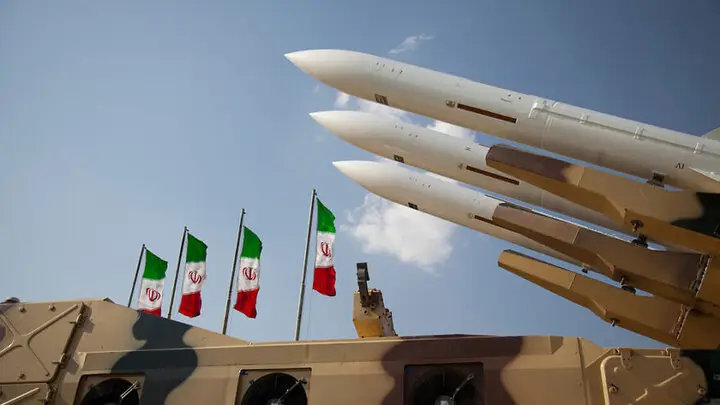
In a strongly worded statement posted on his verified social media account, Trump said the United States, acting under his direction as Commander-in-Chief, had launched “powerful and deadly” strikes against what he described as ISIS-linked terrorists operating in Northwest Nigeria. He claimed the operation was in response to the killing of Christians and warned of further military action if such attacks continued. 

NNPC Limited: Early Signals from the Kida–Ojulari Era 

As a non-executive chairman with decades of industry experience, Engr. Kida’s influence lies less in operational detail and more in direction-setting and discipline. The reconstituted board signals a renewed emphasis on corporate governance, professionalism and alignment with the spirit of the PIA, that NNPC Limited should operate as a business, not a government department. 
spot_img

Related Articles

Popular Categories

spot_imgspot_img