

Monday, February 16, 2026
30 C
Abuja

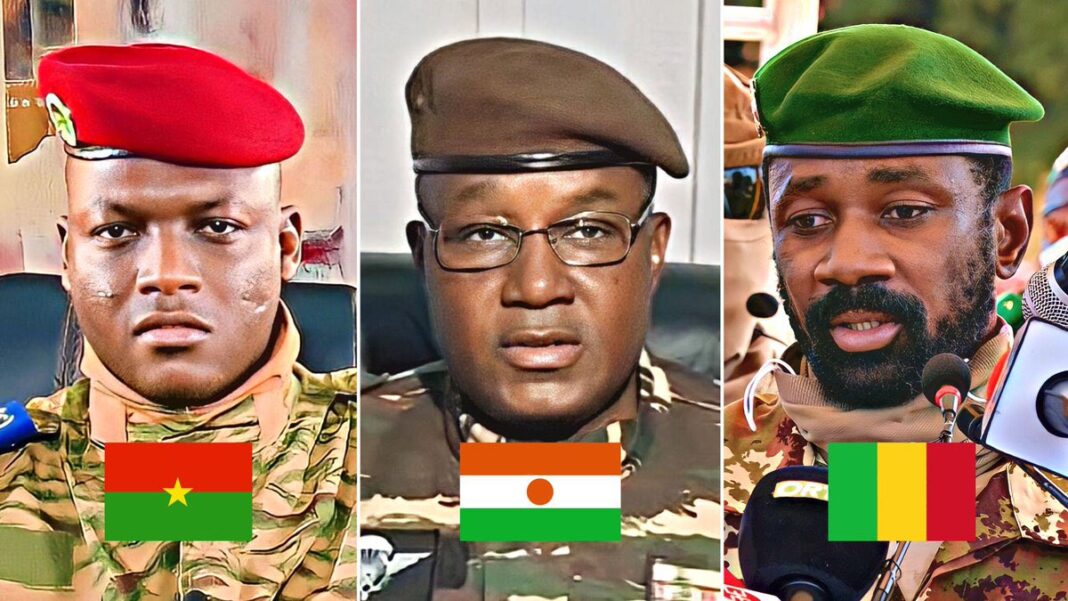
The Impact of Mali, Niger, and Burkina Faso’s Withdrawal from ECOWAS on Regional Security 

Mali, Niger, and Burkina Faso have faced numerous security challenges in recent years, including the rise of extremist groups, internal conflicts, and political instability. These countries have been on the frontline of the fight against terrorism in the Sahel region, with various militant groups exploiting porous borders and weak governance structures to conduct their operations. ECOWAS has historically provided a platform for collective security efforts, including peacekeeping missions and diplomatic interventions. 

Mali, Niger, and Burkina Faso have now formally to withdrawn from ECOWAS. The reason for their withdrawal is attributed to several factors: 

  • Sovereignty Concerns: These countries have expressed a desire to regain full control over their domestic affairs and security policies, free from external influences. 
  • Perceived Ineffectiveness: There is a growing sentiment that ECOWAS has been ineffective in addressing the security challenges faced by these nations, leading to frustration and disillusionment. 
  • Political Shifts: Recent political changes in these countries, including coups and transitions in leadership, have resulted in a reevaluation of their international alliances and commitments. 

Impact on Regional Security 

The withdrawal of Mali, Niger, and Burkina Faso from ECOWAS has profound implications for regional security.

ECOWAS has been instrumental in coordinating collective security efforts, including military interventions and peacekeeping missions. The departure of these three nations undermines the unity and effectiveness of ECOWAS’s security architecture, making it more challenging to respond to regional threats. 

he Sahel region, where Mali, Niger, and Burkina Faso are located, has been a hotspot for extremist activities. The withdrawal from ECOWAS could create a security vacuum, allowing extremist groups to exploit the lack of coordinated regional responses and expand their influence.

The exit of these nations may lead to the fragmentation of existing security initiatives and cooperation frameworks. Collaborative efforts such as intelligence sharing, joint military operations, and border security measures could be disrupted, hindering the overall effectiveness of counter-terrorism strategies. 

Neighboring countries within ECOWAS may face increased pressure to address security challenges on their own. The burden of managing cross-border threats and instability could strain their resources and capabilities, potentially leading to further regional instability. 

To address the potential negative impacts of the withdrawal, several mitigation strategies could be considered: 

  • Bilateral and Multilateral Agreements 

Mali, Niger, and Burkina Faso could explore bilateral and multilateral security agreements with other regional and international partners. Such agreements could provide alternative platforms for cooperation and support in addressing security challenges. 

  • Strengthening National Security Capabilities 

Investing in and strengthening national security capabilities, including military, intelligence, and law enforcement agencies, is crucial. Enhancing the capacity to respond to internal and external threats independently can mitigate the adverse effects of the withdrawal. 

  • Regional Dialogue and Diplomacy 

Maintaining open channels of communication and dialogue with ECOWAS and neighboring countries is essential. Diplomatic efforts to address grievances and rebuild trust could pave the way for future cooperation and reintegration into regional security frameworks. 

The withdrawal of Mali, Niger, and Burkina Faso from ECOWAS presents significant challenges for regional security in West Africa. The weakening of collective security mechanisms, increased vulnerability to extremism, and fragmentation of security initiatives are among the key concerns. However, with strategic mitigation efforts, including bilateral agreements, strengthening national security capabilities, and regional dialogue, it is possible to address these challenges and work towards a more stable and secure West Africa. 

The future of regional security in West Africa hinges on the ability of all stakeholders to navigate this complex transition and find common ground for cooperation. The commitment to peace, stability, and collaboration remains crucial in ensuring the safety and prosperity of the region. 

Hot this week

President Tinubu Felicitates NNPC Board Chair Musa Kida at 65

President Tinubu Felicitates NNPC Board Chair Musa Kida at 65

We Are Better Together: A Caution to the Advocates of Separation

It must first be clearly stated that the North’s preference for Nigerian unity is not because it is incapable of standing on its own, nor because it is uniquely dependent on the present federal arrangement for its existence. Historically, the North demonstrated a strong capacity for political cohesion and governance under the regional system, where the Caliphate produced the Premier and the Sultanate provided the Governor. With a vast, geographically contiguous landmass, a dominant lingua franca and largely shared religious and cultural frameworks, a substantial part of Northern Nigeria has historically functioned as a coherent political space.

PDP Disputes Ibadan Court, Affirms NWC Validity 

The PDP chairman noted that the Ibadan ruling was only one of several judgments of the Federal High Court on the matter and that the core issues were already before the Court of Appeal. He described the decision as “technically academic” pending an authoritative pronouncement by the appellate court. Turaki reassured party members that the National Working Committee produced by the Ibadan Convention remained “legally intact and firmly in place,” and committed to what he described as the party’s ongoing rebirth.

A Setback for Wike in PDP Crisis 

While the Supreme Court’s earlier intervention briefly revived Anyanwu’s standing, Tuesday’s dismissal signals that legal victories alone may no longer be enough to secure long-term control. The struggle within the PDP is increasingly shifting from courtrooms to internal political negotiations, and in that arena, the momentum appears to be slipping away from the Wike camp.

NNPC Ltd. Debt: FG Forgave Interest, Not Principal, Officials Say 

Fresh details have emerged that challenge the widespread belief that the...

Topics

President Tinubu Felicitates NNPC Board Chair Musa Kida at 65

President Tinubu Felicitates NNPC Board Chair Musa Kida at 65

We Are Better Together: A Caution to the Advocates of Separation

It must first be clearly stated that the North’s preference for Nigerian unity is not because it is incapable of standing on its own, nor because it is uniquely dependent on the present federal arrangement for its existence. Historically, the North demonstrated a strong capacity for political cohesion and governance under the regional system, where the Caliphate produced the Premier and the Sultanate provided the Governor. With a vast, geographically contiguous landmass, a dominant lingua franca and largely shared religious and cultural frameworks, a substantial part of Northern Nigeria has historically functioned as a coherent political space.

PDP Disputes Ibadan Court, Affirms NWC Validity 

The PDP chairman noted that the Ibadan ruling was only one of several judgments of the Federal High Court on the matter and that the core issues were already before the Court of Appeal. He described the decision as “technically academic” pending an authoritative pronouncement by the appellate court. Turaki reassured party members that the National Working Committee produced by the Ibadan Convention remained “legally intact and firmly in place,” and committed to what he described as the party’s ongoing rebirth.

A Setback for Wike in PDP Crisis 

While the Supreme Court’s earlier intervention briefly revived Anyanwu’s standing, Tuesday’s dismissal signals that legal victories alone may no longer be enough to secure long-term control. The struggle within the PDP is increasingly shifting from courtrooms to internal political negotiations, and in that arena, the momentum appears to be slipping away from the Wike camp.

NNPC Ltd. Debt: FG Forgave Interest, Not Principal, Officials Say 

Fresh details have emerged that challenge the widespread belief that the...

No Terrorists Were Killed in U.S. Strike on ‘ISIS’ in Nigeria 

Abu Jabo dismissed reports that terrorists were killed in the strike, stressing that Jabo has no history of insurgency or bandit activity. “There are no terrorists here. There are no Christians here either. Jabo is a peaceful, Muslim community. We do not have security problems,” he added. Local sources also dispute claims that the area harbors ISIS-linked elements, describing Jabo as a quiet farming settlement with no record of extremist activity.

Trump: U.S. Hit Terror Targets in Nigeria 

In a strongly worded statement posted on his verified social media account, Trump said the United States, acting under his direction as Commander-in-Chief, had launched “powerful and deadly” strikes against what he described as ISIS-linked terrorists operating in Northwest Nigeria. He claimed the operation was in response to the killing of Christians and warned of further military action if such attacks continued. 

NNPC Limited: Early Signals from the Kida–Ojulari Era 

As a non-executive chairman with decades of industry experience, Engr. Kida’s influence lies less in operational detail and more in direction-setting and discipline. The reconstituted board signals a renewed emphasis on corporate governance, professionalism and alignment with the spirit of the PIA, that NNPC Limited should operate as a business, not a government department. 
spot_img

Related Articles

Popular Categories

spot_imgspot_img