
Monday, February 16, 2026
34.1 C
Abuja

Tinubu’s Economic Reforms Show Results 

Floating of the Naira Marks a Turning Point in Nigeria’s Economic Policy.

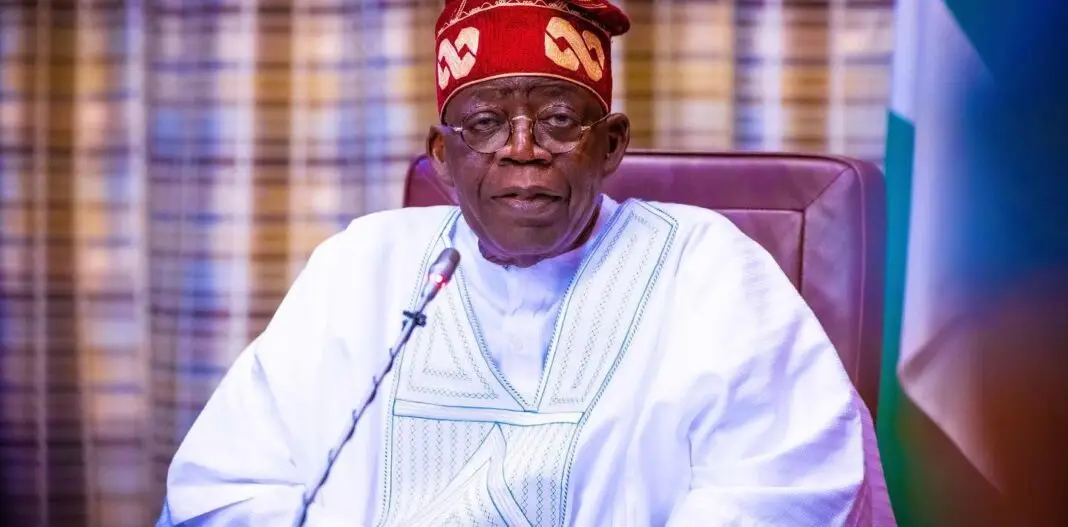
The economic landscape of Nigeria is witnessing significant transformation under President Bola Tinubu’s administration, with recent reforms earning both domestic and international recognition. Central to these reforms is the bold decision to float the naira, Nigeria’s national currency, marking a pivotal shift from previous exchange rate management policies. 

In a landmark policy change, President Tinubu’s government allowed the naira to float freely against other major currencies. This move replaced the longstanding practice of managed exchange rates, which had resulted in a wide gap between the official and parallel market rates. By permitting the naira’s value to be determined by market forces, the administration sought to attract foreign investment, curb currency speculation, and ultimately stabilize the economy. 

The floating of the naira has led to an initial period of adjustment, with the currency experiencing significant fluctuations. However, analysts note that this was a necessary step toward restoring investor confidence. International organizations such as the International Monetary Fund (IMF) and the World Bank have praised the reform, emphasizing that a market-driven exchange rate regime is crucial for long-term economic sustainability. 

Some of the benefits of the reform include: 

  • Increased Transparency: The unified exchange rate has minimized opportunities for arbitrage, reducing corruption and leveling the playing field for businesses. 
  • Boost in Foreign Investment: Investors now benefit from a more predictable and transparent currency market, resulting in renewed interest from abroad. 
  • Improved Dollar Liquidity: The reform has encouraged the inflow of foreign currency, helping to ease Nigeria’s chronic dollar shortages. 
  • Enhanced Economic Efficiency: The floating naira allows the economy to adjust more naturally to external shocks, promoting sustainable growth. 

While the initial transition has posed challenges for businesses and consumers, including rising import costs and inflationary pressures, the Tinubu administration has introduced complementary policies to cushion the impact. These include targeted social welfare programs and efforts to boost local production. 

Economic experts believe that, over time, these reforms will foster a more resilient and dynamic Nigerian economy. “Floating the naira was a difficult but necessary choice, and it sends a strong signal that Nigeria is open for business and committed to reform,” said Bismarck Rewane, Managing Director of Financial Derivatives Company Ltd. 

Reactions to the reforms have been cautiously optimistic. While some Nigerians express concern over the short-term hardships, many acknowledge the potential for long-term benefits. International partners continue to signal support, with several pledging increased investment in Nigeria’s growing technology, manufacturing, and energy sectors. 

As President Tinubu’s economic agenda unfolds, the floating of the naira stands out as a defining moment in the country’s pursuit of economic transformation. As Tinubu’s Economic Reforms Show Results, with continued commitment to reform, Nigeria is poised to solidify its position as Africa’s largest economy and a key player on the global stage. 

Hot this week

President Tinubu Felicitates NNPC Board Chair Musa Kida at 65

President Tinubu Felicitates NNPC Board Chair Musa Kida at 65

We Are Better Together: A Caution to the Advocates of Separation

It must first be clearly stated that the North’s preference for Nigerian unity is not because it is incapable of standing on its own, nor because it is uniquely dependent on the present federal arrangement for its existence. Historically, the North demonstrated a strong capacity for political cohesion and governance under the regional system, where the Caliphate produced the Premier and the Sultanate provided the Governor. With a vast, geographically contiguous landmass, a dominant lingua franca and largely shared religious and cultural frameworks, a substantial part of Northern Nigeria has historically functioned as a coherent political space.

PDP Disputes Ibadan Court, Affirms NWC Validity 

The PDP chairman noted that the Ibadan ruling was only one of several judgments of the Federal High Court on the matter and that the core issues were already before the Court of Appeal. He described the decision as “technically academic” pending an authoritative pronouncement by the appellate court. Turaki reassured party members that the National Working Committee produced by the Ibadan Convention remained “legally intact and firmly in place,” and committed to what he described as the party’s ongoing rebirth.

A Setback for Wike in PDP Crisis 

While the Supreme Court’s earlier intervention briefly revived Anyanwu’s standing, Tuesday’s dismissal signals that legal victories alone may no longer be enough to secure long-term control. The struggle within the PDP is increasingly shifting from courtrooms to internal political negotiations, and in that arena, the momentum appears to be slipping away from the Wike camp.

NNPC Ltd. Debt: FG Forgave Interest, Not Principal, Officials Say 

Fresh details have emerged that challenge the widespread belief that the...

Topics

President Tinubu Felicitates NNPC Board Chair Musa Kida at 65

President Tinubu Felicitates NNPC Board Chair Musa Kida at 65

We Are Better Together: A Caution to the Advocates of Separation

It must first be clearly stated that the North’s preference for Nigerian unity is not because it is incapable of standing on its own, nor because it is uniquely dependent on the present federal arrangement for its existence. Historically, the North demonstrated a strong capacity for political cohesion and governance under the regional system, where the Caliphate produced the Premier and the Sultanate provided the Governor. With a vast, geographically contiguous landmass, a dominant lingua franca and largely shared religious and cultural frameworks, a substantial part of Northern Nigeria has historically functioned as a coherent political space.

PDP Disputes Ibadan Court, Affirms NWC Validity 

The PDP chairman noted that the Ibadan ruling was only one of several judgments of the Federal High Court on the matter and that the core issues were already before the Court of Appeal. He described the decision as “technically academic” pending an authoritative pronouncement by the appellate court. Turaki reassured party members that the National Working Committee produced by the Ibadan Convention remained “legally intact and firmly in place,” and committed to what he described as the party’s ongoing rebirth.

A Setback for Wike in PDP Crisis 

While the Supreme Court’s earlier intervention briefly revived Anyanwu’s standing, Tuesday’s dismissal signals that legal victories alone may no longer be enough to secure long-term control. The struggle within the PDP is increasingly shifting from courtrooms to internal political negotiations, and in that arena, the momentum appears to be slipping away from the Wike camp.

NNPC Ltd. Debt: FG Forgave Interest, Not Principal, Officials Say 

Fresh details have emerged that challenge the widespread belief that the...

No Terrorists Were Killed in U.S. Strike on ‘ISIS’ in Nigeria 

Abu Jabo dismissed reports that terrorists were killed in the strike, stressing that Jabo has no history of insurgency or bandit activity. “There are no terrorists here. There are no Christians here either. Jabo is a peaceful, Muslim community. We do not have security problems,” he added. Local sources also dispute claims that the area harbors ISIS-linked elements, describing Jabo as a quiet farming settlement with no record of extremist activity.

Trump: U.S. Hit Terror Targets in Nigeria 

In a strongly worded statement posted on his verified social media account, Trump said the United States, acting under his direction as Commander-in-Chief, had launched “powerful and deadly” strikes against what he described as ISIS-linked terrorists operating in Northwest Nigeria. He claimed the operation was in response to the killing of Christians and warned of further military action if such attacks continued. 

NNPC Limited: Early Signals from the Kida–Ojulari Era 

As a non-executive chairman with decades of industry experience, Engr. Kida’s influence lies less in operational detail and more in direction-setting and discipline. The reconstituted board signals a renewed emphasis on corporate governance, professionalism and alignment with the spirit of the PIA, that NNPC Limited should operate as a business, not a government department. 
spot_img

Related Articles

Popular Categories

spot_imgspot_img